Imagine three delegations arriving separately in the same room – and being unable to communicate before the meeting even begins. Such is the situation that South Africa, Egypt and Ethiopia (and, by extension, Nigeria, Uganda and the entire African continent as a whole) have found themselves in inside the BRICS bloc. For the first time […]
Menej ako 1 min.
min.
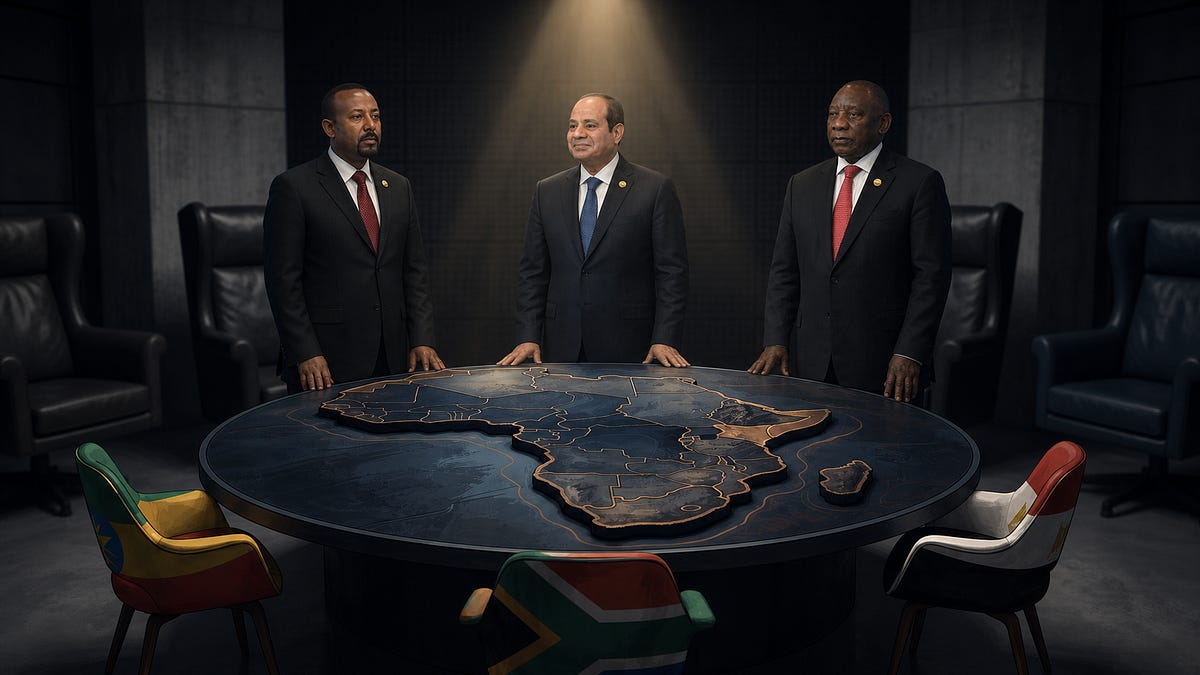
Imagine three delegations arriving separately in the same room – and being unable to communicate before the meeting even begins. Such is the situation that South Africa, Egypt and Ethiopia (and, by extension, Nigeria, Uganda and the entire African continent as a whole) have found themselves in inside the BRICS bloc. For the first time in the group’s history, Africa has three full members and two “partner states” – a significant step for a bloc that represents nearly half the world’s population. But both representation and actual influence within the group are two very different things, and a newly-released document from Pretoria has demonstrated this all too well.
Common Ground: Insights for stronger African coordination in BRICS, produced by the South African Institute of International Affairs (SAIIA) and the South African BRICS Think Tank (SABTT) following a closed-door retreat on 27–28 May 2026, lands on a fairly simple observation: the three African members currently show up separately. Each has its own Sherpa track, its own ministerial channel, its own foreign policy tradition — and there is no point at which they sit down together before positions are locked in. Is that a problem worth solving, or simply the natural condition of three sovereign states pursuing their own interests? The document makes a case for the former, but it’s worth letting readers weigh the question themselves.
One useful reference point comes from an unlikely place: the UN Security Council, where Africa’s three elected members — known as the A3 — have long coordinated their votes on African questions under an explicit continental mandate from the African Union. The Pretoria retreat suggests South Africa, Egypt and Ethiopia could borrow the habit of consultation without pretending to the same authority. As the document itself is careful to note, the three “do not represent the continent and should not claim to do so.” That caveat matters. Any coordination here would be a matter of shared interest among three countries, not a delegated voice for 54 nations.
What would that actually look like? Nothing especially dramatic, by the sound of it: a single pre-summit meeting to compare priorities, a short joint policy brief written through think tank and academic channels, and one modest, testable step — perhaps a shared position on trade language, or a joint project pitch to the New Development Bank (NDB). Small enough to fail without embarrassment, useful enough to be worth trying before the 18th BRICS Summit, set for New Delhi on 12–13 September 2026.
Not every issue lends itself equally to coordination, and that unevenness is itself instructive. On economic questions — industrial development, energy transition, cross-border payments — African interests appear to converge naturally. Local-currency trade settlement, for instance, is estimated by the AfCFTA Secretariat to save the continent roughly $5 billion a year in transaction costs alone. Framed this way, the push toward local currencies reads less as a geopolitical statement against the dollar and more as ordinary financial housekeeping — though whether outside observers will see it that way is its own open question.
Security Council reform tells a different story. The 2005 Ezulwini Consensus calls for permanent African seats but leaves unresolved exactly which countries would hold them — an ambiguity that isn’t just theoretical. In 2025, BRICS foreign ministers failed to issue a joint statement for the first time in the grouping’s history, reportedly after individual countries’ seat ambitions surfaced in ways that broke an unspoken diplomatic understanding. By the time of the Rio declaration that July, the language had been carefully rebalanced rather than resolved. It’s a reminder that shared diagnosis doesn’t guarantee shared solutions — and it raises a genuinely difficult question: what does African unity look like on an issue where African states themselves want different outcomes?
There’s something refreshingly unglamorous about the retreat’s proposal. No new secretariat, no permanent headquarters, no grand institutional architecture — just a rotating point of contact and a habit of talking before positions harden. Perhaps that modesty is the point. Big multilateral bodies have a way of launching structures that meet once and quietly disappear; a lighter approach might simply be more likely to survive contact with reality.
Still, coordination carries its own risks. Would a visible African bloc inside BRICS invite pushback from other members, or draw the continent’s internal disagreements — like the Security Council question — into a spotlight where they’re harder to manage quietly? And could three countries, one of which (South Africa) has belonged to BRICS for over a decade while the others joined only in 2024, coordinate as genuine equals, or would the imbalance in experience tilt the conversation?
None of this has an obvious answer yet, and perhaps that’s the more honest place to leave it. Africa’s expanded presence inside BRICS is barely two years old. Whether it becomes a coordinated presence — or remains three separate voices speaking into the same room — is a decision that South Africa, Egypt and Ethiopia are only now beginning to make. For readers watching from across the Global South, that’s arguably the more interesting story: not whether Africa has arrived at the table, but what it chooses to do once it’s there.
📌 Subscribe to Think BRICS for weekly geopolitical video analysis beyond Western narratives. Follow also our new channels BRICS Business and Think BRICS Chronicles.