Meta CEO Mark Zuckerberg defended his company in a Los Angeles court as part of a landmark civil trial over social media. The 20-year-old plaintiff says she became addicted to social media as a child, and the algorithms of Instagram and YouTube harmed her mental health. Lawsuit The plaintiff, known as “Kaley,” and her mother […]
Menej ako 1 min.
min.
Meta CEO Mark Zuckerberg defended his company in a Los Angeles court as part of a landmark civil trial over social media. The 20-year-old plaintiff says she became addicted to social media as a child, and the algorithms of Instagram and YouTube harmed her mental health.
Lawsuit
The plaintiff, known as “Kaley,” and her mother accuse Meta and YouTube of intentionally designing addictive features into the platforms.
Kaley said she began compulsively using YouTube at age 6 and turned to Instagram at age 9. She claims the platforms worsened her depression and suicidal thoughts.
She’s expected to take the witness stand later in the trial.
“Some people say that social media platforms can be held liable for their choices to set up an algorithm in a particular way,” Eugene Volokh, professor of law emeritus at UCLA law school, told Straight Arrow News.
Often, social media companies avoid liability because of Section 230. That was passed by Congress in 1996 and provided immunity to websites from liability for third-party content.

Download the SAN app today to stay up-to-date with Unbiased. Straight Facts™.
Point phone camera here
Basically, websites aren’t responsible for what people put on them.
“The person who uploads or initiates the content is still responsible, but everyone else is not,” Eric Goldman, co-director of the data center for high tech law at Santa Clara University, told SAN.
It’s been invoked in courtrooms by tech companies thousands of times over the last 30 years.
“I’ve tracked over 1,700 cases where Section 230 has been involved,” Goldman said.
Where this trial differs from thousands of other cases is that Section 230 does not apply, at least for now.
“The social media defendants have already advanced a Section 230 defense in the case, and it was partially successful,” Goldman said. “A few of the claims were precluded by Section 230 are no longer part of the case. The remainder of the claims are now going to trial. So, Section 230 has already been asked and answered with respect to this trial, and the jury won’t be considering it.”
What is being considered here is not the content on the site, but rather the algorithm created by the social media companies that shows you what’s on the site.
“You’re being held liable because you set up your algorithm to prioritize certain kinds of things, or, for example, prioritize things that are popular,” Volokh said. “Prioritize things that this person is certainly interested in.”
Attorneys for the social media companies also argued that the First Amendment protects them.
“They did preclude some of the claims, and the remainder of the claims have survived the First Amendment challenge, and the jury won’t be considering the First Amendment,” Goldman said.
While this jury will not consider the First Amendment or Section 230, the appeals court that likely comes next will.
“When the case is appealed, and it will be appealed, regardless of who wins at trial, Section 230 will be back in play,” Goldman said. “The defendants will point out that they think that the court made a mistake rejecting it previously.”
Same with the First Amendment defense.
“Just like Section 230, the First Amendment will be back in play,” Goldman said.
And unlike in a murder trial, an appellate court may be more likely to overturn the ruling.
“That’s the kind of thing that the jury says, ‘yes, this person is the one who did the killing,’” Volokh said. “Probably on appeal, it’s not going to change the result. But this is a case that’s really pretty heavily about the law. About who should be held responsible for supposed harms to users. Should it be the people posting the material? Should it be the platforms that aggregated and presented or should it be, in a sense, the users themselves?”
Zuckerberg testimony
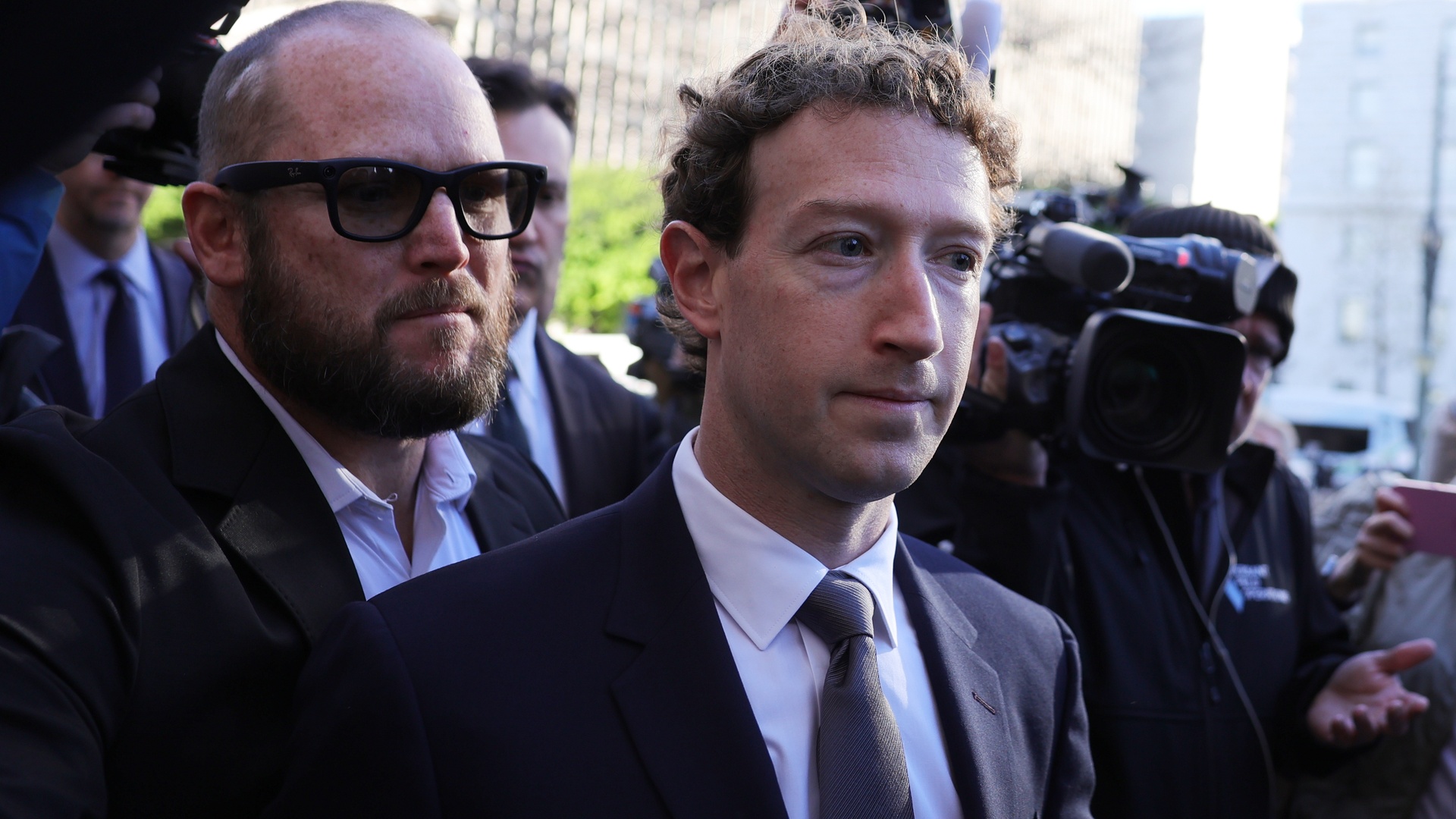
Zuckerberg’s testimony was highly anticipated, with dozens of people gathering outside the court while he entered, as captured by reporter Meghann Cuniff.
His testimony was not livestreamed, but at least one reporter inside the courtroom described Zuckerberg as “combative.”
The billionaire reportedly mostly skirted direct questions about whether Instagram is addictive. According to The Associated Press, Kaley’s attorney Mark Lanier asked Zuckerberg if people tend to use something more addictive.
“I’m not sure what to say to that,” Zuckerberg reportedly said. “I don’t think that applies here.”
Lanier also reportedly laid out three options for what people can do when it comes to vulnerable people. Help them, ignore them, or “prey upon them.”
Zuckerberg reportedly agreed the latter option was not what a company should do, saying, “I think a reasonable company should try to help the people that use its services.”
The Meta CEO has testified on Capitol Hill several times about this issue, and that testimony was brought into the courtroom.
Lanier brought up Zuckerberg’s comments, where he claimed Instagram employees are not given goals to increase the amount of time people spend on the app. Lanier then presented internal documents that contradict that statement.
Zuckerberg responded that those goals used to exist, but the company has moved away from them.
The AP report said Zuckerberg mostly stuck to his talking points during the testimony.
What it could mean
Other social media giants will absolutely be keeping an eye on this trial and what it could mean for future litigation. Goldman said whatever way this case goes will be important for future cases.
First, if the plaintiffs win.
“The plaintiffs could get strong backing from the jurors, in which case the price tag of the settlement will be enormous, or possibly the damages will be so great that the social media defendants don’t even have the cash, which I know sounds weird, but that should give you a sense of the scale of damages at issue in these cases,” he said. “And so, it could set a precedent that wipes out social media.”
But there’s also a scenario where the social media companies win.
“It could also set a precedent that the jurors aren’t buying the arguments of the plaintiffs,” Goldman said. “That even if they were skeptical of social media, the plaintiffs’ claims don’t work. And that would be quite noteworthy as well, because then it could eliminate the entire genre of litigation that has been gearing up for a few years now.”
Regardless, the case will likely be considered by higher courts.
“Precedents are mostly set by appellate courts, not by jury verdicts,” Volokh said. “It’s true that a jury verdict can have an important psychological effect on future juries and has an effect on the plaintiffs being more willing to sue or less willing to sue, on defendants being more or less willing to settle. But technically speaking, a precedent is something that’s set by an appellate court.”
Some of these questions won’t be answered in this trial, because some state legislatures are taking their own actions to get results.
SB 976, the Protecting Our Kids from Social Media Addiction Act, became law in California in 2024 and restricts how online platforms can expose minors to certain algorithms, feeds and notifications without the consent of parents, along with other protections.
“In that sense, the battle is just starting,” Goldman said. “It’s assuming social media survives this trial. They’re still gonna have the battles with all the legislation that’s been enacted trying to do the exact same thing.”
Goldman also shared his concerns over what could happen if this trial or legislation starts breaking down social media and Section 230.
“It is the foundation of the internet as we know it, and there are a lot of people who say a lot of bad things about the internet today, but we should not lose sight of how many people are living their best lives helped by the internet,” he said.