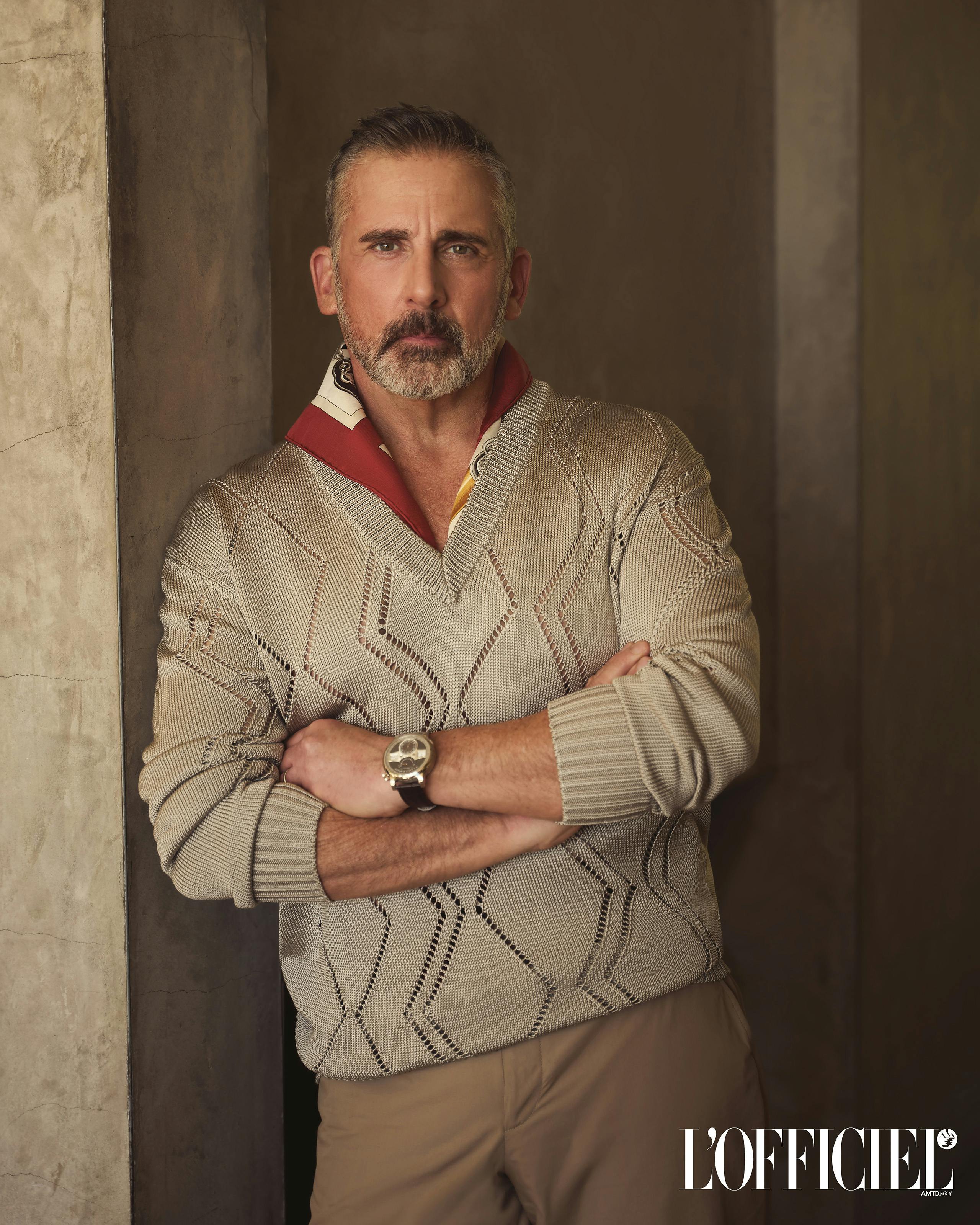
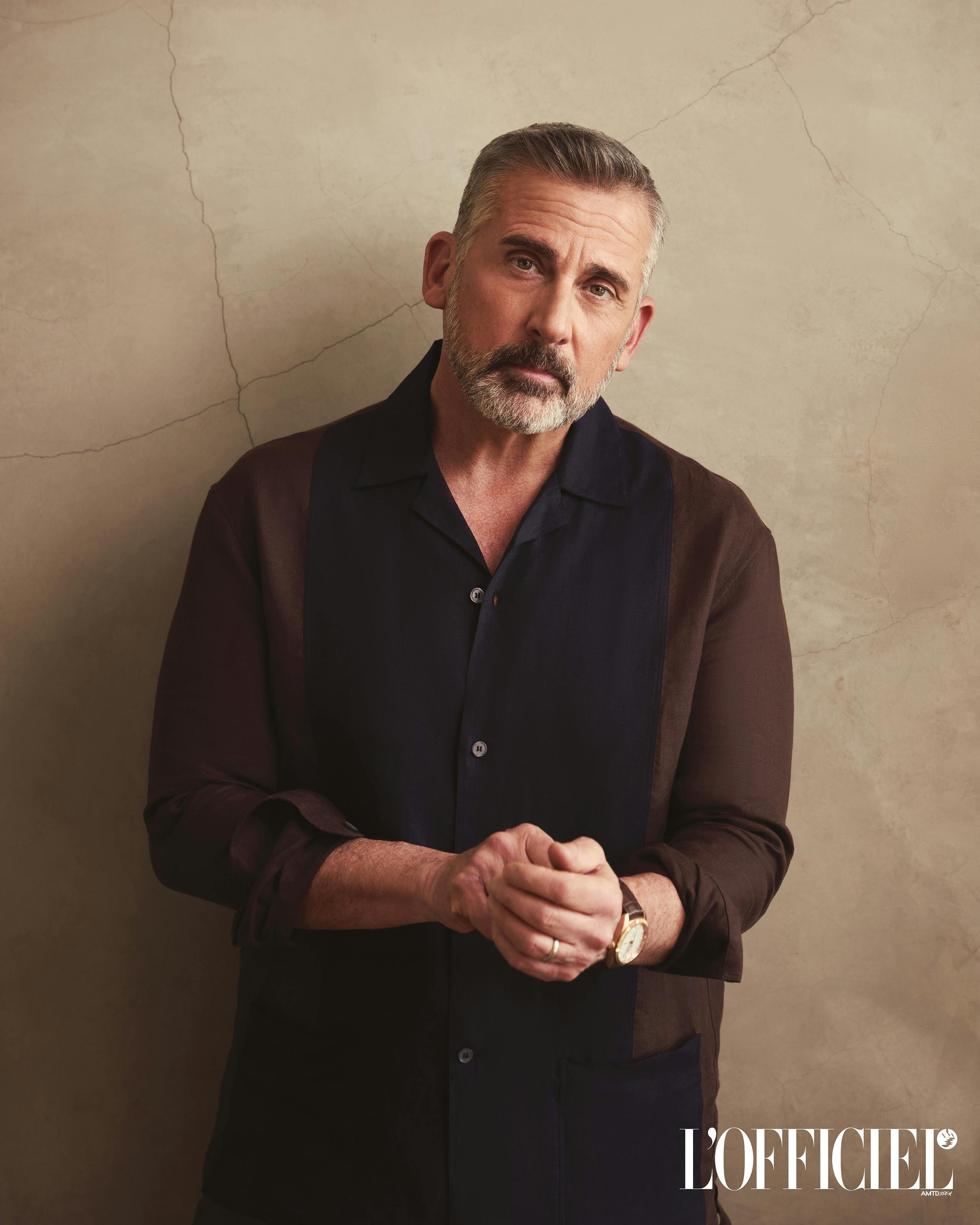
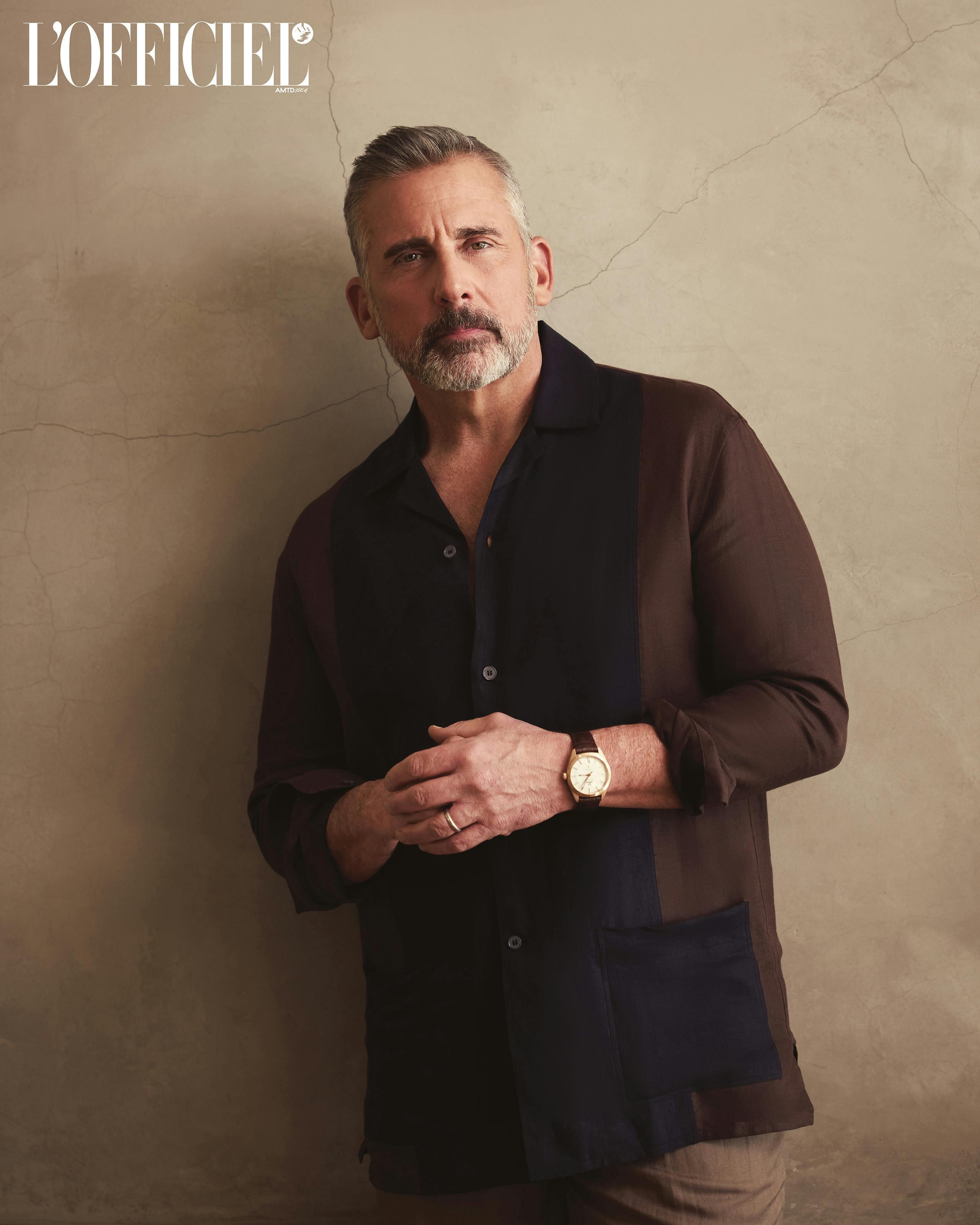
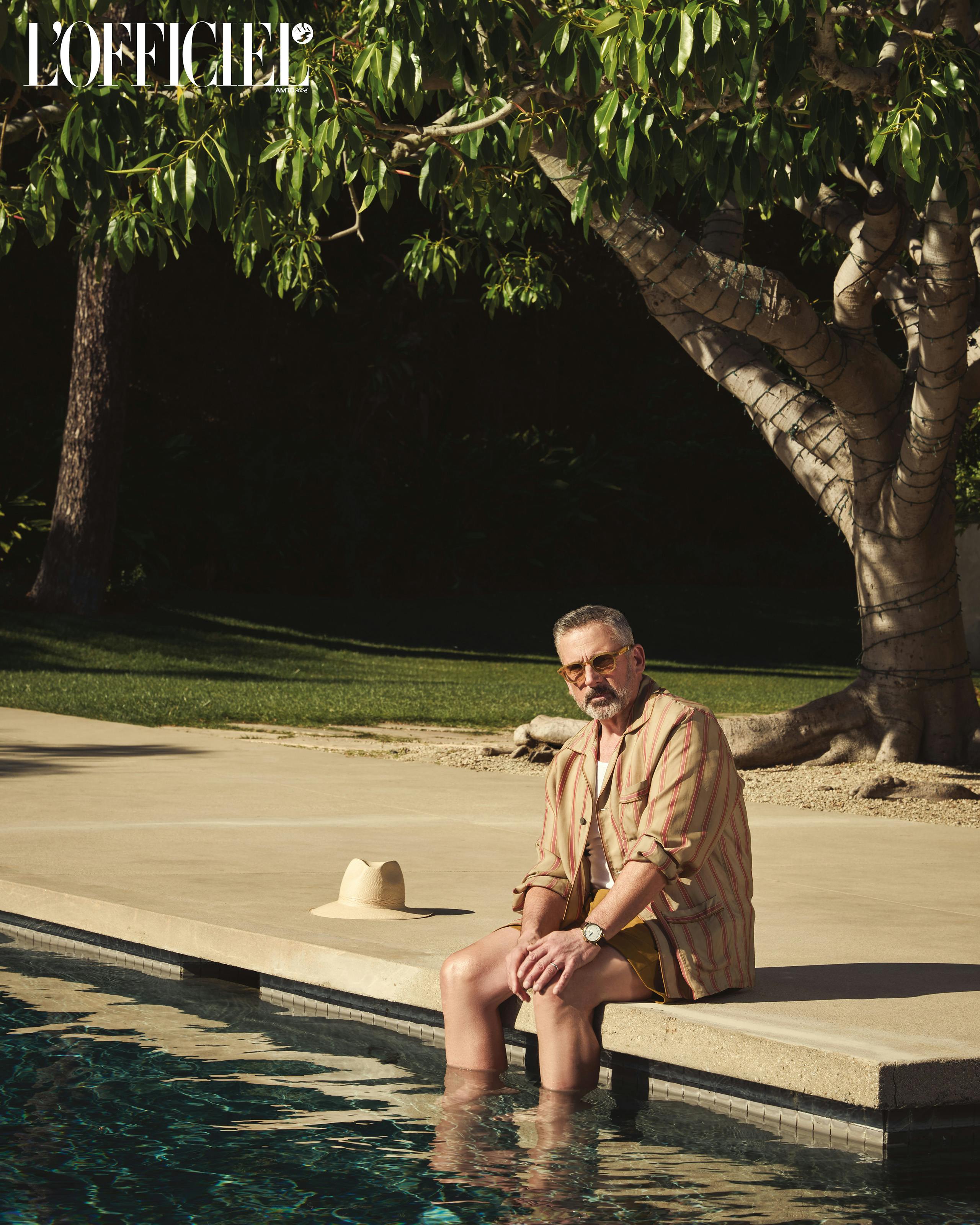
PHOTOGRAPHY Brian Bowen Smith STYLED BY: Mark Holmes He may be one of the most celebrated actors today, but for Steve Carell, it’s the simple things in life that bring the most joy: traveling with his wife, spending time with his kids, and, surprisingly, cleaning his driveway. “I could spend hours mulching leaves,” says the […]
Menej ako 1 min.
min.
PHOTOGRAPHY Brian Bowen Smith
STYLED BY: Mark Holmes
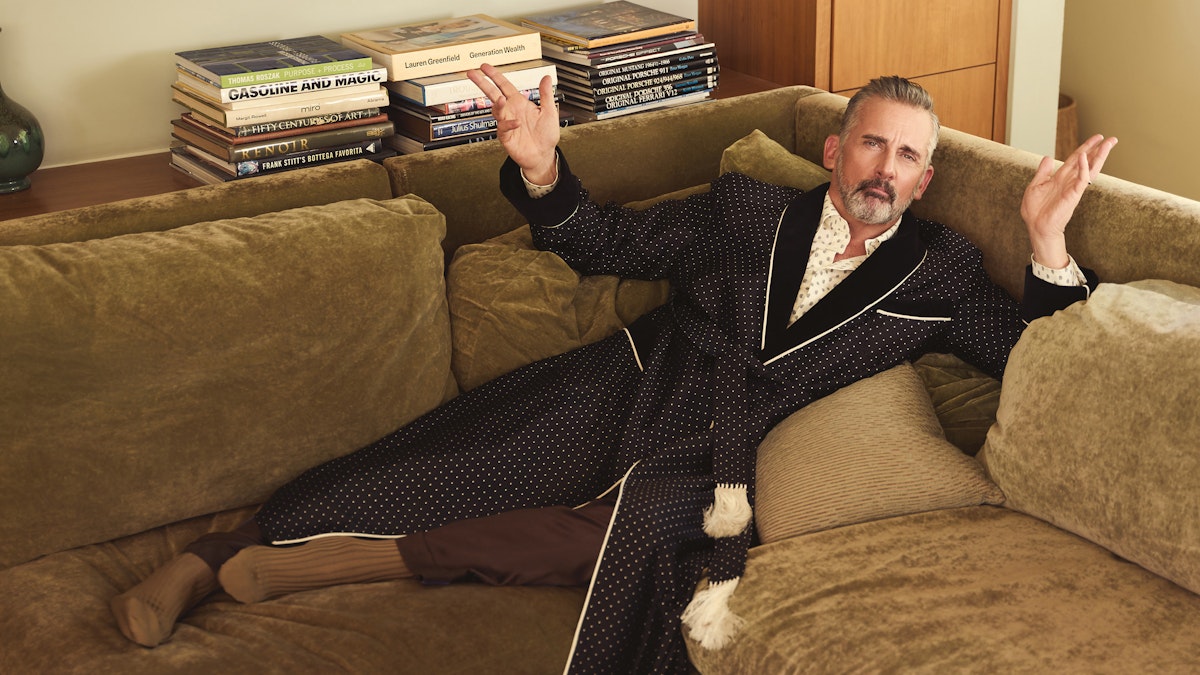
He may be one of the most celebrated actors today, but for Steve Carell, it’s the simple things in life that bring the most joy: traveling with his wife, spending time with his kids, and, surprisingly, cleaning his driveway. “I could spend hours mulching leaves,” says the actor, 63. “I get very excited about something like buying a new leaf blower. I actually just went one step further and bought a leaf vacuum that straps over my back, and I love it.”
By industry standards, Carell has always led a quiet life. Growing up in Concord, Massachusetts, he didn’t imagine a career in Hollywood; acting was simply something he enjoyed. “I did a lot of theater in high school and college, but I just didn’t think of it seriously,” he says. “I never dreamt of being famous in any way, and it’s still a bit weird to me, to be honest. I kind of don’t get it.” It wasn’t until he graduated from Denison University—where he studied history and played hockey—in 1984 that Carell even considered pursuing acting professionally. He was toying with the idea of becoming a lawyer or teacher when theater friends invited him to move to Chicago.
Throughout the early ’90s, Carell honed his improv skills at The Second City comedy troupe. That’s also where he met actor and writer Nancy Walls. They married in 1995, and in 1999, both became correspondents for The Daily Show. It wasn’t until his 2004 portrayal of the sweetly dimwitted weatherman Brick Tamland in Anchorman: The Legend of Ron Burgundy that Carell’s career skyrocketed. At 41, he was suddenly in demand. His first starring vehicle, The 40-Year-Old Virgin, premiered in 2005; just months later, the world encountered his career-defining character, Michael Scott—the lovable, endlessly meme-able Dunder Mifflin dynamo he played for seven seasons of NBC’s The Office. “I could tell early on that it had the potential to be something special,” he says of the show. “And then it took, like, 15 years for people to think that. But I’m really proud of it, and I’m very thankful that it’s so well liked. It’s a big deal.”
As The Office racks up new generations of fans on streaming platforms, Carell continues to build a diverse portfolio. Although he still has plenty of comedies to his name, from Get Smart to Date Night to Crazy, Stupid, Love, he’s also had critically acclaimed dramatic turns in Little Miss Sunshine, Foxcatcher, and The Big Short. Most recently, he’s returned to TV, starring in The Morning Show, The Patient, and The Four Seasons. He was, notably, killed off on all three shows. “People love watching my characters—or me—die, I guess,” he laughs.
In his next project, the HBO Max series, Rooster, Carell’s character is very much alive. He portrays Greg Russo, an author and divorcé who drops everything to support his college professor daughter, Katie (Charly Clive), when her personal life implodes. The father-daughter bond is the heart of the Bill Lawrence–created dramedy, and for Carell—who’s dad to daughter Annie, 24, and son Johnny, 21—it was all highly relatable. “I bring a lot of my relationship with my own daughter into this,” he says. “I actually got her a job working as a production assistant on the show, and when we were shooting one scene, I accidentally said, I would do anything for Annie, instead of saying my character’s daughter’s name. There was this big Awww sort of moment, but it really lined up for me. Because I was thinking of my daughter as I said the line.”
“Raising children is my favorite part of my life,” he continues. “There’s not even a close second—it’s the most satisfying thing I’ve done.” While he’s immensely grateful for his success, “It’s always just been a job,” explains Carell. “I’ve tried not to let it define me too much. But mostly, I just didn’t want it to be weird for my kids.”
Here, Carell speaks to L’OFFICIEL about navigating parenthood, finding success at 40, and the roles—and fashion choices—that have impacted him most.
L’OFFICIEL: What initially drew you to Rooster—was it the Bill Lawrence of it all?
STEVE CARELL: It really was the Bill Lawrence of it, beginning and end. I’ve always been a fan of his, but I’d never even met him. He got in touch about an idea for this show, and I met with him and his writing partner and co-producer, Matt Tarses. We talked about our relationships with our daughters in that age realm, and it really interested me. They went off and wrote it, and several months later, I got the pilot, and it was one of the best pilots I’ve ever read.
L’O: Greg is very protective of his daughter, and he pushes parental boundaries at times. Is that something you relate to?
SC: I think it’s a pretty honest depiction. The back-and-forth between a father and a daughter is funny at times and heartbreaking at others. These two people love each other, but they’re thrown into this situation where the proximity’s a little too close for the daughter’s liking. But there’s a self-awareness in my character, as there is in me. Generally speaking, I know when I’m being that obnoxious dad. Most fathers do know when they’re pushing buttons, and I lean into things that drive my kids crazy, too. That’s all part of being a dad.
L’O: How do you drive your kids crazy?
SC: When my daughter was little, I used to embarrass her by acting goofy in public, like dancing to the music in a supermarket. I never made a scene; it was just enough to make the hair on the back of her neck stand up. She’d say, Dad, don’t! But there was a part of her that actually liked it. There’s a comfort in knowing that, as ridiculous and annoying as dads can be, the baseline is complete commitment to your daughter.
L’O: It feels like Greg still sees his daughter as his little girl, but also wants to be her friend. How have you dealt with that transition into adulthood with your own kids?
SC: It’s a completely different relationship, being close to your kids when they’re kids compared to when they’re your adult children. But I will make a distinction between wanting to be your kids’ friend and wanting to be close to them. My wife and I aren’t out to be our kids’ friends; we’re their parents. I think my character sees it that way, too. He wants to be close with his daughter, but he’s also quite lonely. Whether he admits it or not, he really needs her—she doesn’t see that, though, because she has her own life to live.
L’O: How has it felt to watch your children go out into the world and create their own lives?
SC: I think the best part of this stage is to see them flourishing and making mistakes and learning from them. As much as you want to be there and correct any problems like you did when they were little, you can’t. They grow and mature and become funny, smart, and sensitive as they get in touch with who they are and what they want out of life. Watching them go from little kids to adults who challenge you and understand irony and satire is exciting.
Generally speaking, I know when I’m being that obnoxious dad.
L’O: You’ve written various projects over the years, and you’re playing an author in ‚Rooster.‘ Have you ever considered writing a book?
SC: Greg is loosely based on a Carl Hiaasen–type of writer, and throughout the series, we see the covers of books he’s written about this character named Rooster. I pitched a funny idea to Bill about writing an actual Rooster book that ties in with the show: a ghostwritten component, in the voice of Greg Russo. For about three minutes, I thought, Maybe I should take a crack at writing that… And then I thought, No. [Laughs.] It sounds great in theory, but writing a book is a different sort of discipline. I’ve never done it, but maybe someday when I’m older, just sitting around, and my wife says, You have to do something. We’re just staring at each other now. Maybe then.
L’O: Did you ever consider pursuing something other than acting?
SC: I didn’t really give myself permission to try acting until I was out of college. So much of it had to do with my parents and all the support they’ve always given me. I felt I owed them more than, Thanks for the great education, but now I want to go be an actor. They never told me what to do, although I think my mom secretly wanted me to be an attorney—which did sound good, so I took the LSAT. But after school, friends of mine were moving to Chicago to take a stab at acting and asked if I wanted to split rent on a cheap apartment. My parents gave me the thumbs up and said, Absolutely. You have to give it a shot if it’s something that you really like. When I started acting, I thought, If this doesn’t work out, I’ll teach history and coach hockey or lacrosse in the afternoons. And, you know, I thought I’d be pretty good at that, too.
L’O: I’d imagine that would have been a very different pace of life.
SC: It would have been. But, I mean, who knows? Life takes all of these different twists and turns. When I decided to become an actor, I thought, If I can make a living doing this, that’s success. When I was around 40 and the success started really building, it was a surprise. I had not anticipated it, nor did I expect that to ever happen. I was very grateful, but that wasn’t the goal.
L’O: Has your definition of success changed over time?
SC: To do something I love and be able to pay the bills and raise a family, to me that still sounds great. A lot of commencement addresses say, Follow your dreams. Do what you love. Not everybody knows what they love or has a built-in idea of what their vocation should be. I was really lucky that way.
L’O: Do you remember the first time you felt like you’d really “made it”?
SC: When I got hired into The Second City Touring Company. I was making, like, $220 a week, which was plenty at that time. And I really thought that was it. Even after The 40-Year-Old Virgin came out, I still wasn’t convinced that I was a success.
I remember being called in for a meeting at Warner Brothers, which I thought was an audition. I walked in with my satchel, my headshot, and my résumé stapled to the back. We were in a conference room with executives including Jeff Robinov, the head of Warner Brothers [at the time]. I thought, What am I doing in a room with the head of Warner Brothers? Then he said, We want to reboot Get Smart as a movie, and we’d like you to play Maxwell Smart. It went from me thinking this was an audition to We’d like you to star in this movie. That was the biggest head-exploding, most mind-boggling moment. Because under the table, I had my hand on my headshot, ready to thank them for calling me in.
L’O: How have you navigated your relationship with fame?
SC: It was never a conscious thing to keep in perspective, because it just didn’t seem real. A big thing was trying to make sure that my kids had a fairly normal upbringing. My wife and I aren’t Hollywood-party types; I like to do the work, and I have friendships at work, but we don’t go out a lot. Most of our friends are the parents of our kids’ classmates. So for me, it was a slow build—and by the time you’re 40, you’d better have it kind of figured out, in terms of who you are and what’s important.
L’O: You’re not on social media, which also lends itself to privacy.
SC: I just don’t feel like I have time for it—and that’s not to disparage it. I think it can serve people well, and it’s obviously an important part of our culture. But I would be bored of myself on social media. I don’t think anyone cares what I had for dinner, or any of it. And the whole idea of posting something, waiting, seeing responses, and then responding to the responses? Not for me.
L’O: So while the rest of us are doomscrolling, what are you doing?
SC: Sitting in an empty room, staring at a light bulb. [Laughs.] I have hobbies. I play sports. I hang out with my kids. My wife and I are trying to travel more now that we’re empty nesters. And, obviously, working and writing when I get a chance. It’s pretty low key—there’s nothing really splashy to report. This is going to make a great article: “The Most Boring Man.”
L’O: It sounds more peaceful than boring, but when it comes to choosing roles, what excites you?
SC: It’s case by case. Comedy is subjective, but I tend to gravitate towards things with some sort of reality to them. If the relationships and the characters have an authenticity at their core, that makes it much funnier to me. Because then you’re believing that this is human behavior, as opposed to just a bunch of people saying funny things.
I would be bored of myself on social media. I don’t think anyone cares what I had for dinner.
L’O: Which of your characters have you related to most?
SC: I related to Michael Scott because I know a lot of people like that—or versions of that—who are good people. They may be incredibly annoying at times, but at their heart, they’re decent. Then there’s someone like Foxcatcher’s multimillionaire philanthropist and convicted murderer John du Pont, who I didn’t relate to as much, but I was fascinated by him. Even with all of my research, I could never begin to fully understand who he was, although I tried to understand different components. [Carell received an Oscar nomination for the role.]
L’O: Did you ever imagine that, all these years later, Michael Scott would still be such a culturally relevant character?
SC: No. When the show was on, it was successful, but it was never a big deal. It wasn’t until it went off the air that people really started watching it, which doesn’t happen very often. The phenomenon of getting that second life is completely astounding to me. But at the same time, I remember when we first started the show and the four of us—Jenna [Fischer], John [Krasinski], Rainn [Wilson], and I—got together for lunch. I said, If this gets picked up, it will probably be the thing that we are remembered for and defines us. Everyone was excited, but I don’t know if anyone else felt that way. I had a sense that it was different.
L’O: Why was that?
SC: I could immediately tell that the cast cared about each other so much, and it was a true ensemble. No one was trying to stand out or overstep. We all felt like equals, and everyone was very gracious and supportive. It wasn’t great right out of the blocks; it took some time to gel into something. But with that cast and writing staff, it was a really potent group of people.
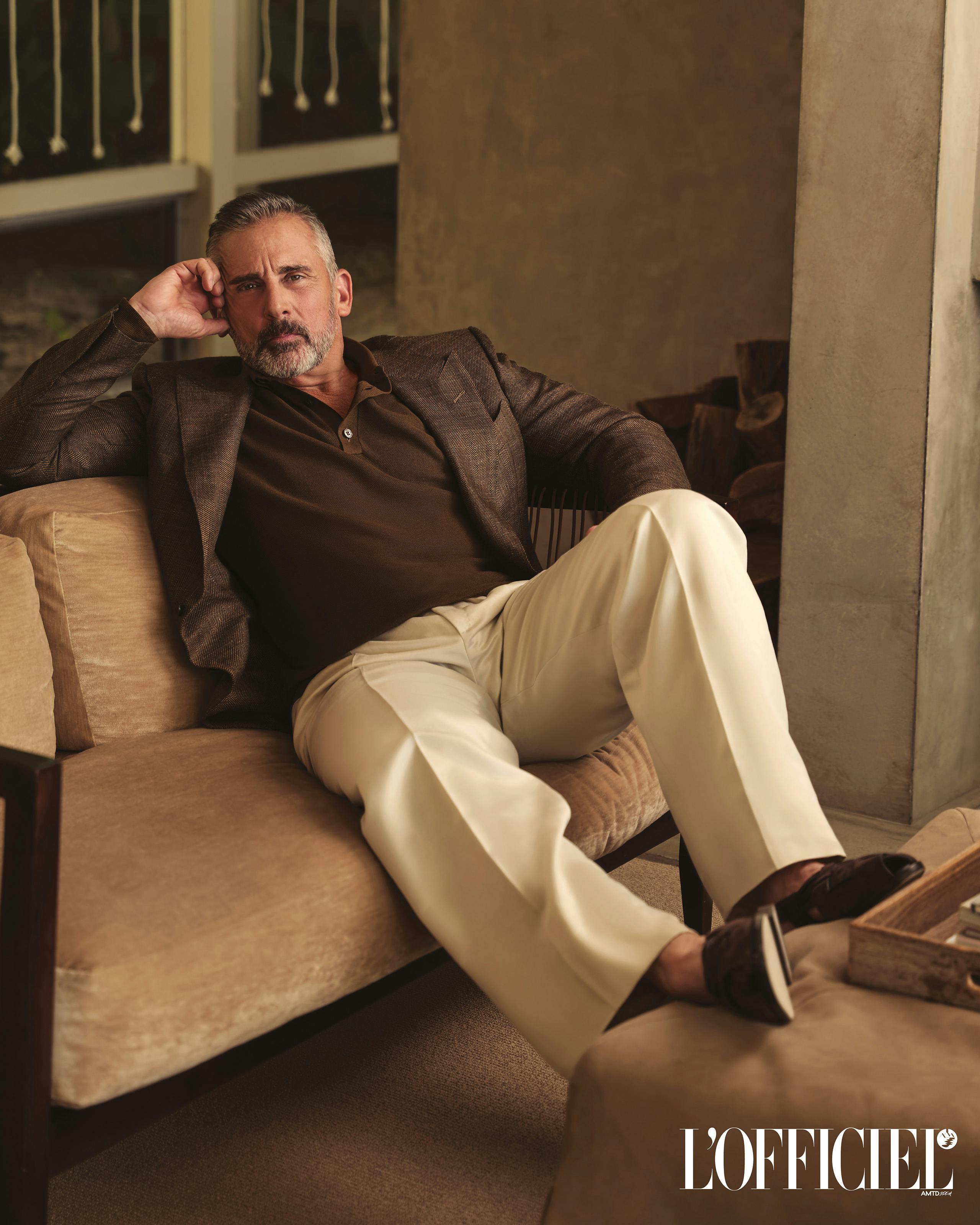
L’O: Your recent TV work has been much darker—your characters in The Morning Show, The Patient, and The Four Seasons have all been killed off. What’s with the pattern?
SC: Yes, in the last three things I’ve done, I have been killed. That’s my calling card now. [Laughs.] I actually knew going into The Four Seasons that my character [Nick] was going to die, but [co-star and co-creator] Tina [Fey] says she’s sorry she killed me off. I don’t believe her, but it’s a nice thing to say. I will actually promise you, though, that my character’s not going to get killed in Rooster.
L’O: Like many of your characters, though, Greg is romantically challenged. What draws you to playing guys who are unlucky in love?
SC: There’s something beautiful about someone who doesn’t give up on the idea of love. Even in something like The 40-Year-Old Virgin, here’s a guy who, for all intents and purposes, has given up. He figures that his life is just going to be a certain way and he’s trying to accept that, but there’s a little part of him that still feels like there’s a chance. And I think that’s lovely.
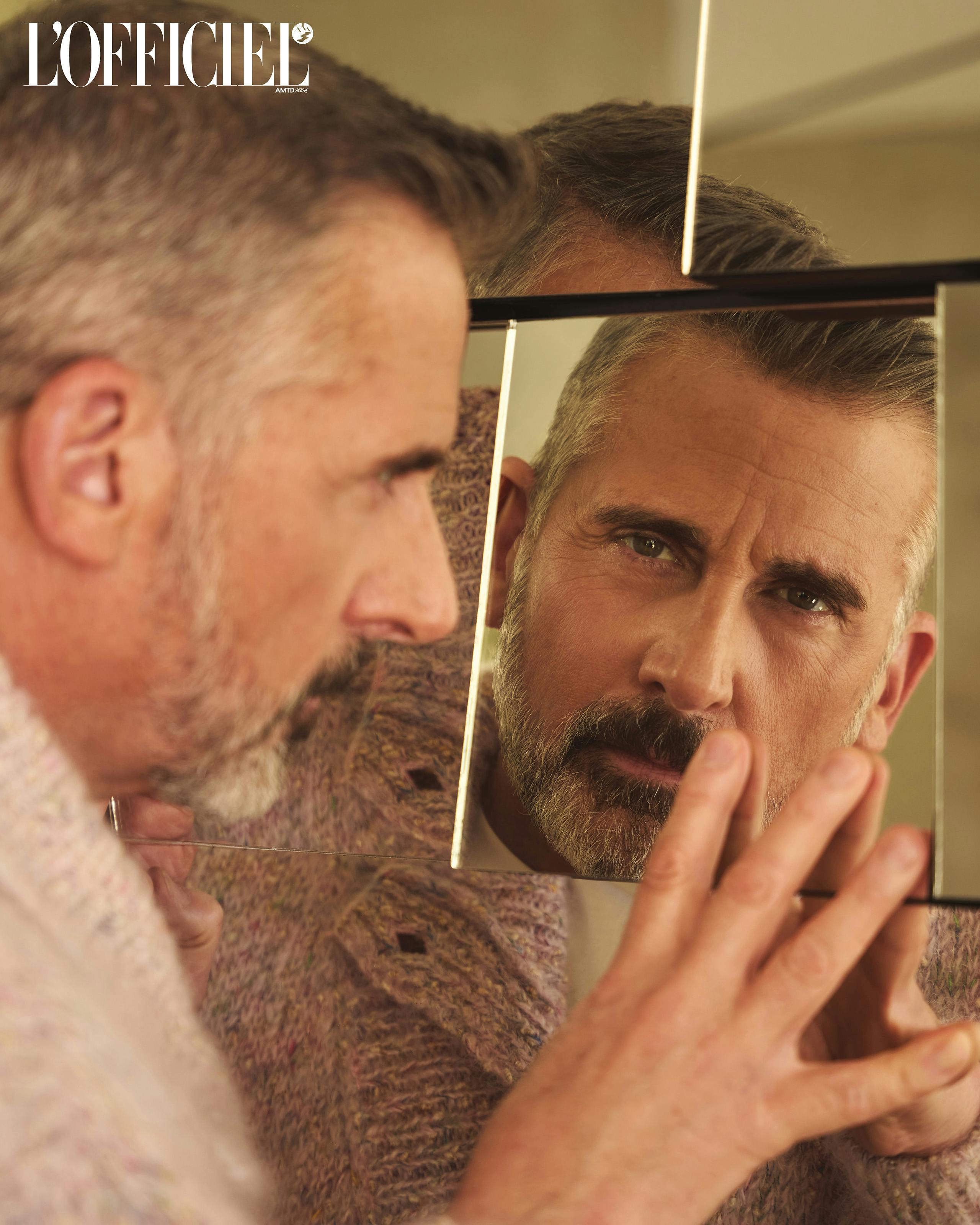
L’O: Your wife, Nancy, is also a comedian and writer—and you’ve worked together a lot. What kind of creative sounding board is she?
SC: She has a great eye. I trust her implicitly. We read scripts together, and after 30 years of marriage, we know each other pretty well. We really do finish each other’s sentences, but people who know us know that she’s way funnier than I am. She’s just a super-talented and smart person. And, you know, she’s a babe.
L’O: Does she weigh in on your fashion choices?
SC: Oh yeah, sure. She’ll give me the thumbs up or thumbs down.
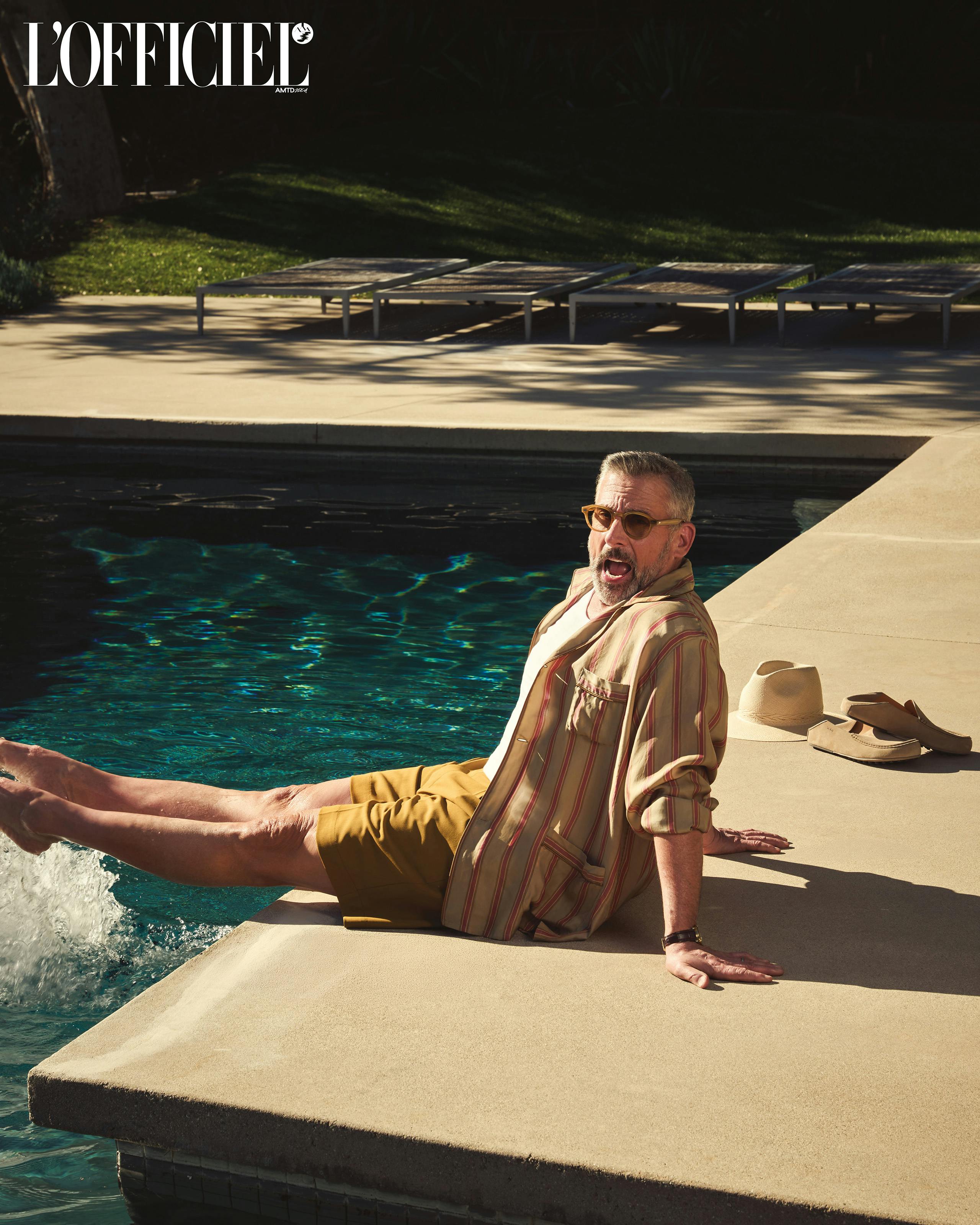
L’O: What is your fashion comfort zone?
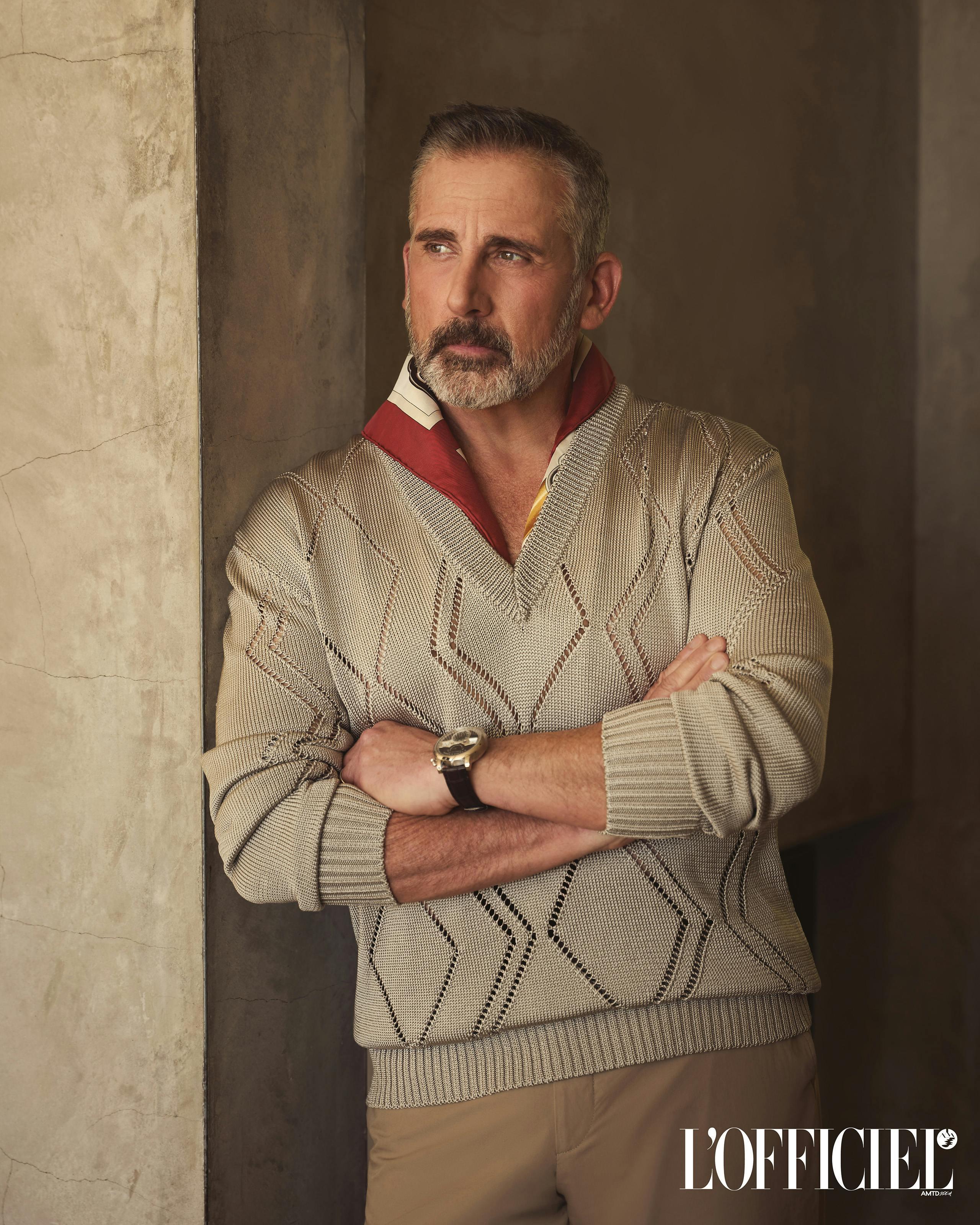
SC: Just basics. I grew up in New England, so I think I have a fairly preppy aesthetic—more classic, not fussy. I don’t like standing out too much. I’ve found that fit is the most important thing; it doesn’t matter how expensive something is. If it fits well and you feel good in it, it’s going to look much better. I’m also one of those people who, when I find something I like, I stick with it.
L’O: Do you remember your first designer purchase?
SC: I remember the first designer piece that was given to me. I was in Chicago and didn’t have any clothes, so my oldest brother, Greg, bought me a powder blue Liz Claiborne bomber jacket. It had the biggest shoulder pads you had ever seen—even for that era—and I thought I looked so cool in it. I was working at [the chain restaurant] Houlihan’s as a waiter, and the hostess, who I had a crush on, said, I really like your jacket. I loved it, and I wish I still had it.
I never dreamt of being famous in any way. It’s still a bit weird to me, to be honest.
L’O: Who is your style icon?
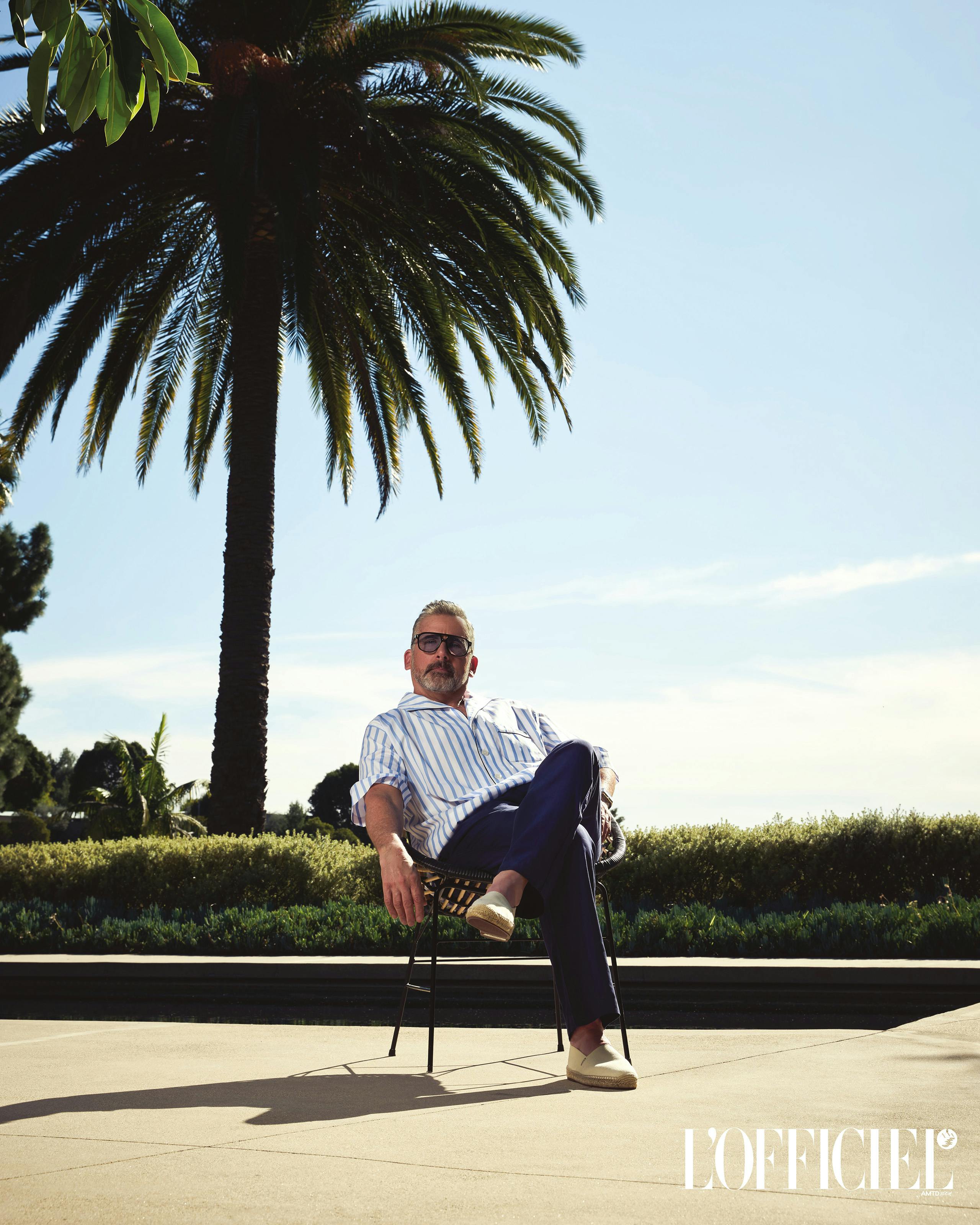
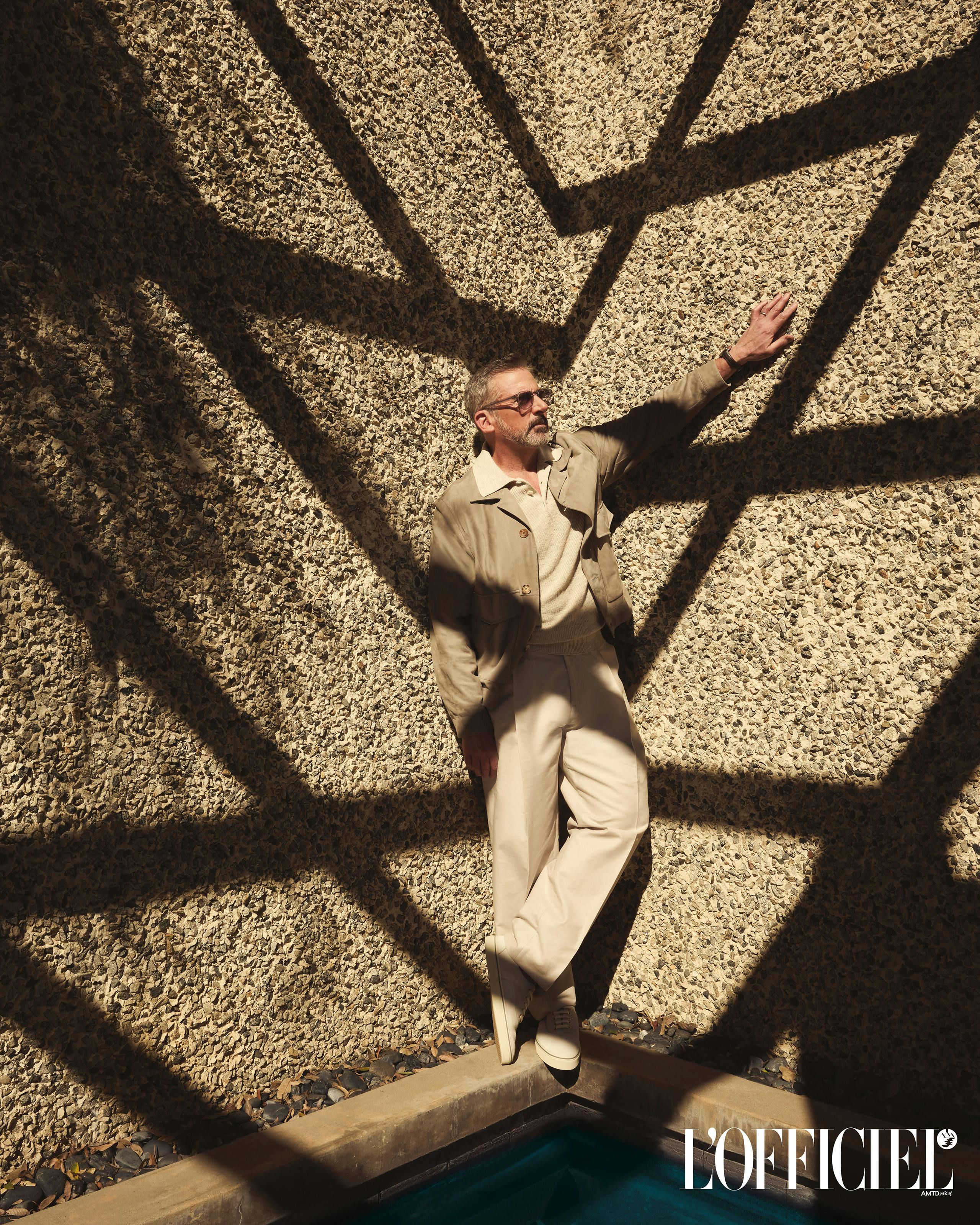
SC: Roger Federer’s aesthetic is very cool, and it doesn’t look like he’s trying. I also love a lot of actors’ looks from the ’30s and ’40s: [Humphrey] Bogart or Cary Grant in a suit, or lounging around the pool in a white polo shirt and linen trousers. Again, they weren’t trying too hard. It’s just what they had in the closet.
L’O: Are there any Hollywood legends you still dream of working with?
SC: Not anything I would put out there. [Laughs.] I think it goes back to when I was younger and trying to imagine where this all might go, but I tend to curb my expectations a little bit. I’m just thankful for all of the things that I do get offered, and I feel greedy asking for more. But secretly, yes, there are some people I would love to work with. I’m just too shy to say.
L’O: What do you hope audiences take away from your projects?
SC: I do hope people get some enjoyment out of my work, but I don’t want to walk around saying that what actors do is any sort of public service; that feels pretty self-congratulatory. It’s simple: If I do a comedy, I hope it makes people laugh—and, preferably, laugh really hard in parts. If it’s a drama or a hybrid, the hope is also that it elicits some sort of human response. You only have yourself as a barometer, and I can’t go into something thinking, I wonder if this will make people laugh. Once you start trying to imagine what makes other people laugh, it doesn’t feel authentic. So if it makes me laugh, that’s the goal.
L’O: Fair enough—although, for the record, Rooster did make me laugh out loud a few times.
SC: Well, then, my work here is done.
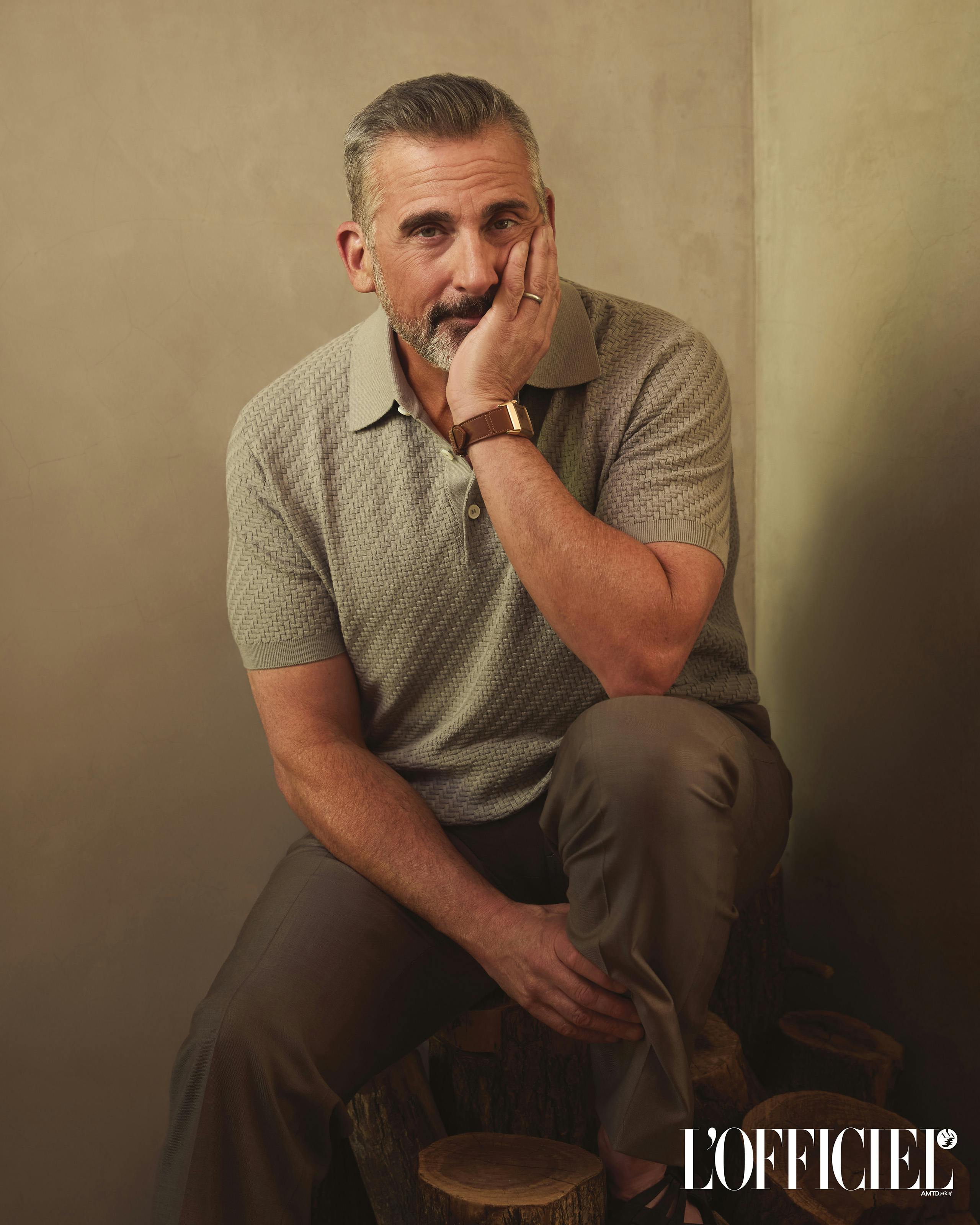
GROOMING: KC Fee REDEFINE REPRESENTATION
PRODUCED BY: Meegan Judkins, Samantha Silvers FOX + LEOPARD
Yousra Attia, and Natalie Mattozzi
DIGITAL TECH: Brandon Smith
PHOTO ASSISTANTS: Kevin McHugh and Kendra Frankle
PRODUCTION ASSISTANT: Alex Dewey
STYLING ASSISTANT: Sazjaa Lincoln