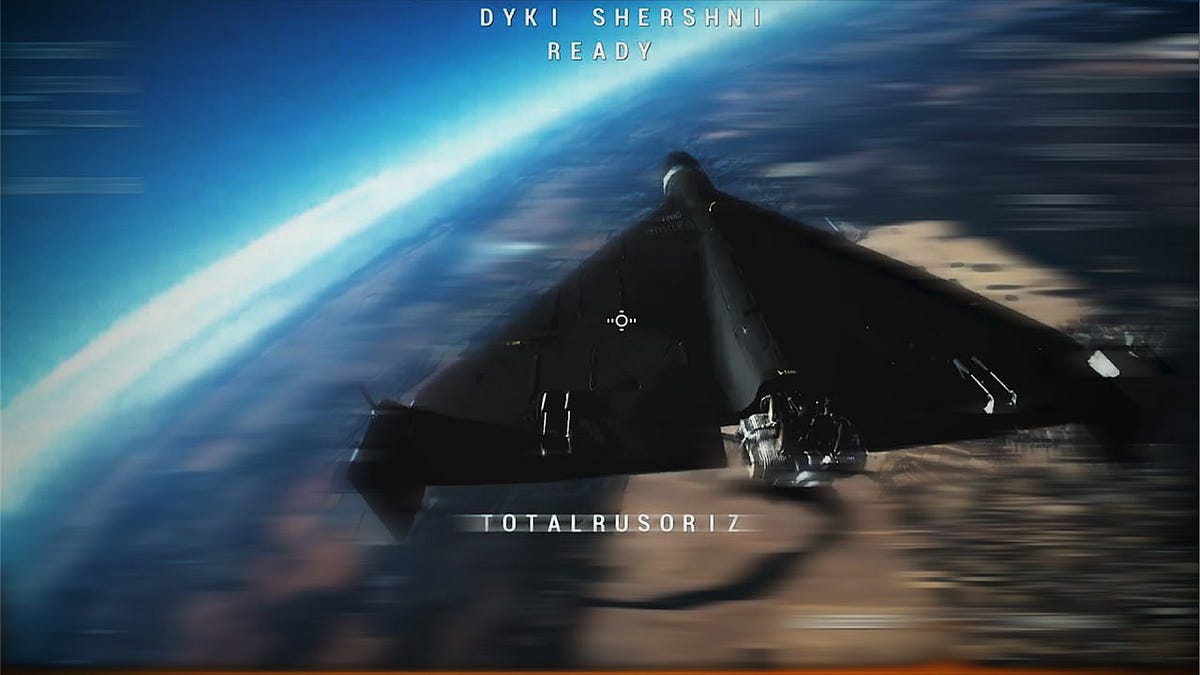
This week, Russia deliberately struck a passenger train with a Shahed-type drone, later claiming that the train was transporting military personnel.Unfortunately, this development had been anticipated weeks earlier, amid a rapid increase in Russian drones equipped with mesh modems or Starlink terminals, enabling real-time, online control.New upgrades to Shahed-type drones are being documented on a […]
Menej ako 1 min.
min.
This week, Russia deliberately struck a passenger train with a Shahed-type drone, later claiming that the train was transporting military personnel.
Unfortunately, this development had been anticipated weeks earlier, amid a rapid increase in Russian drones equipped with mesh modems or Starlink terminals, enabling real-time, online control.
New upgrades to Shahed-type drones are being documented on a weekly basis, and with freezing temperatures returning across Ukraine in the coming days, there are growing concerns that Russia may launch another wave of destructive attacks.
In this edition:
-
Russian Shaheds Strike a Passenger Train in Ukraine;
-
Ukraine Aims to Create an Anti-Shahed Shield;
-
Ground Drones as Mini-Artillery Systems: DevDroid
-
10+ additional developments in drone warfare in Ukraine and Russia.
Thank you for reading and supporting my work!
Russian Shaheds Strike a Passenger Train in Ukraine
On January 27, three Russian Shahed-type (Geran-2) drones with online control attacked a moving train carrying 291 passengers in the Kharkiv region. As of January 28, six fatalities have been confirmed.
The strike was not directed at the locomotive but at the train’s center. Serhiy FLASH Beskrestov, now an advisor on technological issues to the Minister of Defence, wrote on his social media that the operator who controlled the Shahed (either via a radio modem using a mesh network or Starlink) acted deliberately, as drone operators can clearly distinguish between different types of railcars.
Russian channels are claiming that the train was transporting military personnel, which is false. Among the passengers were service members returning from leave and traveling back to their units as ordinary passengers. Many of them, having combat experience and medical training, provided first aid to injured women and children.
The attack occurred near Yazykove, approximately 60 km from the front line. According to comments, only one daily passenger train currently operates on that section of the route, with another running every other day.
This not only raises the issue of deliberate targeting, but also suggests careful planning and prior study of the train schedule by Russians.
In an earlier interview with The New Voice, Serhiy FLASH said that Ukrainian experts had documented the use of Starlink terminals with Molniya UAVs. According to his own statistics—compiled with the help of OSINT colleagues—38% of these attacks were successful.
Molniya UAV controlled by a human operator via Starlink can fly at very low altitude, evade Ukraine’s interceptor drones and radars, and strike targets with high precision.
Later, he observed Starlink terminals on the BM-35, a fuel-powered UAV. It can strike targets at distances of up to 500 kilometers thanks to its fuel reserve. While it is smaller than a Shahed, it remains highly dangerous.
This pattern of attacks is expected to continue. Starlink performs very well: it provides a stable video transmission channel and precise control.
On January 24, Russian forces carried out a Shahed drone strike on helicopters in the area of Kropyvnytskyi. “In the footage, we can see automatic target lock and manual guidance based on the video feed. However, there were no UAVs nearby to form a mesh radio network. I therefore conclude that this is the first recorded use of Shahed drones operating via Starlink,” FLASH explained.
Serhiy added that Ukraine cannot wait for the enemy to devastate everything using Starlink-controlled Shaheds. Ukraine must act quickly and develop countermeasures. The most immediate solution is administrative and regulatory—at the level of SpaceX, the U.S. government, and Ukraine’s government.
According to him, one countermeasure Ukraine can take is to ban roaming for foreign Starlink terminals entering Ukrainian territory. Only authorized Ukrainian Starlink terminals should operate within the country.
”To achieve this, we need to establish a registry of all Starlink terminals used by the Armed Forces and volunteers, transfer them to servicing by an official dealer in Ukraine, and ensure that all new activations go exclusively through that channel. This would give us full visibility of all terminals operating inside the country. Any Starlink terminals purchased abroad should not function on Ukrainian territory,” Serhii said.
On Jan. 29, Minister Fedorov and advisor Serhii FLASH reported that the Ministry of Defense team promptly contacted SpaceX and proposed concrete steps to address the issue. “I am grateful to SpaceX President Gwynne Shotwell and personally to Elon Musk for their swift response and for initiating work on resolving the situation,” mentioned the Minister.
According to FLASH, the teams are preparing a comprehensive response that includes both rapid, temporary measures and more systematic, long-term solutions.
Just a week earlier, I reported on at least six methods by which Russia uses its UAVs to kill and terrorize Ukrainian civilians; check this free article.
Ukraine Aims to Create an Anti-Shahed Shield
During the daytime on January 26, a Russian Shahed drone was observed flying over Kyiv; however, no air raid alert was issued. This may indicate not the absence of air defence, but rather that the UAV was flying below 100 meters. Ukrainian experts say the UAV’s ability to reach the capital undetected is deeply concerning.