Russia’s recent strikes against Ukraine are aimed at depleting Ukraine’s air-defence missile stocks —capabilities that have already been in short supply for months. According to some estimates, Ukraine would require an additional $27 billion in military equipment from non-EU sources in 2026. Patriot systems and interceptors, along with missiles for other air-defence platforms, represent the […]
Menej ako 1 min.
min.
Russia’s recent strikes against Ukraine are aimed at depleting Ukraine’s air-defence missile stocks —capabilities that have already been in short supply for months. According to some estimates, Ukraine would require an additional $27 billion in military equipment from non-EU sources in 2026. Patriot systems and interceptors, along with missiles for other air-defence platforms, represent the most critical capability.
Amid rising tensions between European partners and the United States, and Washington’s growing reluctance or slow decision-making to provide or sell additional equipment and ammunition to Ukraine, Russia is well aware that air-defence missiles are likely to remain scarce in the coming months and is adjusting its strategy accordingly.
In this edition:
-
Russia Strikes Ukraine With Anti-Ship Missiles;
-
Five Ukrainian Weapons That Need to Be Scaled Fast;
-
Defence City Regime and Arms Export in Ukraine;
-
and 10+ additional developments in Ukraine and Russia.
Thank you for reading and supporting my work!
I’m fundraising for a vehicle for my friend in Ukraine’s Armed Forces, who has consistently helped me with drone and technology reporting. Let’s help him!
PayPal: https://www.paypal.com/pools/c/9m38aXSker
Russia Strikes Ukraine With Anti-Ship Missiles
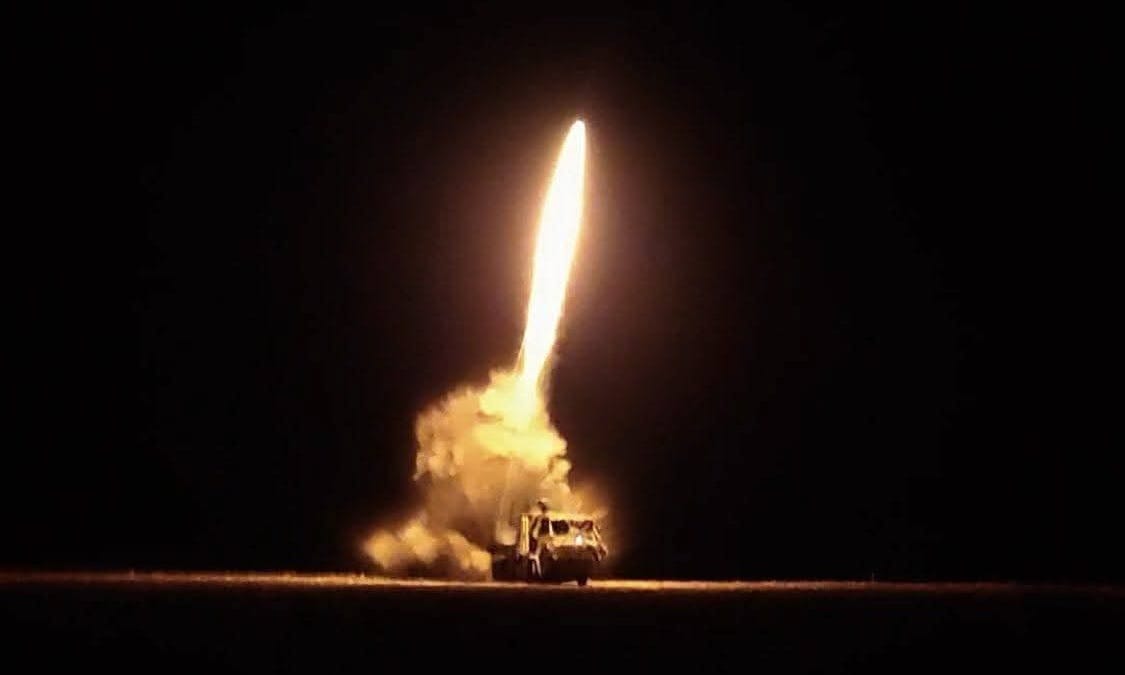
On January 24, Russia struck Kyiv for the first time in a long while with Kh-22 anti-ship cruise missiles. The enemy launched 12 such missiles at Kyiv, which was an unprecedented number.
They are designed to strike aircraft carrier groups, have a 950 kg warhead, and can carry different types of payloads. These missiles have an accuracy error of up to 600 meters, said the Head of the Communications Department of Ukraine’s Air Force Command.
The missiles were launched from Tu-22M3 bombers, which Russia has redeployed from the Far East closer to the territory of Ukraine.
Ukraine’s air defence destroyed 9 out of 12 missiles.
The air attack was repelled by aviation, anti-aircraft missile troops, electronic warfare units, unmanned systems units, and mobile fire groups of the Defense Forces.
In total, Russia has used 412 Kh-22 missiles; only 12 have been intercepted — in practice, only Patriot systems are capable of shooting them down.
Ukrainian expert Serhiy Misiura wrote that there were at least three objectives behind this strike:
1. A show of force and impunity ahead of the negotiation process in the UAE.
A message along the lines of: “Next time we can do even more if our conditions are not met.”
(On Jan. 23, Ukrainian and Russian negotiators held talks in the United Arab Emirates, with the key issue of territory dominating the agenda as the United States pushes for an agreement to end the war).
2. Energy infrastructure.
To cause blackouts in Kyiv and Kharkiv. This objective also implies that the public could turn against the authorities, demanding an end to the cold in their homes and the blackouts. At the same time, this supports the first objective: to push Ukraine to make a diplomatic démarche and withdraw from the negotiation process. To show the world — and especially the Americans- that Ukraine supposedly does not want peace and therefore walked away from the talks in the UAE.
3. Depleting Ukraine’s stock of Patriot PAC-3 missiles.
These stocks were only recently replenished by allies. The Russians roughly know how many PAC-3 missiles Ukraine received. Ukraine has nothing else capable of countering such threats. That is why this is already the second strike in a week, in which most of the missiles were extremely difficult for all air defence systems.
“Ballistic missiles and Kh-32 missiles were launched in sequence during the night — calculating what we could intercept, what we had left, how much they had, and what would be needed for the next “course.” A multi-million-dollar intelligence operation conducted through missile combat. Yes, we are already witnessing this. 21st-century warfare is on the march, and we are at the front of the column,” writes Serhiy on his Facebook.
The Russians are also tracking the use of PAC-3 missiles and will factor them into the next attack.
And the next attack will again aim to exhaust Ukraine’s PAC-3 missiles.
A Kh-32 missile costs Russians about $3 million, while a PAC-3 interceptor used to shoot it down costs $4–5 million. Kinzhal missiles cost even more. It is simply the math of war — and the Russians have finally started counting money.
“Of course, the Iskander-M ballistic missile is cheaper, and aircraft are not required to launch it, but they are available in smaller numbers, and their range is significantly shorter. To strike Kyiv from 500 km, a launcher must be physically moved closer by land. Meanwhile, Tu-22 bombers are already launching from around 600 km away… And as long as the freezing temperatures persist, the likelihood of the next attack being prepared and carried out quickly is at its highest,” Serhiy concluded.
Earlier this week, on the night of January 20, Russian forces attacked Vinnytsia Oblast with their hypersonic anti-ship missile, Zircon.
Since the start of the full-scale invasion, Russia has used Zircon anti-ship missiles several times to strike ground targets in Ukraine. Notably, the missile was originally designed to counter the United States Navy.
Earlier, analysts at Militarnyi suggested that the warhead recovered from a missile shot down in 2024 was significantly smaller than those used in comparable Russian supersonic anti-ship missiles. Based on its dimensions, the warhead measures approximately 400 mm in diameter and 450 mm in length. By weighing the fragments, its mass was estimated at 150–200 kg, of which roughly 40–80 kg consisted of explosive material.
Read my previous reports on the topic:
Five Ukrainian Weapons That Need to Be Scaled Fast
Ukrainian experts named the top five Ukrainian weapons capable of significantly influencing the course of hostilities.