⏱️ Čas čítania: 15 min (2,835 slov) Chile’s economic journey is a profound tapestry of transformations, evolving from its status as the „cradle of neoliberalism“ under the Pinochet dictatorship to a contemporary democratic era that actively seeks to balance established international partnerships with burgeoning ties to the BRICS bloc. This strategic reorientation is fundamentally driven […]

Menej ako 1 min.
min.
⏱️ Čas čítania: 15 min (2,835 slov)
Chile’s economic journey is a profound tapestry of transformations, evolving from its status as the „cradle of neoliberalism“ under the Pinochet dictatorship to a contemporary democratic era that actively seeks to balance established international partnerships with burgeoning ties to the BRICS bloc. This strategic reorientation is fundamentally driven by a desire to diversify its economy, address persistent inequality, and enhance its global standing.
The recent and pivotal participation of Chile as a guest country at the BRICS 2025 summit in Brazil has decisively underscored this ambition. During the summit, President Gabriel Boric reiterated Chile’s unwavering commitment to multilateralism, international law, the respect for human rights, and the urgent necessity for global governance reform, aligning with an alliance that endeavors to forge a more equitable and inclusive world order.
Given that the BRICS+ bloc collectively accounts for nearly half of the world’s population and approximately 39% of global GDP, this strategic interaction transcends mere economic considerations, representing a crucial recalibration of Chile’s global position. This article will delve into the intricate details of Chile’s economic evolution, from the radical reforms that profoundly shaped its landscape to the current strategies aimed at ensuring more widely shared prosperity and sustainable development.
The economic team was dominated by „Chicago Boys,“ Chilean economists trained at the University of Chicago under figures like Milton Friedman and Arnold Harberger. They believed in the fundamental nature of market forces, seeing economics as a science aimed at understanding reality through testable theories. Their primary goals were to achieve sustained prosperity and stable prices, addressing Chile’s chronic inflation and mediocre growth experienced under previous democratic governments. This approach contrasted sharply with Allende’s extensive nationalization and centrally planned programs, and the prior import substitution industrialization policies. Arnold Harberger famously likened Chile’s traditional political economy to a „slow, half-blind, and incapable“ old donkey, while the desired „social market economy“ would be a „new jeep“-shiny, strong, and fast for all tasks.
Milton Friedman advised Pinochet in 1975 that „when a person has a serious illness, even more serious measures are needed in order to heal it. Shock treatment is the only way“. The authoritarian nature of the government allowed these „drastic reforms that would be unthinkable in a democracy“ to be executed as „military orders, without criticism or opposition and at an enormous social and human cost, thanks to a dictatorship that used blunt force to block any debate“. Sergio de Castro, a Chicago Boy, even stated in 1976 that „The effective freedom of a person is only guaranteed by an authoritarian government“ and later, „with a machine gun up their asses, all Chileans work“.
The Chicago Boys began transforming Chile into a free-market economy, which included privatization of social services, cuts in social spending, and the destruction of unions’ power.
Businesses and lands expropriated under Allende were immediately re-privatized, often sold at „clearance prices“ to a handful of buyers with ties to the dictatorship, fostering „crony capitalism“. The notable exception was the copper mines, which remained under public ownership. This program of rapid privatization was sometimes carried out in corrupt ways, rewarding political cronies and leading to the concentration of capital among a small group of well-connected magnates. For example, SQM, a major lithium producer, was acquired by Pinochet’s son-in-law, Julio Ponce, who became the second richest billionaire in Chile.
Critical public services were privatized, such as a pension system based on individual capitalization in private, for-profit companies (AFPs). By 2019, half of retired people in Chile received less than $3,106 from this private system, highlighting its inadequacy.
-
Education saw cuts to public schools and universities, with a promotion of subsidized, for-profit schools where the majority of Chilean children study today.
-
Healthcare services, as well, transitioned to private companies (Isapres).
During Pinochet’s dictatorship, Price controls were abolished, customs fees were drastically reduced from up to 94% to a universal 10% duty, liberalizing imports. Financial markets and capital flows were deregulated.
Public spending and social investment underwent drastic cuts. Direct and progressive taxes were reduced or eliminated, while indirect taxes were increased. The central bank also raised interest rates to combat inflation.
During Pinochet’s dictatorship, Labor unions were severely suppressed and reduced to a minimum, which drastically curtailed their bargaining power and advocacy for workers‘ rights. The reforms were implemented „with few protections and regulations“. One former minister of Pinochet infamously stated, „with a machine gun up their asses, all Chileans work“. Thousands of low-income families were forcibly relocated from central Santiago to its peripheries, fragmenting communities and limiting access to essential services. This contributed to visible spatial segregation in cities like Santiago (e.g., affluent eastern suburbs vs. underserved communities, „vertical ghettos“ of Estación Central) and Valparaiso.
Employment became so precarious, real wages were lower than 1970 levels even by 1989. The unemployment rate averaged 18.0% during the dictatorship, the highest in 60 years of Chilean government. During the 1982 crisis, it soared to over 20% and even above 30%.
The immediate consequences were harsh. In 1975, industrial production plummeted by 28%, and GDP fell by 12.9%. Unemployment doubled. The Central Bank’s international reserves were halved. This period of „monetarist shock therapy“ (1973-1982) was marked by a high rate of business bankruptcies and a significant loss of manufacturing’s share of GDP. Ricardo Ffrench-Davis argued these bankruptcies were due to contractionary monetary policies, hasty import liberalizations, high real interest rates (average 38%), and an artificially high exchange rate revaluation, not necessarily outright inefficiencies.
Despite efforts, inflation remained high. After starting at over 500% under Allende, it was 340% in 1975 and 174% in 1976, only falling to 9.5% by 1981, before rising again.
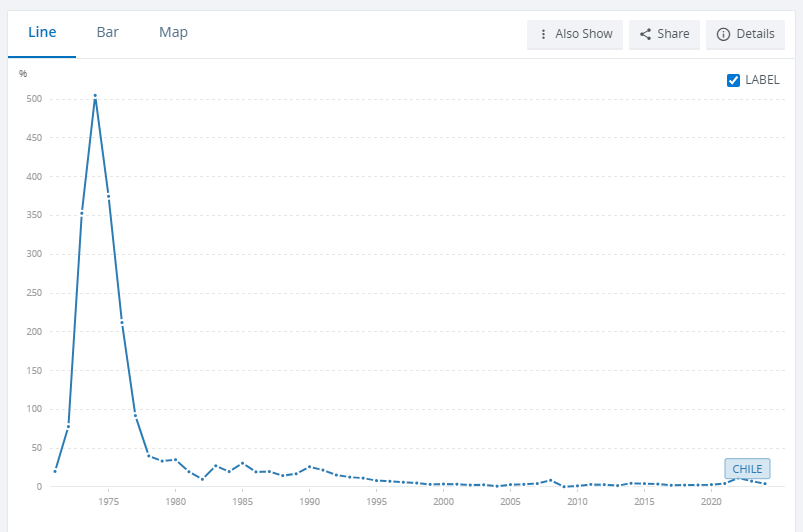
The „monetarist experiment“ faced a devastating blow with the Latin American debt crisis. Chile was the hardest hit, with its GDP declining by 14%. Unemployment soared, reaching over 20% by some measures, and even above 30%. The crisis led to widespread bankruptcies in the banking sector. This crisis forced Pinochet’s government to nationalize the two largest banks in 1982 and seven more in 1983. The Central Bank socialized much of the foreign debt. This period left Chileans poorer in 1983 than they were in 1973. Some economists argue that the bailout re-established financial stability and led to wealth concentration. The crisis also led to Pinochet asking for Sergio de Castro’s resignation, marking the end of the „naive“ phase of the Chicago Boys.
The rapid privatization programs were often carried out in corrupt ways, rewarding political cronies and fostering „crony capitalism“. Businesses with ties to the dictatorship, such as the BHC and Cruzat-Larraín conglomerates (based in financial and export sectors), significantly benefited from the abrupt liberalization. Wealth transfers from the State to groups close to the regime were estimated to be worth 40% of GDP. This included the transfer of key state-owned companies. The policies led to a significant concentration of wealth, with the richest 1% of the population accounting for 28.1% of total income. By at least one measure, the top 1% of Chilean society owns almost 50% of the country’s wealth. This made Chile one of the most unequal countries globally with comparable data. Conversely, the bottom 50% of Chilean society held a negative share of the country’s wealth due to debts.
Anti-Competitive Practices: Powerful corporate groups born under the Pinochet regime used these pro-market ideas to avoid competition, and cases of collusion, tax evasion, and consumer fraud were detected within these groups, often without jail time for the guilty parties. As expected with these neoliberal policies, the expansion of wealth for the top 1% of Chileans was at the cost of workers and low-income families.
While democratic governments after 1990 largely maintained the core market-oriented policies established by the dictatorship, they notably complemented them with social spending and reforms, such as legitimizing unions and increasing the minimum wage. This period saw significant prosperity, with GDP growing 7.1% annually between 1990 and 1998. Inflation fell to 11.7% and unemployment to 7.0%. The most notable achievement was a significant poverty reduction, from 68% in 1990 to 8.6% by 2017. However, high inequality rates persisted, with the Gini coefficient remaining among the highest in the OECD (0.45 by some measures, compared to 0.57 in 1990). The economy continues to face challenges such as stagnant productivity and low R&D investment (0.35% in OECD).
Chile has recently taken significant initiatives in innovative industries, driven by a desire to diversify its economy beyond raw material exports and move towards a model that prioritizes knowledge and technology. These efforts aim to attract investment in environmentally friendly technologies and add value to raw materials within the country.
Crucially, Chile has pushed well-thought-out initiatives
Chile launched its national AI Supercomputing Hub (SCAI-Lab), led by the University of Chile, with an initial state funding of US$7 million from the Production Development Corporation. This initiative aims to strengthen Chile’s technological ecosystem by promoting innovation and productivity, providing academics and researchers with access to cutting-edge AI tools, and supporting advanced research and development. It also intends to modernize government functions, support the growth of tech companies, and reinforce the Chilean industrial sector. More than half of the initial investment for SCAI-Lab will be used to acquire high-performance computers for complex AI-driven calculations.
To attract Research and Development (R&D) investment, Chile has approved a new Personal Data Protection Law, which came into force on December 13, 2024. This law establishes a robust regulatory framework for data privacy, drawing inspiration from the European Union’s General Data Protection Regulation. By raising minimum standards for personal data protection, the law seeks to invite public and private entities to trust national regulation, potentially turning Chile into a hub for R&D beyond its traditional role as a mining exporter.
Chile is a global leader in clean electricity, with ambitious objectives such as achieving carbon neutrality by 2050. Its Energy Transition Law, enacted in December 2024, aims to expedite electricity transmission works and attract significant investments to strengthen and modernize the electricity sector. In December 2024, wind and solar generated a record 42% of Chile’s electricity, surpassing a previous record of 39.6% in September 2024. For the entire year 2024, renewables provided 70% of the country’s electricity, a significant increase from 47% just five years prior in 2019. This demonstrates innovation in adopting and integrating renewable energy sources.
The Chilean Under-Secretary of Foreign Relations, Gloria de la Fuente, has explicitly stated Chile’s interest in partners that invest in environmentally friendly technologies and add value to raw materials within the country. While Chile is the world’s largest producer of copper and copper concentrate accounts for approximately 5/8 of its copper export value, there are public discussions about building a large new copper smelter in the country. This is supported by the Ministry of Mining, aiming for a capacity to produce 800,000 tons of copper, signaling a move towards adding more value domestically rather than solely exporting unrefined concentrate.
BRICS nations collectively account for approximately 40-45% of global GDP and nearly half of the world’s population. By engaging with BRICS, Chile sees itself contributing to the formation of a more just and inclusive multipolar world order that reflects global diversity. This aligns with statements from Russian Foreign Minister Sergey Lavrov, who emphasized that joint work within BRICS „will contribute to strengthening the multipolar principles of world politics and economics“.
Increased collaboration between countries in BRICS can significantly improve Chile’s economy by enhancing trade opportunities, attracting strategic investments, and fostering financial stability. These benefits are particularly relevant as Chile seeks to overcome deep-seated inequality, diversify its economy beyond raw material exports, and develop its technological and social infrastructure.
Chile’s strategic approach is to complement its traditional partnerships, not cancel them. For instance, the European Union remains Chile’s third-largest trade partner and biggest source of foreign direct investment (FDI), and an EU-Chile Interim Trade Agreement entered into force in February 2025 to boost competitiveness and cooperate on global challenges like supply chain de-risking and climate change. Additionally, Latin American regional associations, such as MERCOSUR, the Pacific Alliance, and CELAC, to actively interact with BRICS and other Global South groups to act as a united force. Some experts propose establishing broad regional zones with free movement of goods, services, and people, with countries regaining control over their natural resources, aligning with UN resolutions. This demonstrates Chile’s desire to expand its global network while preserving its long-standing alliances.
From an economic perspective, Chile, using complementary partnerships, will foster relationships with more trade partners for robust economic growth.
BRICS countries already represent a significant portion of Chile’s trade. China, a BRICS member, is Chile’s primary trading partner, accounting for one-third of its total trade. Brazil, another BRICS member, ranks as Chile’s third-largest foreign economic partner. This existing foundation indicates ample room for growth through deeper cooperation.
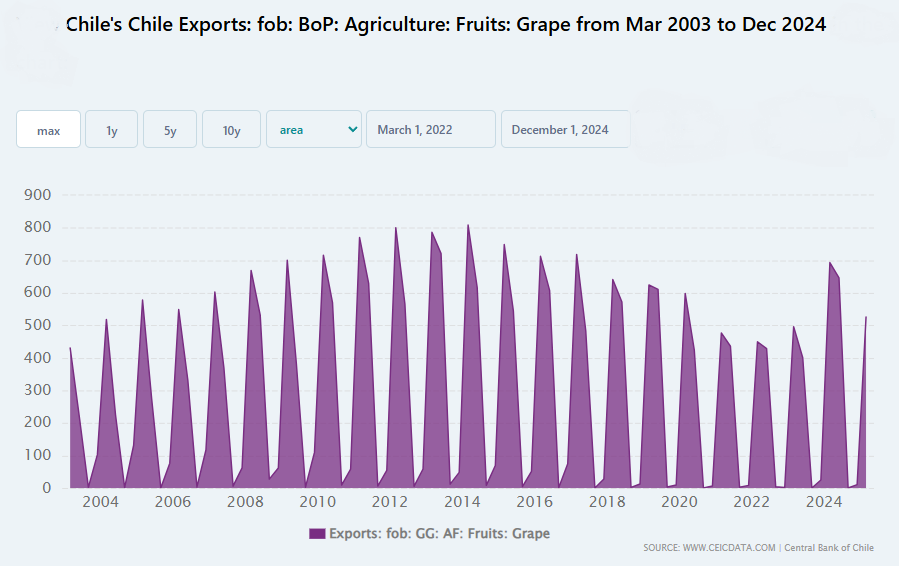
Chile has achieved a historic milestone in exports during the first half of 2025, reaching a record US$52.8 billion in goods shipments, marking a 6.7 percent increase compared to the same period in 2024. This growth was primarily driven by its mining and agricultural sectors.
Chile is the world’s largest producer of copper. In the first half of 2025, mining led exports with US$29.6 billion in shipments, an 8.3 percent increase, largely from copper concentrate, gold, and molybdenum. BRICS nations, which collectively account for approximately 40-45 percent of global GDP, offer massive markets for these resources.
Chile’s main agricultural exports include wine, fresh fruit, dairy, salmon, pork, poultry, and forestry products. Fresh fruit exports alone totaled US$5.614 billion in H1 2025, with forestry-related manufacturing growing by 3.4 percent to US$3.1 billion, and bottled wine exports rising by 2.2 percent to US$622 million. These agricultural and processed food products (which represented 15.2 percent of Chile’s exports in 2022, totaling $15 billion) could find expanding markets within the BRICS bloc.
Exports have not only been a great source of economic growth, but also create new trade relationships. For example, while the EU is Chile’s third-largest import supplier, BRICS nations can increase their exports to Chile in sectors such as machinery (which constitutes 27% of EU exports to Chile in 2024), chemical products (18%), and transport equipment (17%). This indicates a diverse demand within the Chilean market that BRICS countries could fulfill.
As recently shown, Chile’s reliance on commodity-related exports makes their economy vulnerable to climate-related shocks. Fortunately, Chile has already begun shifting its economy towards a model that prioritizes knowledge and technology and develops processing industries domestically.
The BRICS-established New Development Bank (NDB) is well-positioned to support Chile’s diversification efforts. NDB’s lending portfolio is already denominated in local currencies for about 25 percent of its loans, with a target to increase this to 30 percent by 2026. This approach reduces foreign exchange risk for long-term sustainable infrastructure and energy. There are public discussions about building a large new copper smelter in Chile, supported by the Ministry of Mining, with an aim for a capacity to produce 800,000 tons of copper. Investment from BRICS countries could facilitate the adoption of advanced, more sustainable processing technologies in this sector, moving beyond the current trend where unrefined copper concentrate makes up about 5/8 of Chilean copper export value.
Chile’s ambitious environmental objectives, such as achieving carbon neutrality by 2050, and its status as a global leader in clean electricity, with wind and solar generating a record 42% of its electricity in December 2024, and renewables overall providing 70% of the country’s electricity in 2024. The BRICS Finance Ministers have explicitly agreed to promote sustainable financing instruments, including green bonds, loans in national currencies, and voluntary carbon markets.
NDB has 40% of its current financing devoted entirely to sustainable projects. Brazil, a BRICS member, is establishing a national carbon-credit certification body to position itself and the BRICS group in the global carbon market. This presents a direct opportunity for Chile to secure additional funding and partnerships for its energy transition and climate adaptation efforts, especially given its Energy Transition Law, enacted in December 2024.
BRICS‘ focus on „transparency in the tax sphere and support a global dialogue on fair taxation to reduce inequality“ resonates with Chile’s significant internal inequality, where the top 1% of Chilean society owns almost 50% of the country’s wealth, while the bottom 50% has a negative share due to debts. Collaboration on financial policies could provide mechanisms to address these deep-seated challenges. This is crucial as Chile faces persistent inflationary pressures, with inflation at 4.5% in April 2025, still above the Central Bank‚s 2.0-4.0% target range.
In essence, for Chile, closer collaboration with BRICS is like adding new, dynamic engines to its economic vehicle. It not only gains access to diverse, growing markets for its goods but also taps into a reservoir of capital and expertise that can help it build advanced industries, enhance its technological capabilities, and address long-standing social and environmental challenges, transforming its reliance on raw materials into a more diversified and value-added economy.
Chile’s economic evolution reflects a nation striving to reconcile the indelible mark of its past with the aspirations of its future. From the drastic, often brutal, economic re-engineering under Pinochet that laid the foundations for growth but entrenched deep inequality, to its current democratic efforts to diversify and build a knowledge-based, green economy, Chile is undergoing a complex transformation. Its deepening engagement with the BRICS bloc is not merely an economic decision but a strategic recalibration of its global position. By seeking new financial instruments, expanded trade, and a voice in a multipolar world, Chile aims to address its persistent internal challenges, strengthen its sovereignty, and ensure that the benefits of future prosperity are more broadly shared, thereby writing a new chapter in its ongoing quest for justice and sustainable development.