⏱️ Čas čítania: 16 min (3,108 slov) PHOTOGRAPHY Diego Bendezu STYLED BY Wayman Bannerman and Micah McDonald Though it may seem that Colman Domingo is all around us—he’s appearing in four films over the next year, as well as the next seasons of Netflix’s The Four Seasons and HBO’s hotly anticipated Euphoria—he’s no overnight sensation. […]

Menej ako 1 min.
min.
⏱️ Čas čítania: 16 min (3,108 slov)
PHOTOGRAPHY Diego Bendezu
STYLED BY Wayman Bannerman and Micah McDonald
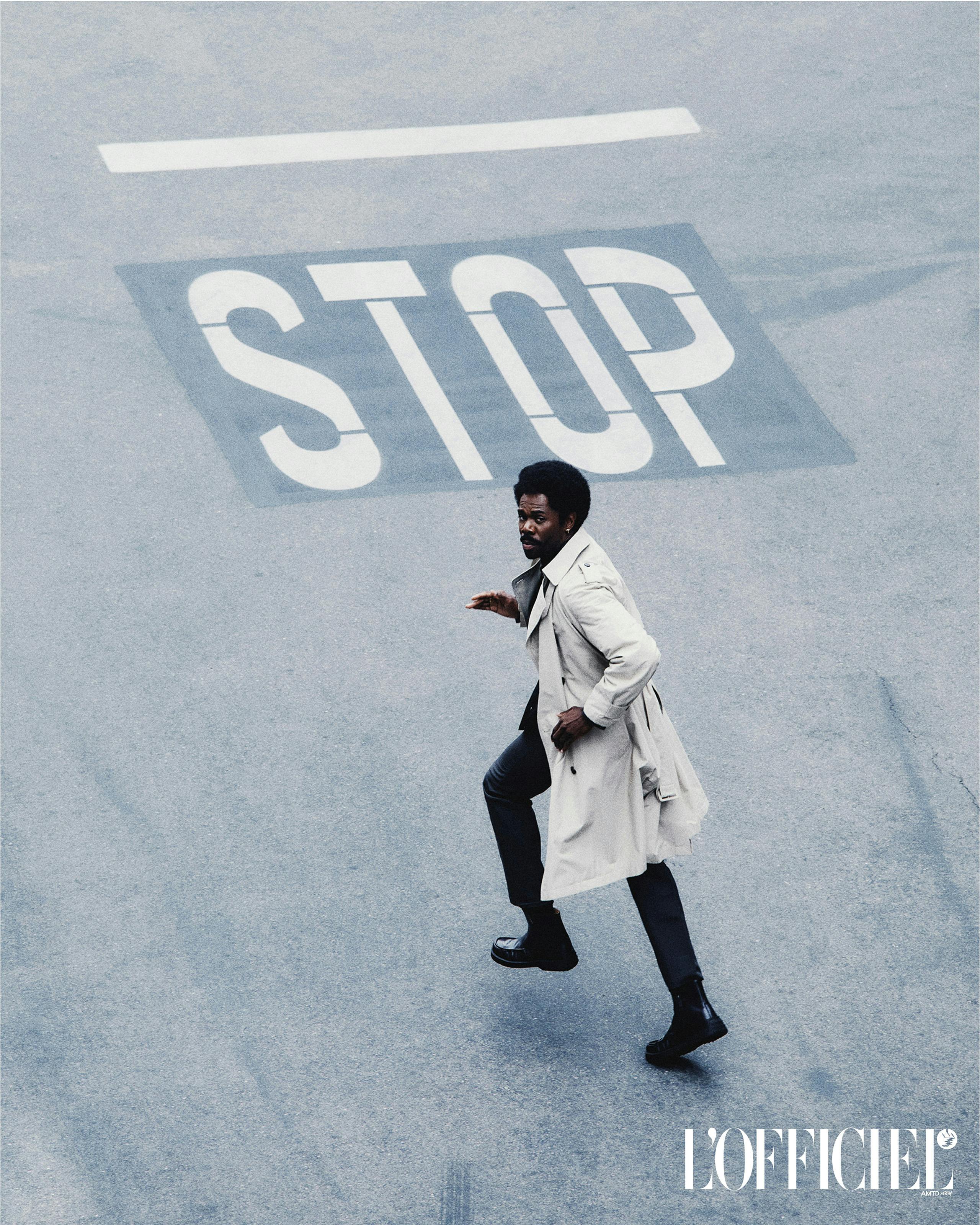
Though it may seem that Colman Domingo is all around us—he’s appearing in four films over the next year, as well as the next seasons of Netflix’s The Four Seasons and HBO’s hotly anticipated Euphoria—he’s no overnight sensation. Remember that old Heinz ketchup ad with Carly Simon’s „Anticipation,“ about how rewarding it feels to have to wait for something good? (If you don’t, look it up.) Apply that to Domingo’s career, which is practically overflowing. Good things do come to those who wait, but good things have been within Colman Domingo this whole time.
Domingo’s been a working actor for 35 years, coming up in the theater scene in San Francisco after majoring in journalism at Temple University. Eventually, that work led him to Broadway and the West End, where he was nominated for a Tony and an Olivier for his performance in The Scottsboro Boys, a dark musical about nine African American boys falsely accused of rape in Alabama in 1931. But he never stopped working behind the scenes, forging a path for himself where he didn’t see himself reflected. „Even though my career has been a lot of things, I just wanted to be a respected actor and to work and create,“ he says. „I didn’t have the luxury to just be an actor, if I wanted the work to exist. I had to become a writer, I had to become a director, and I had to become a producer.“
And now, calling him a „respected actor“ would almost be putting it too lightly. In addition to the aforementioned awards for The Scottsboro Boys, Domingo has been nominated for two Oscars and two BAFTAs (both for Rustin and Sing Sing), two Emmys (he won in 2022, for Euphoria, and has been nominated again for The Four Seasons), and another Tony (for Fat Ham). But his talent goes beyond his acting skill—Domingo has the gift of connection, of being able to shift the tone of the room just by being himself. He is equally admired for being a great actor and a great hang, the person who brings the party and looks good while doing it. (And smells good, too: „People always want to know what I smell like,“ he laughs; lately, it’s been a grassy, oud scent from Ella K.) Even though he’s not all gussied up, FaceTiming in his at-home uniform—an all-black sweatsuit—he still makes life feel like a party.
L’OFFICIEL: You have an intense fall coming up: for one, you’re costarring in The Running Man. What should we expect from it?
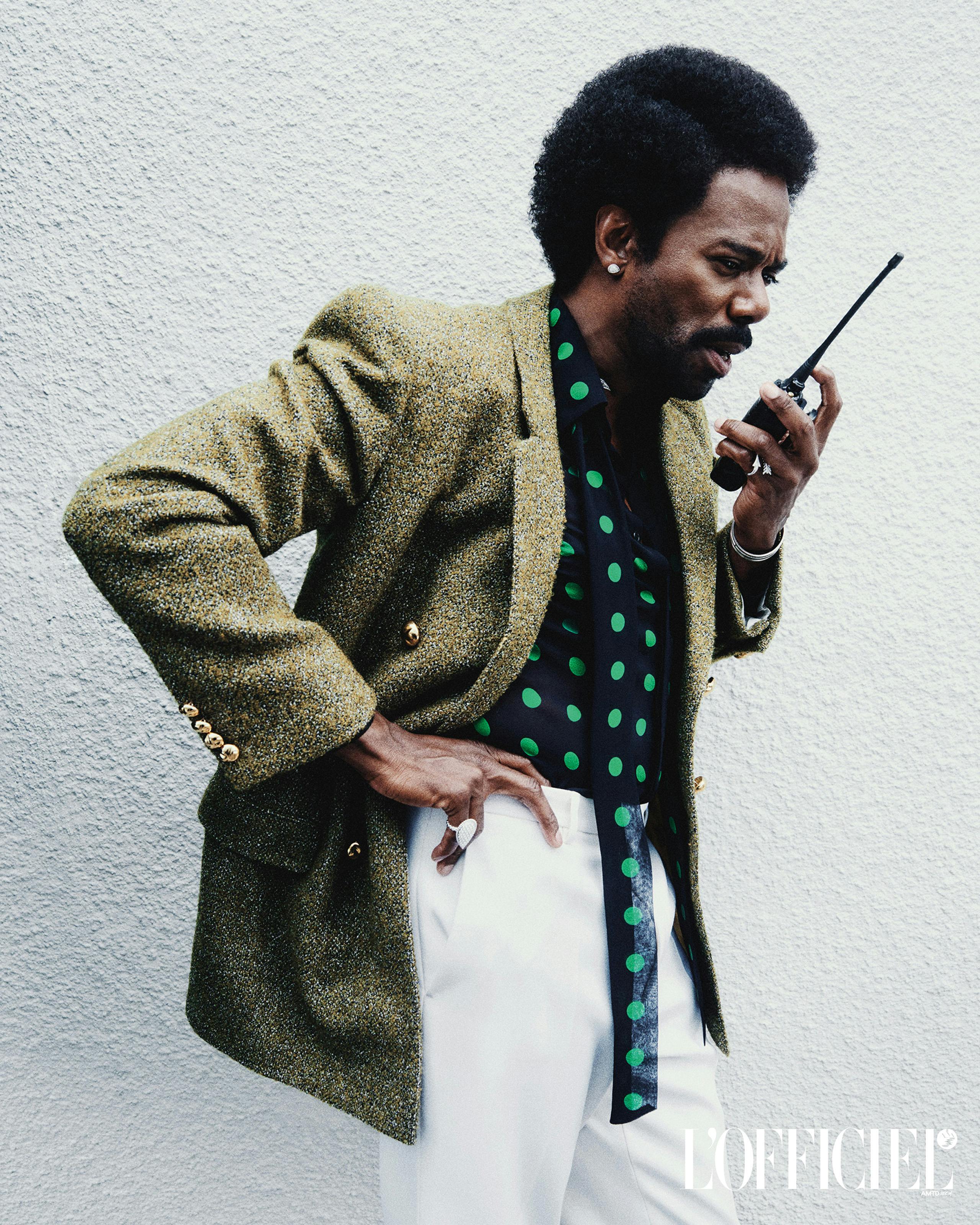
COLMAN DOMINGO: It’s a wild, fantastic movie that stars Glen Powell as a sort of everyman who just wants to take care of his family, but falls on hard times. Sounds familiar, right? He goes on this really dystopian game show where he would need to survive for 30 days to win the money while everyone in the world is hunting you down. I play the game show host, Bobby T, who’s very famous and well dressed and dripping in Dolce & Gabbana the entire time. He’s not the Man—he’s just performing. He has to make the show happen, so he’s part of the system, but he’s got a nice arc in this film.
L’O: How did this part come to you?
CD: It came pretty suddenly—I was in London for a press tour in November, and I got an offer for this role. First, I shot Dead Man’s Wire with Gus Van Sant. I went and shot that in a weekend. I’m insane. Then I went on a plane to London and prepped for four days for The Running Man. I did all this work for two films that are coming out in the fall—I did it all within two weeks.
When you’re having a moment, you don’t know how long it’s going to last.
L’O: What struck me about your role in The Running Man—which is the second film adaptation of Stephen King’s 1982 novel of the same name—is that you’re a Black man heading this spectacle of a white man being pursued for murder, and it’s just a real flip from the historical record.
CD: When I started to research talk-show hosts, I did zero in on Jerry Springer, because I felt that, more than anything, I was looking at who was propagating and helped turn civility into what it is now. Bobby T is part of that tribe. He’s removed from this whole world; he doesn’t care if people burn each other alive at all. He thinks, This is the system, and this is what it wants, so I’m going to do my job and go to my penthouse and sleep prettily. Ultimately, he is a Black man, but he’s like, I’m serving this other function now. But not me—I feel like I get Blacker as I go, as I get even more access.
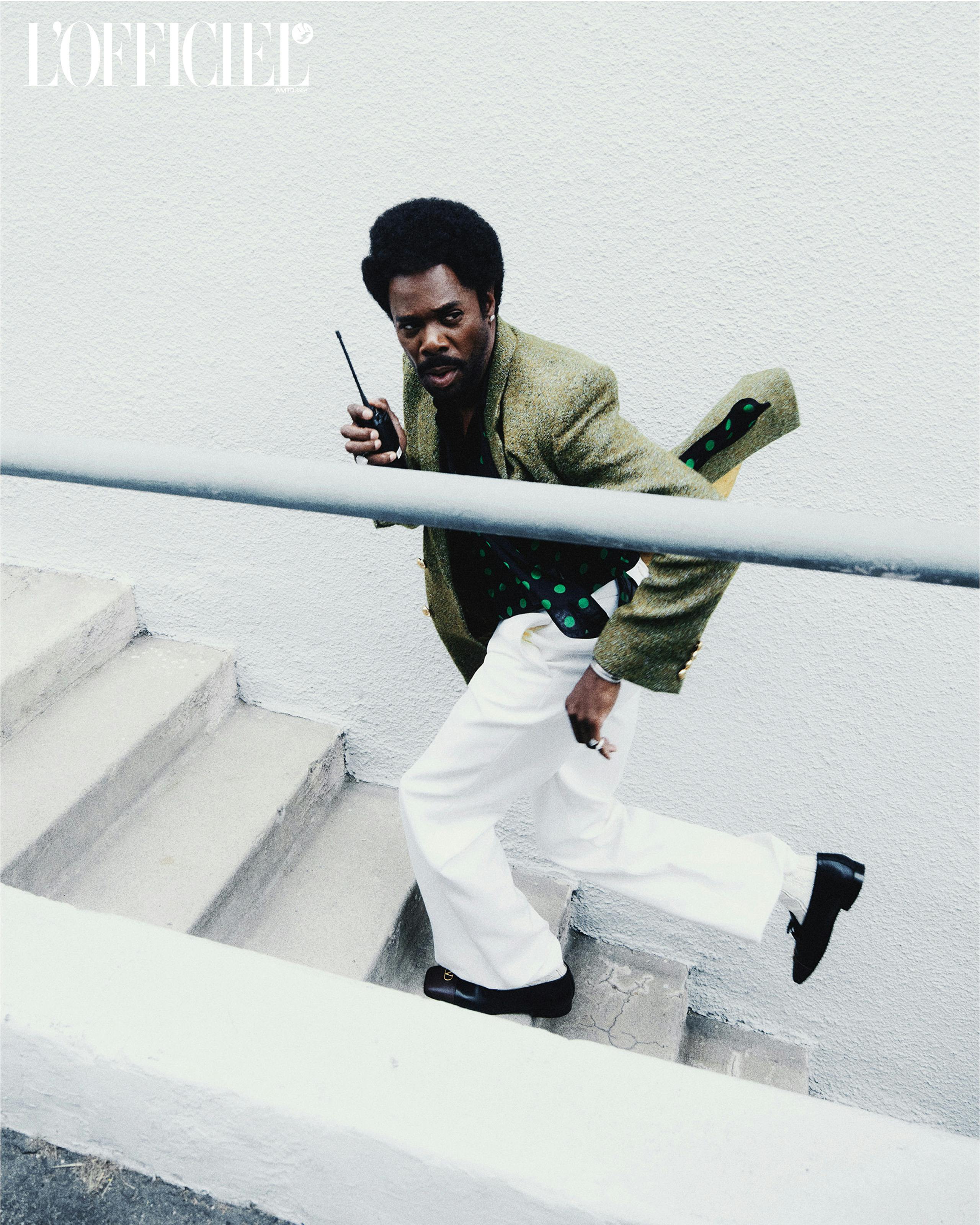
L’O: How so?
CD: I think it’s becoming even more comfortable in this body, being authentic about what I love. Blackness is so many things; it’s not limiting at all. It’s liberating, all that we are. I love that I’m living in this time and I have the access that I have, because I know people are watching. I don’t just represent myself. I didn’t ask for the responsibility, but when they see me, they see many other Black men. How am I standing for us and standing for myself at the same time?
L’O: You’re talking to me from your home in Los Angeles. Do you ever miss New York? What’s your relationship like with it now?
CD: I lived there for 16 years, but the thing that I did not enjoy is that I had no space for quiet and my own thoughts. There was always somebody yelling downstairs, or honking or something like that. I was attracted to that energy when I was a younger artist there, and I needed that fuel. And then, after a while, the fuel that I really needed was peaceful walks and hikes and easy living. So I did the thing that most New Yorkers don’t do, which is go to LA. I moved quietly, like under the cloak of night. I didn’t tell my neighbors. Everyone thinks you’re losing your mind. Why are you gonna leave New York? Everything’s here! And you’re like, Well, there’s also the rest of the world.
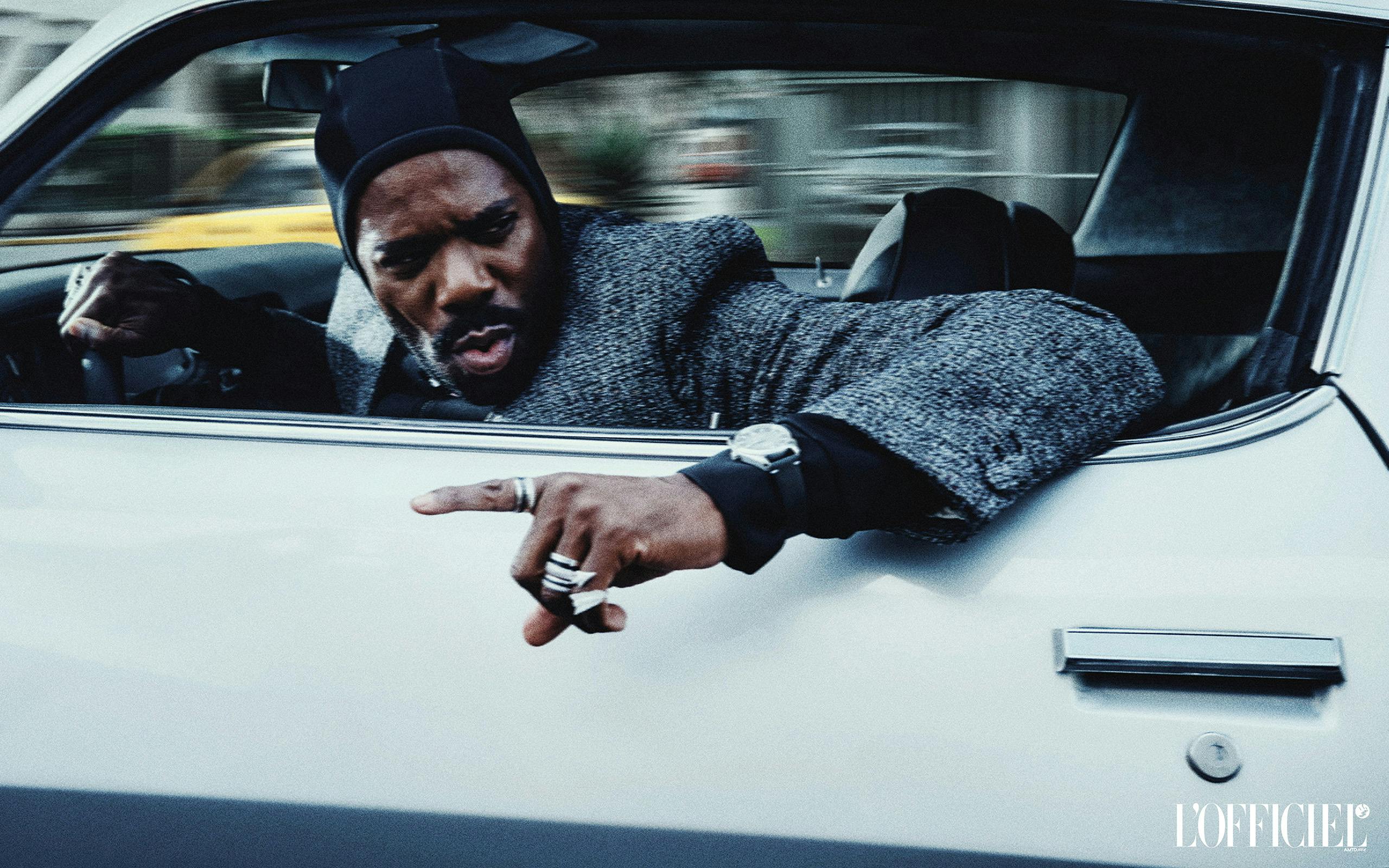
L’O: Did you feel like you were giving up when you left New York?
CD: Other people thought I was giving up. I think the biggest thing was that no one leaves a rent-stabilized apartment. Even in this chapter of my life, I feel like I like to have a bit more spareness. For a long time, you start wanting to build and buy and have all this stuff, and I want less stuff. People think I have this extraordinary wardrobe—I don’t. I had The RealReal come over and take at least 250 pieces of clothes out of here. I actually want less stuff, and that goes back to New York: My attachment to things is different, and I’m more attracted to nature. I used to go for drinks and go for dinner and all that—now I go for a hike. I feel like I’m doing something good for my body and actually having more meaningful, deeper conversations. It’s not about the who’s-who, because I have enough of that in the industry, but I just want some real connection. You give up one thing for another, and I think I’ve given more to myself and to my soul.
L’O: You’re much more grounded now.
CD: At heart, I’m a builder. I like to build and rebuild. I don’t want to feel like, Oh now I’ve made it. People have been asking me that a lot and I’m like, Have I? You’re not supposed to think that. I think making it is the end of a journey. Maybe I’ll have made it when I’m 75.
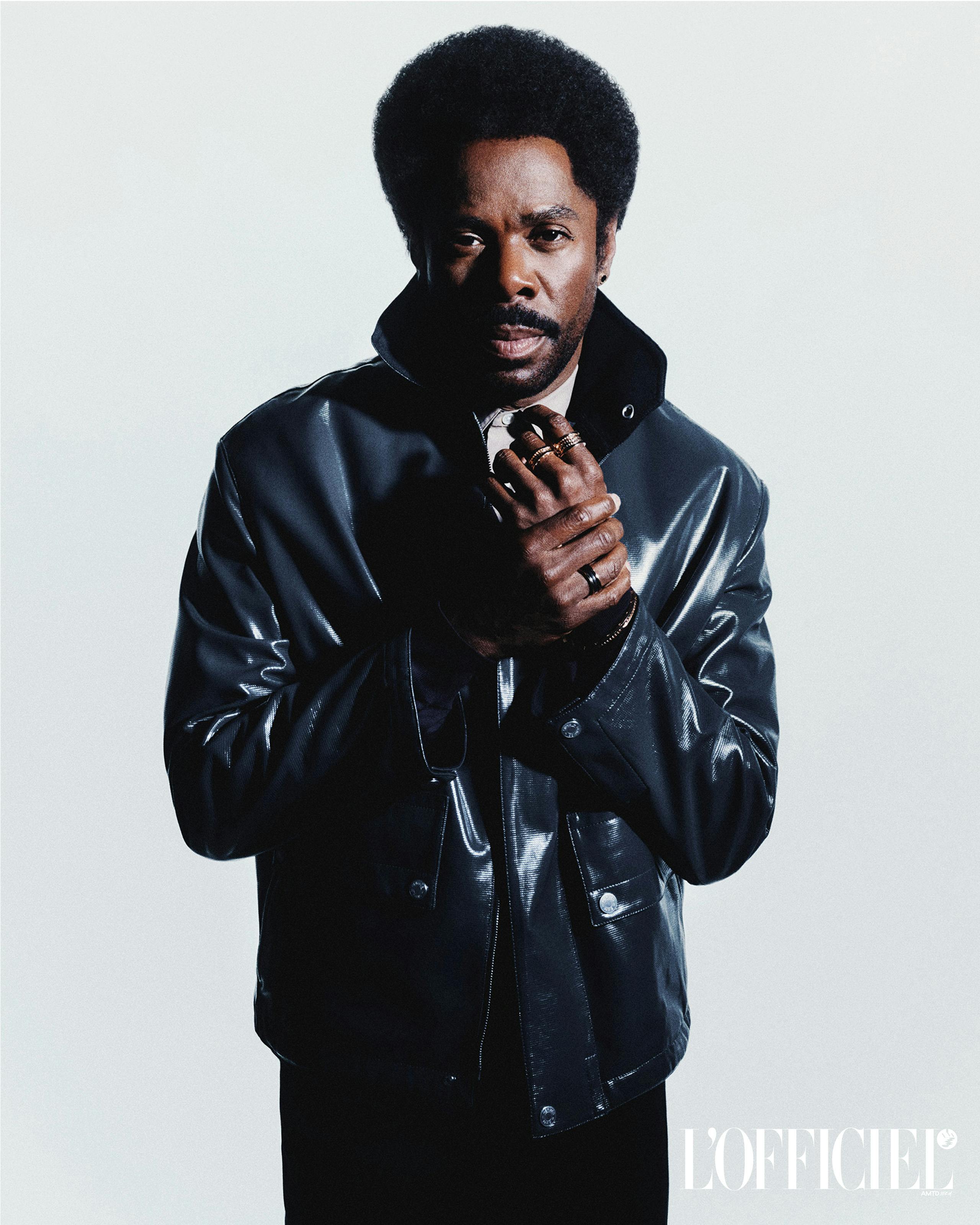
L’O: Making it doesn’t mean meeting all your dreams—it’s also getting to a place that you never thought you would get to before. Do you think that feeling like you’ve made it too early makes people lazy?
CD: Yes—when you’re having a moment, you don’t know how long it’s going to last. Sometimes the moment may fade, and you see people trying to recreate the moment, and it’s like, No, no, no. It’s not just about trying to recreate the moment and wear that outfit or have these sound bites that got you noticed before—you need to evolve. I hope that I’m a different person than I was 35 years ago when I started my career. It’s ok to change.
L’O: Twelve-ish years ago, I saw you in a production of The Scottsboro Boys, and you’ve certainly changed since then.
CD: I’ve been blessed to be a part of certain works of art like that, whether it’s Passing Strange or The Scottsboro Boys, two works of art that really had no intention of moving to Broadway. That work really changed me. Because you gotta get behind being on a deconstructed minstrel show about nine African American teenage boys accused of raping two white women, and you have to stand up, flat-footed in your truth, and be like, Yeah, this is revolutionary theater. I know that those plays are the seeds of the plant to help me do the film work, whether it’s Rustin or If Beale Street Could Talk or Sing Sing, because I’m used to being out on a limb for my work. If you look at my theater work, I’ve always played the utility actor, the actor who can play four or five different roles and give them four or five different lives on stage—bodies and voices and things like that. I’ve been groomed to be a shape-shifter. I’m a character actor, but I’m also a leading man, and I’m also a clown, and I’m also a romantic lead.
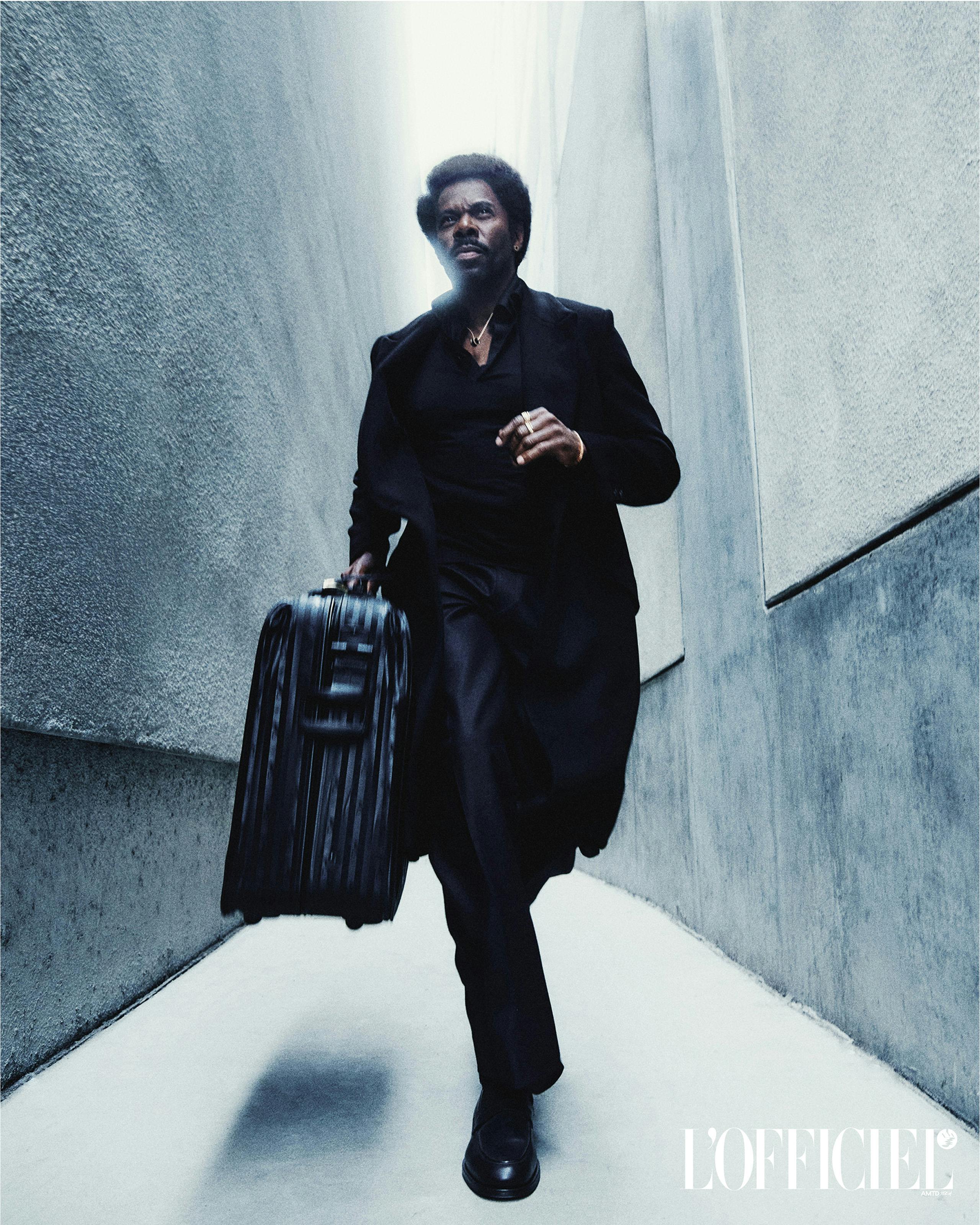
L’O: It feels to me that you have a strong center, and you’re willing to let everything around you change.
CD: I’m not a rigid person at all. I am pragmatic. I’m the one who pumps the brakes. I know that the only way I can do good work is [by] really taking my time. I’m just not that actor that’s like, Oh, I can get changes the week before for a three-page monologue.
L’O: What’s your process, let’s say, for that three-page monologue?
CD: Sam Levinson, [the creator of] Euphoria, gives me so much juicy language and things to think about, and I just want it to be as organic as possible. My desk is filled with inspiration and books and stuff that I can download. I love sitting in my office and I’ll run scenes, and I’ll record the other person’s lines, and then dance with it. I feel like I’m not really making complete choices on how the character is responding in that moment. That’s once on set, or once I’m on stage, because I have to invite in what the other actor is doing.
L’O: Do you have a different approach to portraying real characters versus invented ones?
CD: There is a different approach. I’m playing Joe Jackson in the Michael Jackson biopic [Michael, slated for release in 2026], and I played [civil rights activist] Bayard Rustin [in 2023’s Rustin]. Both of those have such a research foundation, so I get all the information I can get. Any video, any soundbites; I look at the way they sit, how they use their hands, what hand do they write with, the food that they ate, how they laugh, all that stuff. And I get to play with that even more and create with my crazy brain. Characters like X in [the 2020 dark comedy] Zola—I can actually create these people from my imagination and from the people that I know. With Zola—there’s a guy I go to the gym with. He was a trainer, this African guy, but he always wore these hazel contacts. And I don’t know why I thought about it when I was building this character of the pimp in Zola. I went to my director, and I said, What if he had hazel contact lenses? Because whenever I want anyone to look at him, they’re trying to figure something out. She said, How about one? Ah, even better. So now you’re constantly saying: Who is this man?
L’O: I wonder if that attentiveness—noticing other people’s idiosyncrasies and pocketing them for later—comes from your desire to major in journalism.
CD: I’m very curious about other people. I want to figure things out. That’s why I’m drawn to the work that I’m drawn to. I’m a very curious person, and I know that I like to ask questions, and that’s part of what keeps me feeling less alone in this world. I can talk to anybody, and even the people who I think I have nothing in common with, I can find something.
L’O: And when you do find that commonality, it’s a joy like nothing else. What is it about you that everybody likes?
CD: A friend of mine, Anika Noni Rose, asked me one day: Why do people like you so much? I can’t put my finger on it, but I do know that it’s a gift. Last week, when I flew from London to LA—I don’t know Shawn Mendes, but he and I got into a car together and had the best conversation. We both get on our flight, and who’s there? A woman I’ve met maybe twice—Kamala Harris. And she goes, Colman! And she hugs me, and the whole plane is looking like, Who is this guy? But I do feel like I walk into a room and people like me, and I think it’s because I know how to make people feel good. When you are in spaces with people, you have an opportunity to change the rhythm in the space around and leave a little something. I leave behind a good feeling.
L’O: You’re also leaving out the handsomeness quotient, too. My girlfriend demanded I tell you that she has a sort of crush on you—not a sexual one, but she wants you to give her a big hug.
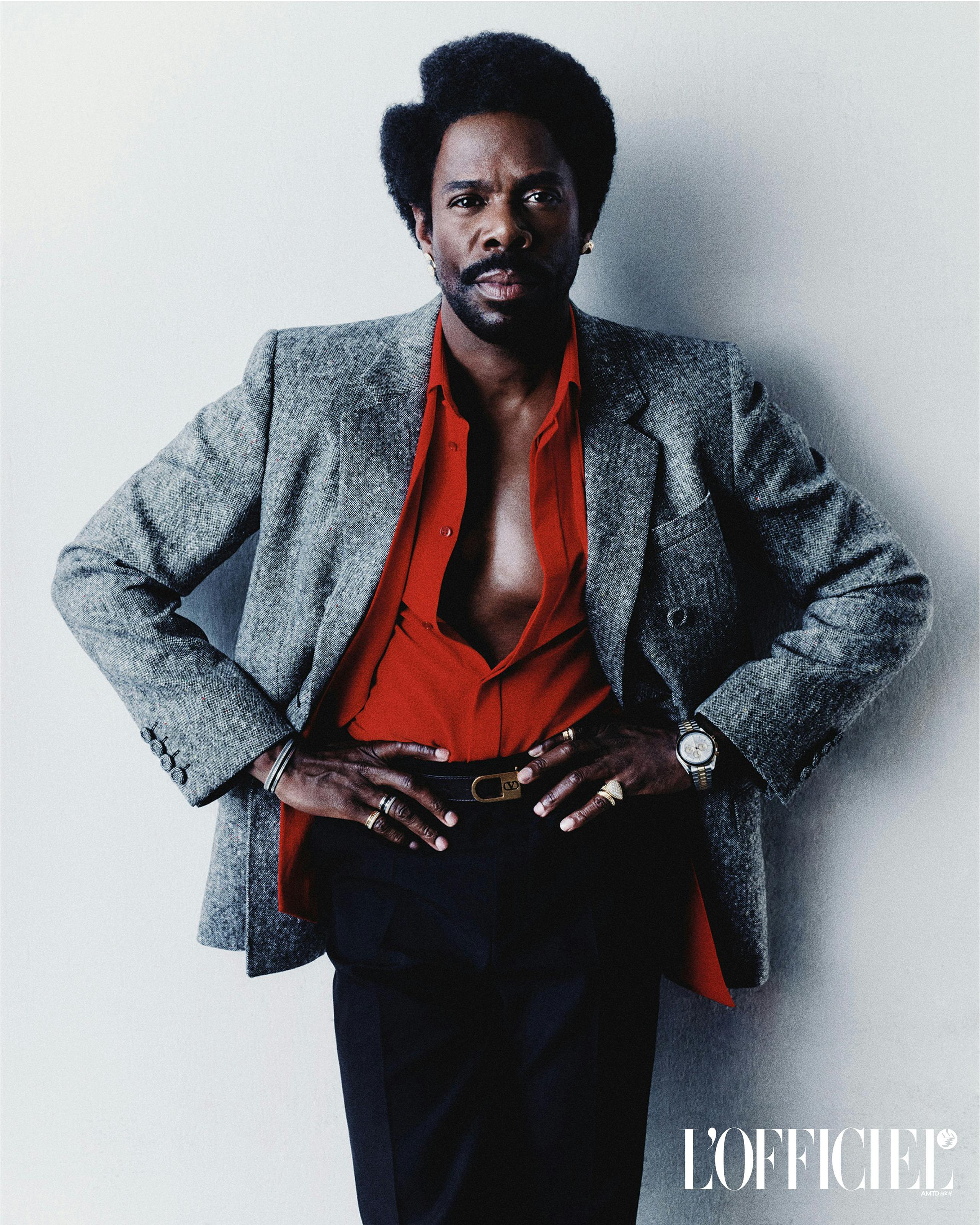
CD: People want to hug me all the time! Men, women, bros. I’m not that person who’s going to deny a hug, because hugs feel good. When people look at me, I help them see something in themselves. Sometimes, it is an attraction—I love it when I get a group of women and they’re like, Oh my God, you’re more handsome in person. I can’t walk down the streets in New Orleans during Essence Fest. But then I have young people who just see a father figure or a big brother figure in me. I like when I get affection from real bros, just like: Yo, man I love the way you dress, the way you hold it down. And they reach out, grab my hand, and they hug me. I didn’t know if that was for me when I was young. Maybe by living authentically and being my whole self, people see all the things that I am, and it’s not just delineated to one aspect of me.
I’m a character actor, but I’m also a leading man, and I’m also a clown, and I’m also a romantic lead.
L’O: And that’s one of the most compelling things about you—it’s a different approach to masculinity.
CD: I’m playing, I’m joyful, I’m sensitive, I’m strong, I flirt. I flirt with everybody. I think I get it from my Central American father, who was a lothario. I think [it’s about] the energy to really notice someone’s hair or the way they move, in a safe way, not an overly provocative way, but in a way that feels like this is a beautiful exchange for all of us, to live in our bodies, to be human and sexy. The most unattractive thing is for a person to believe how hot they are. Because if you already believe you’re hot, what part do I play in it? But I feel like you can feel like your most authentic self. You can feel sexy. You can feel it in your body.
HAIR: Pierce Austin
MAKEUP: Jessica Smalls A-FRAME AGENCY
CREATIVE CONSULTANT: Mariana Suplicy
PRODUCED BY: Simon Schwarz, Rachael Maye Aronoff, and Enid Robbins NO-NAME PRODUCTIONS
DIGITAL TECH: Carla Frias
PHOTO ASSISTANTS: Paolo Alfante and Juan Zarazua
STYLING ASSISTANTS: Ynes Trabelsi, Byron Williams, Kyra Singletary, and Angela Rose Gutierrez