Photo: 2nd Khartia Corps of the National Guard of Ukraine / Facebook While writing my recent newsletters on drones, I could not help but notice that over the past month, Russia’s innovations in unmanned technologies have stood out not for technical ingenuity but for the scale of civilian suffering they cause. These systems are becoming […]
3 min.
While writing my recent newsletters on drones, I could not help but notice that over the past month, Russia’s innovations in unmanned technologies have stood out not for technical ingenuity but for the scale of civilian suffering they cause. These systems are becoming more dangerous and more lethal, with a clear emphasis on maximizing harm to civilians during the harsh winter months.
In this edition:
-
Extreme Cold Affects Drones in Ukraine and Russia;
-
Starlink Saga Continues: Russia Imports Terminals and (Reportedly) Develops an Anti-Starlink Weapon;
-
Russia’s New Geran-5 Drones;
-
5+ additional developments in drone warfare in Ukraine and Russia.
The poll announced in the previous post has ended, and by a relatively small margin of 10%, Drone Warfare in Ukraine was selected as the section that should become my priority. I will make this transition over the next couple of weeks.
Interesting results—I personally expected Drone Warfare to be significantly ahead.

Extreme Cold Affects Drones in Ukraine and Russia
Due to severe freezing temperatures, Ukrainian forces are losing more drones. Before the onset of extreme cold, one to two drones were typically used to strike a single target; in freezing conditions, units are sometimes forced to deploy more than three drones per target.
This was stated by the Head of Communications for the 155th Separate Mechanized Brigade named after Anna of Kyiv, speaking to Hromadske Radio.
According to him, extreme cold accelerates battery depletion in drones, reducing their operational range. In addition, the risk of icing and system failures increases.
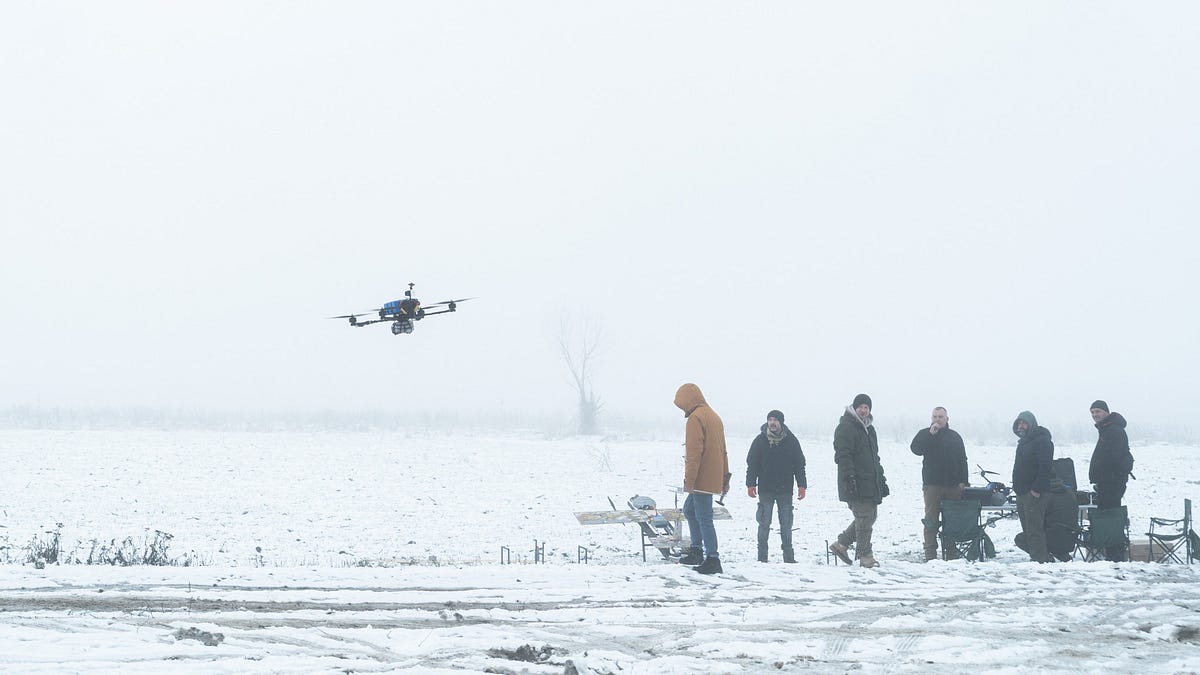
At the Dronarium Academy training ground near Kyiv, fiber-optic lines froze due to deteriorating weather conditions and a temperature drop to –8°C. The site hosted training and exercises on operating unmanned aerial vehicles. Under these conditions, conducting training flights becomes technically impossible.
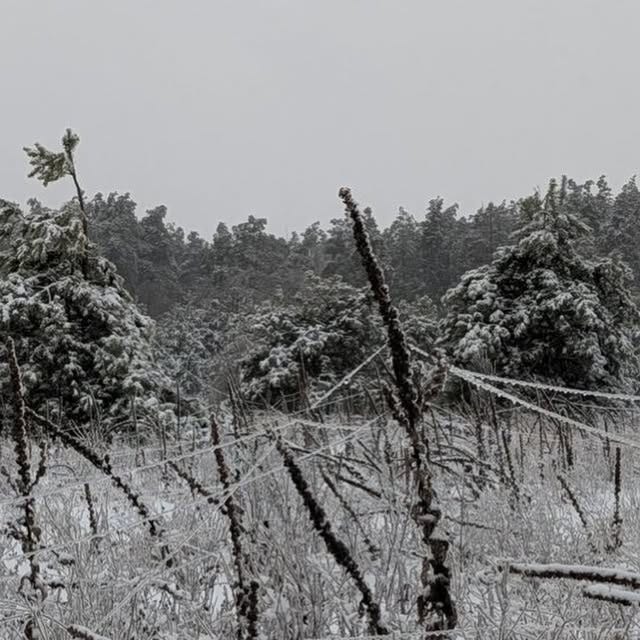
Icing poses a serious problem also for Russian drones, particularly the Geran UAVs, as ice can form on the aircraft’s front parts, significantly complicating flight.
Serhiy FLASH Beskrestnov wrote that Shahed-type drones have a winter variant that includes in-flight heating of some internal components. However, the Shahed lacks heating on its aerodynamic surfaces, which can cause ice buildup. For this to happen, several factors are required: high humidity or rain, and a sharp temperature transition from above to below freezing. This phenomenon usually occurs within the –5°C to +5°C range.
“But even here, it is not so straightforward. A Shahed can carry a significant payload, and if icing is minor, does not alter the wing profile, and does not disrupt the UAV’s overall balance, it can continue flying. Otherwise, the Shahed will crash,” Serhiy added.
Another Ukrainian expert, Anatolii Khrapchynskyi, said that some Shahed components were modernized to mitigate the effects of cold weather. For example, the servo actuators were enclosed.
In addition, heating systems were installed for certain elements, enabling their use in adverse weather conditions. “Icing can occur on any aerial object: any civilian aircraft is treated with a special fluid before takeoff,” the aviation expert noted.
The enemy continues to use strike UAVs against Ukraine. Even in freezing conditions, these drones are still deployed, though in smaller numbers.
Russian attacks on residential buildings cannot be excused by blaming icing or weather conditions. Many strike drone routes deliberately pass over densely populated urban areas, increasing the risk of civilian casualties.
Starlink Saga Continues: Russia Imports Terminals and (Reportedly) Works on an Anti-Starlink Weapon
Two parallel lines of reporting suggest that Russia is both using Starlink terminals for its own drones and also might be developing anti-Starlink space-based weapons.
Read the first part of my reporting here: Integration of Starlink Terminals into Russian Molniya UAVs, and the second part below.