Originally published on Brasil de Fato by Marco FernandesRepublished with permission Since the first round of negotiations between Iran and the US in Oman on 6 February, Donald Trump seems to have toned down his warmongering rhetoric and is now talking about making a “good deal” with Tehran, which he says will be better than […]
14
min.
Originally published on Brasil de Fato by Marco Fernandes
Republished with permission
Since the first round of negotiations between Iran and the US in Oman on 6 February, Donald Trump seems to have toned down his warmongering rhetoric and is now talking about making a “good deal” with Tehran, which he says will be better than the JCPOA (which he himself abandoned in 2018 during his first term). Apparently, Tehran’s assertive rhetoric – promising to start a regional war to defend itself against attacks on its territory – is making the White House think twice before launching into another military conflict in Western Asia. In a 1 February article, the Wall Street Journal states that Washington needs more time to provide sufficient air defences for its allies in the region, which host US bases.
An article published on the website of JINSA (Jewish Institute for the National Security of America), a US Zionist think tank that includes numerous retired military personnel from Israel and the US, went even further. It claims that the US spent no less than 25% of its THAAD anti-missile system stocks in the Twelve-Day War in June, when Israel criminally bombed Iran – with White House support – while negotiations were still ongoing. According to JINSA, the US would need about a year and a half to replenish these systems, which would make a prolonged war with an adversary as powerful as Iran unfeasible. This is yet another symptom of American deindustrialisation, which minimises its supposedly invincible military power. Even so, the pressure from the Zionist regime on the White House to force Iran to surrender its ballistic missiles, cease its support for the “axis of resistance” in the region, and suspend its peaceful nuclear programme is enormous. Serious analysts such as Alastair Crooke – a former British diplomat and former MI-6 agent – an expert on the geopolitics of the region and author of the important book Resistance – the essence of the Islamic revolution, claim that Israel is using the “Epstein case” as a tool to blackmail Donald Trump.
On Wednesday, 11 February, millions of Iranians took to the streets to celebrate the 47th anniversary of the Islamic Revolution, demonstrating strong public support in the face of the threat of another war against the country. But the economic crisis – with inflation and devaluation of the rial – caused mainly by Western sanctions and speculative attacks against the Iranian currency, as confessed by the US Treasury Secretary, remains unresolved. According to sources heard by Brasil de Fato, there is also much dissatisfaction with the government among sectors of the middle and upper-middle classes. Therefore, it is urgent for Tehran to reach an agreement that guarantees relief, even if only partial, from the sanctions.
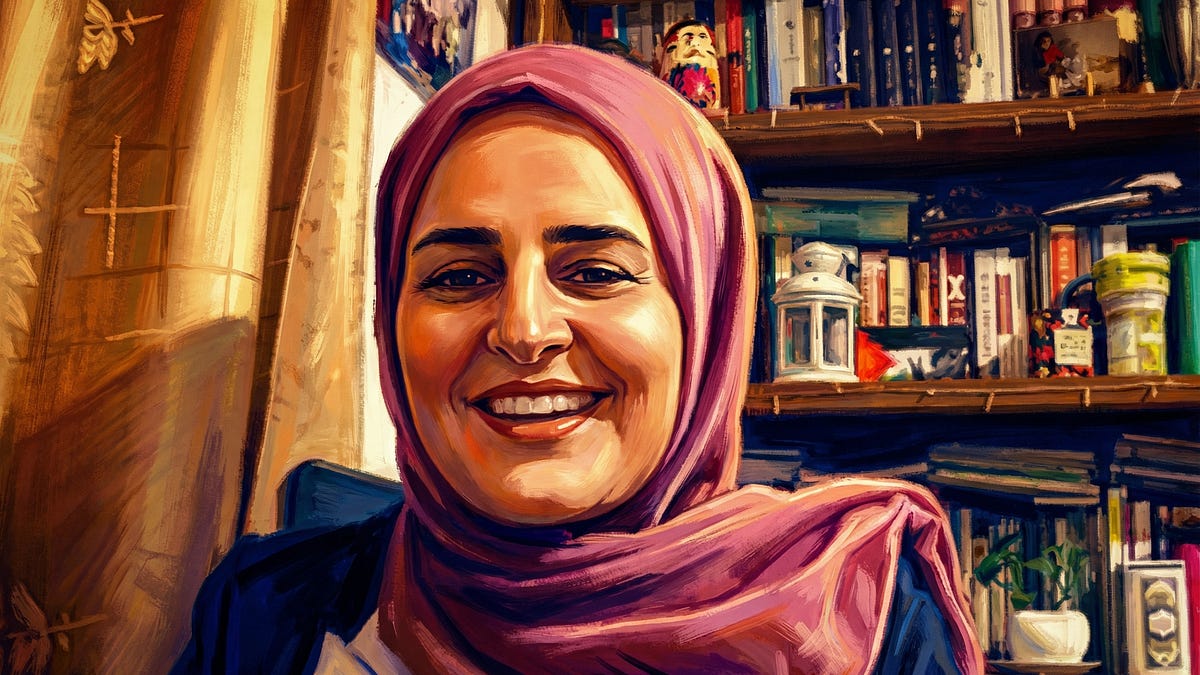
To explore these issues surrounding the current situation in Iran, Brasil de Fato spoke this week with Professor Setareh Sadeqi (University of Tehran). She is an assistant professor at the Faculty of World Studies at the University of Tehran, specialising in American Studies, with research focused on postcolonial theory, sanctions and relations between Iran and the US. She has appeared as a political analyst on several channels, including Al-Jazeera, TRT, RT, Press TV, and CGTN. Prof. Sadeqi is fluent in Spanish, the language we used when we met in Tehran in November 2025, and closely follows politics in some Latin American countries.
We took the opportunity to address a controversial issue that arises in any debate about Iran in countless countries in the Global South and the West: the wearing of the hijab by most Iranian women. We also discussed their role in contemporary society, their achievements in the post-revolution period, and their current challenges.
BdF: In recent days, the US has sent its navy to the Persian Gulf region and Trump has threatened to attack Iran, trying to force negotiations for the country to suspend its nuclear programme, hand over its ballistic missiles and stop supporting Palestinian resistance in the region. What are the chances of negotiation on these terms? What is the Iranian government willing to negotiate?
Setareh Sadeqi: The US sent the aircraft carrier Abraham Lincoln to the Persian Gulf to threaten Iran and force it to negotiate. In other words, to say that Iran has only two options: go to war with the US or sit down at the table with the US to once again “negotiate.” However, for the US, based on its experience with Iran – but also on the experience of many other nations – “negotiations” usually mean making concessions and surrendering. Negotiations have also previously served as a cover for US and Israeli invasion and aggression against Iran, including the assassinations of its top generals and nuclear scientists in June 2025.
We were on the eve of the sixth round of indirect negotiations with the US when Israel launched a war against us. Iran has made it clear, however, that 1) it will not negotiate under threat and 2) the only issue under discussion will be the nuclear programme, and nothing else. The Iranian government demonstrated its power by moving the negotiations to Oman instead of Turkey, where they had initially been proposed to take place. It then made it clear that its defence capabilities, including its missile programme or any other related matters, would not be on the negotiating agenda. Therefore, Iran is willing to reduce its nuclear activities in exchange for the removal of criminal economic sanctions against the country, and nothing else.
The Iranian government has responded in recent days that any attack on the country will be met with a regional war against the US and its allies. If this happens, what are the possible military and economic consequences of a regional conflict? The Wall Street Journal published an article stating that Trump has backed away from an attack at this time due to the lack of sufficient defence for his allies in the region in the event of an Iranian counterattack. How do you assess this statement?
Setareh Sadeqi: Iran has made it clear that any country in the region that hosts a US military base — which basically means all countries in that part of the world — will be attacked in the event of a US and Israeli attack on Iran. Unfortunately, most, if not all, of these countries in the region lack a strong independent army that can protect the interests and sovereignty of their nations.
In fact, they have lost their sovereignty to the US and, in several cases, have allowed their national interests to be compromised in the name of US imperialist ambitions. We have seen, in the case of Qatar, for example, that an Israeli attack on Qatari territory was met with absolutely no resistance.
Or the United Arab Emirates, which hosts one of the largest military bases in the region and has acted as a vassal state, without sovereign decision-making power. In the event of a regional war, most of these countries will have to rely on the US to protect their borders, and according to their own officials and analysts, the US can barely defend its own interests against Iranian missiles. Therefore, if the US makes the mistake of attacking Iran directly or through its military outpost in the region — the Zionist regime — the response it will receive this time will be much more destructive both to the US and the Zionist regime, as well as to all US occupation bases in the region. Thus, the US may be able to start a war, but it will certainly not be able to end it or control how and where it will spread. Even in the case of the invasion and occupation of Iraq and Afghanistan, the US failed to achieve its main objectives, and Iran will be a very different battle.
Recently, US Treasury Secretary Scott Bessent publicly boasted of a financial attack on the Iranian currency, which allegedly caused the sharp devaluation of the rial. Beyond this alleged “financial attack,” have the new sanctions imposed by the US and the EU through the UN via the snapback mechanism related to the end of the JCPOA negotiations (since October) had any effect, making foreign trade even more difficult for Iran?
Setareh Sadeqi: US sanctions – extraterritorial and third-party – have long discouraged many European and non-European countries from trading with Iran. The US basically punishes, in different ways, any nation that buys oil from Iran, sells or buys any products from Iran. This has had a major impact on Iran’s economy and made it extremely difficult for the country to obtain foreign reserves, and Iran has had to resort to barter to sell its oil in some cases.
Third-party sanctions are so outrageous that they have forced Iran’s long-standing trading partners to cut off trade and even refuse to do business with us. For example, Sweden stopped selling Iran vital dressings for children with “butterfly disease” (epidermolysis bullosa), which is an extremely difficult condition, citing US sanctions. All of this has impacted Iran’s economy, and as you mentioned, US officials have boasted about this on several occasions.
The goal of these sanctions has always been to create a financial crisis and dissatisfaction in the country to the point where the population wants to revolt against the government or, at least, express strong dissatisfaction and opposition. That is what they did with Syria, what they are doing with Cuba, and many other examples. When the snapback mechanism [of UN sanctions] was activated, the impact of unilateral sanctions was already present. The devaluation of the rial and unprecedented inflation rates have drastically reduced the purchasing power of Iranians, almost eliminating the middle class.
You have studies on the consequences of sanctions on the Iranian economy since the victory of the Islamic revolution in 1979. Are there periods when these sanctions were more or less damaging to the country’s economy? Which ones? We know that there are several studies — with different methodologies — that attempt to calculate the damage suffered by the Iranian economy over the last five decades. What are the main conclusions of this research? Do you have any concrete examples of projections for important economic and social indicators, such as GDP, GDP per capita, HDI, foreign trade, etc., if the country were not under such severe sanctions imposed by the West?
Setareh Sadeqi: The sanctions have cost the Iranian economy 20-30% of potential GDP growth since 1979 by reducing oil sales, increasing inflation and devaluing the rial. Without them, studies project annual growth of 4-5% (compared to the actual 3%). Nominal GDP per capita today is between 3,000 and 4,000 dollars, but some estimates show that it should be 30% to 40% higher, or about 4,000 to 6,000 dollars.
Our HDI should be around 0.82-0.85 instead of 0.78. Non-oil exports would be double what they are today, and fewer than 2 million people would be considered poor, instead of the current 7 million. Our trade volume would be close to US$ 150-200 billion annually. Some studies suggest that Iran’s GDP would have a potential of $1.2 trillion if there were no sanctions against the country.
US politicians boast about how their sanctions have severely affected the country’s economy and how the “mess” we witness in Iran was created by them. However, what my colleagues and I try to show in our study on sanctions goes beyond simple narratives of how Western financial terrorism against independent nations can be destructive. In fact, what we analyse is how, despite crippling sanctions, Iran has managed to develop domestic production and shift to self-sufficiency as an antidote to unilateral sanctions.
Sanctions against Iran began even before the Islamic Revolution and in response to domestic Iranian movements seeking to nationalise Iran’s oil, led by Mosaddeq. Therefore, as long as Iran, or any other nation, seeks to control its natural resources and safeguard its sovereignty, it will come under attack. And Iran has learned that the only way to survive — and thrive — is to look inward. There will be no guarantee, even if one negotiates with the demonic imperialist power, that sanctions will be lifted.
Therefore, Iran has learned, and this has been the perspective promoted by the leadership, that we must become self-sufficient and produce what we need. Although total self-sufficiency is probably impossible for any nation, Iran has achieved very high levels of self-sufficiency in many sectors, including pharmaceutical production, household appliances, etc. The ‘resistance economy’ is what saved Iran from the total collapse that imperialist power was planning.
How would you compare the sanctions regime imposed by the West on Iran with those imposed on Cuba and Venezuela? Do they have similar patterns or different tactics?
Setareh Sadeqi: Western sanctions against Iran, Cuba, and Venezuela share general patterns of economic isolation aimed at pressuring democratically elected governments that oppose US intervention and refuse to surrender to imperialist ambitions, through oil export restrictions, financial restrictions, and trade barriers, often causing surges in inflation, currency collapses, and humanitarian tensions such as medicine and food shortages.
However, the tactics differ: sanctions against Iran are comprehensive and multilateral (UN, US, EU since 1979, peaking between 2012 and 2018 with oil bans and SWIFT exclusion), targeting nuclear/defence programmes alongside broad sectors, although some adaptations have been applied through trade with non-Western partners (China, Russia).
The case of Cuba is a unilateral US embargo since 1960, denying access to US markets/dollars and restricting tourism and remittances, promoting chronic stagnation but also resilience through diversified alliances and social services. And the fact that Cuba depends on Venezuelan oil, and that Mexico is forced by the US to refuse aid to the country, has made the situation more serious than ever. In the case of Venezuela (intensified between 2014 and 2019 under Trump), the sanctions regime focuses on secondary sanctions on PDVSA oil, hitting its oil-hyperdependent economy hardest, with 76% drops in oil production and inflation spikes of 114,000%, compared to the relatively milder impacts on Iran.
Once again, for all these independent nations that dared to take sovereign and independent positions, the pretext on which these sanctions were imposed included state support for terrorism (Cuba and Iran), violation of human rights and , drug trafficking (mainly Venezuela), etc. Although the narratives and parts of the tactics are different, the main goal is to bring these independent nations to their knees and punish any nation that seeks to establish normal ties with them, so that no nation dares to resist imperialism.
But with the West more exposed than ever, the Epstein files and the transparent rhetoric of the idiocratic US president – confessing that it’s all about oil – regime change operations and justification for brutal sanctions against these nations have become more difficult.
After all, why does the US insist on wanting to overthrow the Islamic revolutionary government after almost 50 years, even though it has failed so far?
Setareh Sadeqi: Democracy, right? Liberate Iranian women! Just as they liberated the Syrians, Iraqis, Libyans, Afghans! Sarcasm aside, the US has always sought regime change through social and economic manipulation, manufacturing consent for wars, occupations, military invasions or supporting terrorism and assassinations in order to replace independent sovereign political systems with puppet regimes that would hand over the country’s natural and human resources to imperialist power.
Take Venezuela, for example: President Maduro was willing to allow American companies to invest in Venezuelan oil, but what the US wants is not to buy other nations’ resources, but to plunder them for free, without paying for them. Kissinger famously said that being an enemy of the US is dangerous, but being a friend of the US is fatal. That’s because the US has no allies: you’re either an enemy or a slave!
The US accepts nothing less than a slave. Look at how Europe bows to US demands; Trump treats EU leaders like schoolchildren and they don’t even care! Iran is one of the last countries, with thousands of years of civilisation, that defends itself, does not bow down, does not surrender, and cannot be intimidated. In fact, Iran scares them, because not only can it fight back, but it is also a model for any nation that wants to be sovereign.
Any debate about Iran, even in anti-imperialist circles in Latin America – where we have always suffered from US interference – brings up criticism of a supposed lack of women’s rights in the country, and the first issue raised is always the “mandatory wearing of the hijab“. I was in Tehran in November 2025 and noticed on the streets that about 30-40% of women did not wear the hijab, and among younger women, I would estimate that more than half did not. You are a social scientist, an expert in international relations and a professor at the University of Tehran, and you wear the hijab. How do you analyse the specific issue of the hijab and the place of women in contemporary Iranian society?
Setareh Sadeqi: Unfortunately, the propaganda war against Iran has affected our friends on the so-called left, including in Latin America. As you mentioned, the Iranian government has backed down on the issue of the hijab, as society has changed and become more receptive to different cultural practices with regard to dress codes. But even before the recent changes, a large part of the female population voluntarily practised the hijab as part of their culture and identity. They did not cover themselves because men told them to or because they were forced to, but because that was their belief. Why should different cultural practices be the concern of other nations? Latin America suffers from very high rates of femicide.
Does this justify brutal sanctions and aggression against their nations? Does this help women’s rights or, in fact, violate their rights and further complicate the situation? Iranian women represent about 70% of university students and have been very active in the country’s social movements. There are many NGOs working with women to empower them, educate them and protect their rights. Iranian women do not need foreign powers to tell them what is right to do or how to defend their rights.
They know very well how to catalyse a revolution, and that is exactly what they did in 1979, alongside Iranian men, to remove the hands of the US and Britain from their country. Iranian society is not monolithic. Debates about women’s rights, including the hijab, have always taken place in universities, social gatherings and parliament. Iranian women have the ability and power to push for the changes they want to see in their society.
In your opinion, what are the main achievements of Iranian women after the revolution (education, wages, other rights, etc.) and how would you compare this with the situation of women during the regime of Shah Reza Pahlavi? What are the main challenges women face today?
Setareh Sadeqi: Iranian women’s participation in the country’s decision-making, as well as in the academic sphere, has been tremendously different from that before the revolution. Women’s rights in matters related to family, marriage, divorce, and equal pay have improved, and although there is always room for improvement and Iranian women are still campaigning and working to improve their rights, the integration of women into the decision-making system has facilitated and incorporated women’s voices in parliament and government.
Today, Iran has many more female editors, authors, doctors, university professors, and athletes, including national teams, than before the 1979 revolution. One of the main reasons is that the Islamic Republic has allowed women to be an active part of society, the education system, and the decision-making system without having to compromise their Islamic and cultural values. If people want to know what the Pahlvai dictatorship’s position was on women’s rights, they can watch the interview with the deposed Shah on women’s rights, in which he, in front of his own wife, says he does not believe that women can be leaders or hold important positions.
*Dr. Setareh Sadeqi Mohammadi is an assistant professor in the Faculty of World Studies at the University of Tehran. She specialises in American Studies, with research focused on postcolonial theory, sanctions, and Iran-US relations. Her work includes a PhD on the persuasive rhetoric of African American movements, and she has published articles on the impact of US sanctions on Iran. She has appeared as a political analyst on several channels, including Al-Jazeera, TRT, RT, Press TV, CGTN, etc.
Join the Conversation:
📌 Subscribe to Think BRICS for weekly geopolitical video analysis beyond Western narratives.