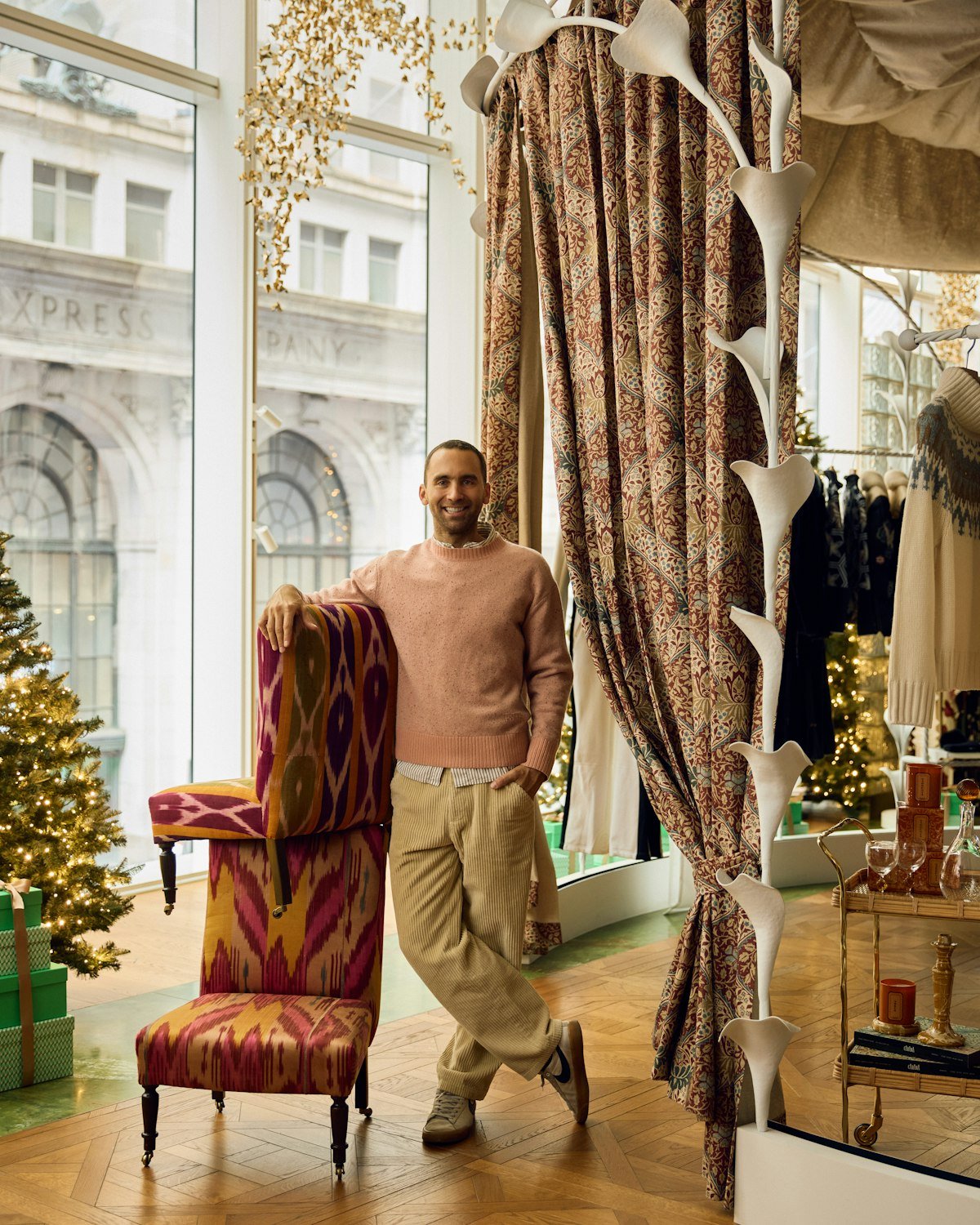
When Will Cooper talks about design, he doesn’t describe rooms so much as mere landscapes. He speaks in terms of softness, theatricality, ritual, and—above all—connection. It’s a vocabulary he’s developed across years of working in spaces that are never static, always shifting, and intentionally designed to blur the boundaries between architecture, clothing, memory, and movement. […]
3 min.
When Will Cooper talks about design, he doesn’t describe rooms so much as mere landscapes. He speaks in terms of softness, theatricality, ritual, and—above all—connection. It’s a vocabulary he’s developed across years of working in spaces that are never static, always shifting, and intentionally designed to blur the boundaries between architecture, clothing, memory, and movement.
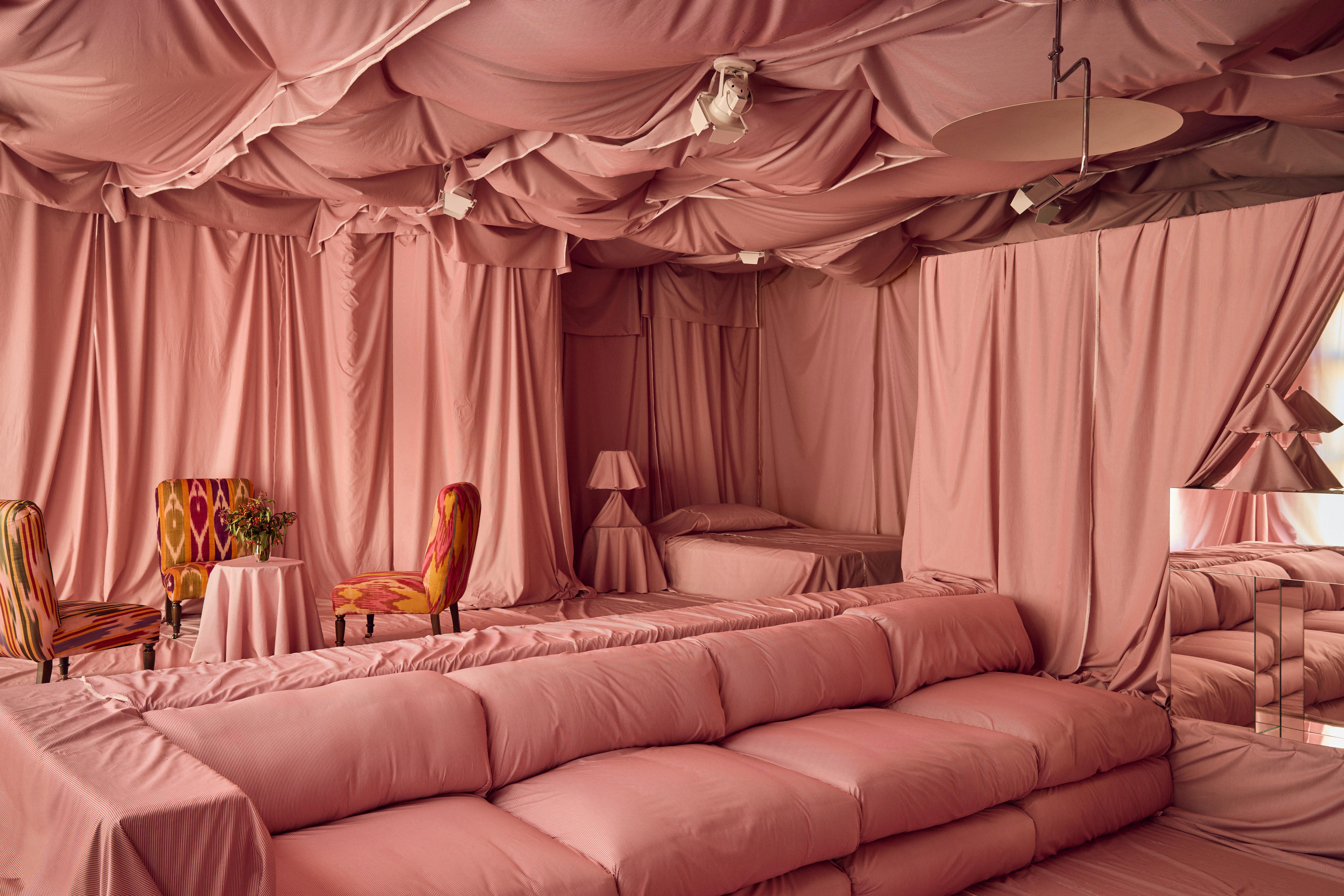
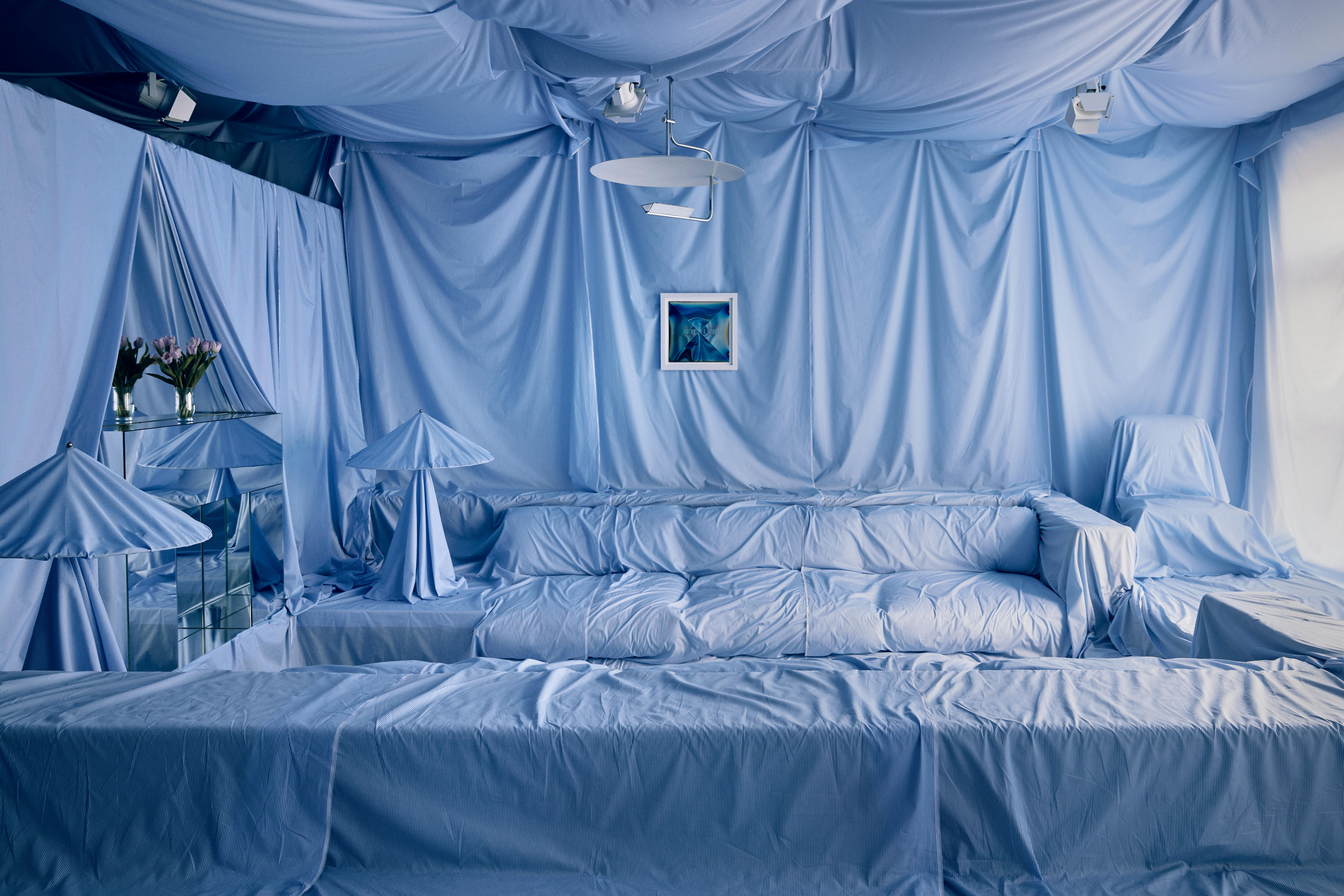
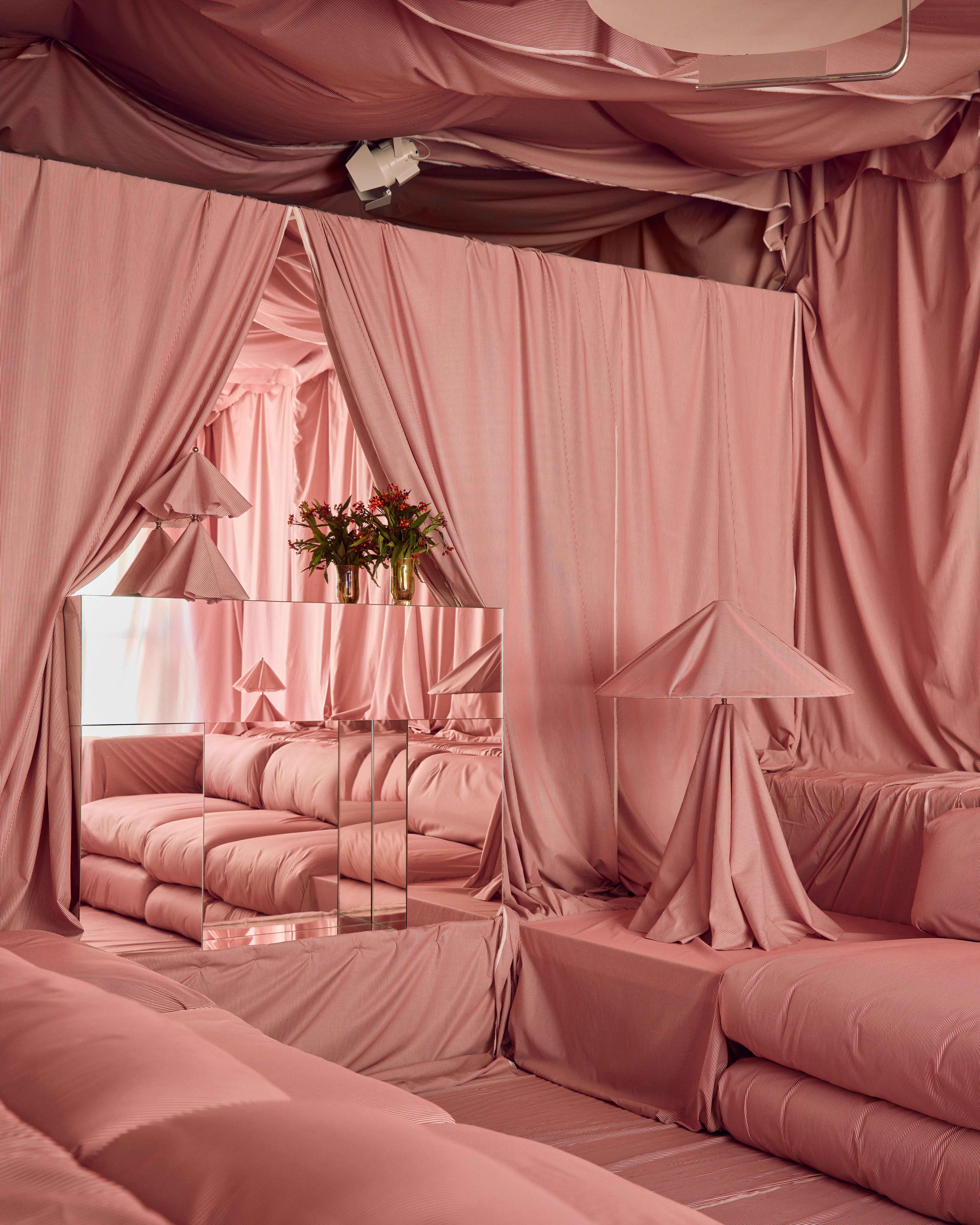
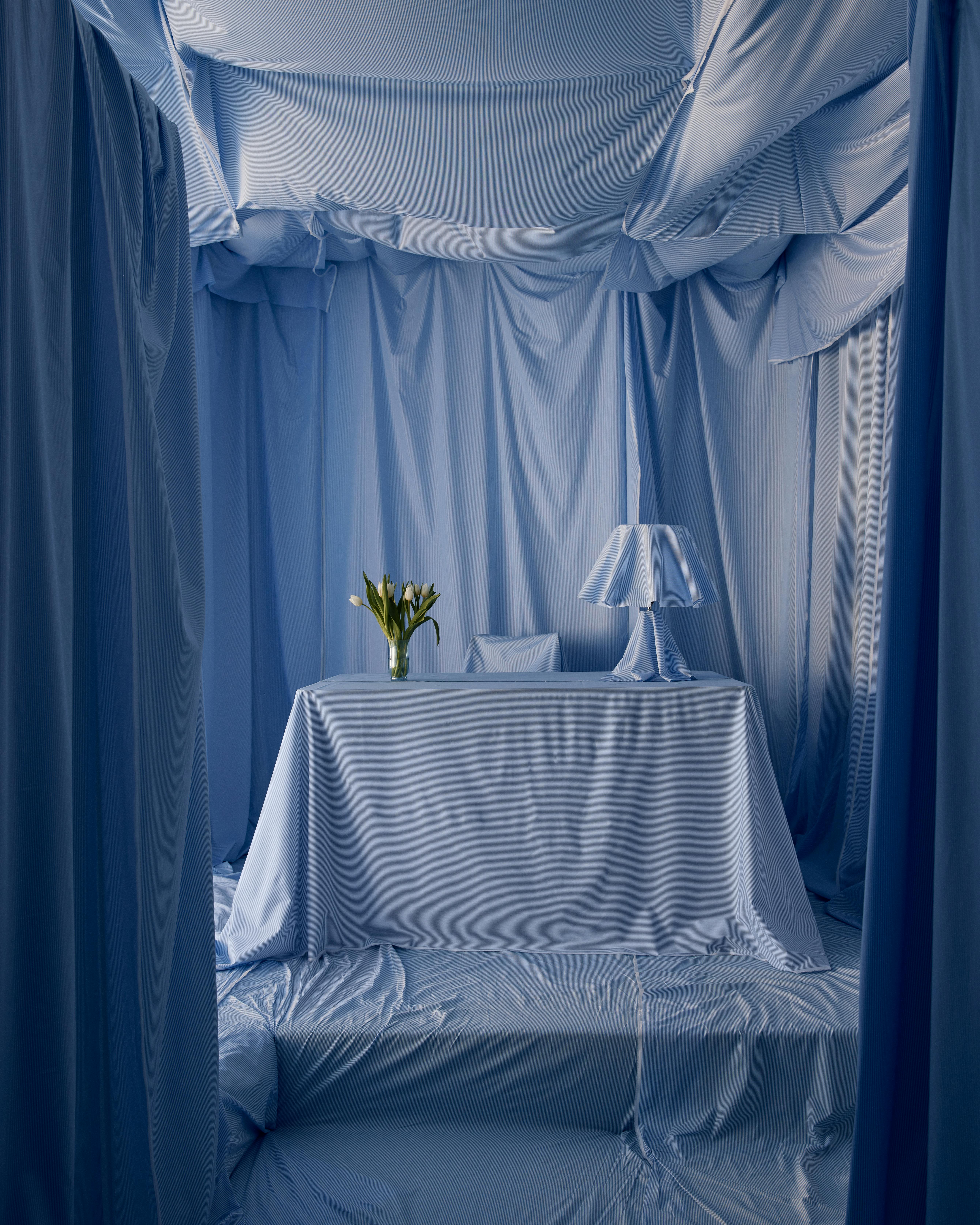
Cooper, the founder and creative force behind the William White universe, sees fabric as a kind of architecture—one that moves, adapts, and responds to the body in a way traditional walls never could. “I’ve always been enamored with the idea of a soft partition,” he says. “It has mobility; it has flexibility; it has character. It lets you move the space instead of building a wall.” His latest draped installations, first tested in his Canal Street studio and reimagined in new iterations for Printemps New York, embody that approach. These enveloping environments create a “womb-like” sensation where floor, wall, and ceiling dissolve into a single monochrome material. The effect is a dichotomy of sorts: disorienting and calming; a world that feels suspended, softened, and intimate.
At the heart of Cooper’s work is the idea of connecting his brand’s universe through material. William White’s signature shirting fabric becomes the connective tissue across everything he makes—from apparel to upholstery, drapery, jackets, and more. “It’s one material telling one story,” he says. “Flattening the architectural form with a single fabric turns the whole space into something you can digest as one idea.”
This holistic approach naturally aligns with a theatrical sensibility. Cooper often references the stage curtain—the ultimate gesture of reveal and conceal—as inspiration for his installations. “I approach everything with a very theatrical lens,” he says. “There’s always the question of what’s behind the curtain, what’s being shown, and what’s being held back.” In his world, drapery becomes both architecture and a narrative device: a way to guide the eye and shape emotion.
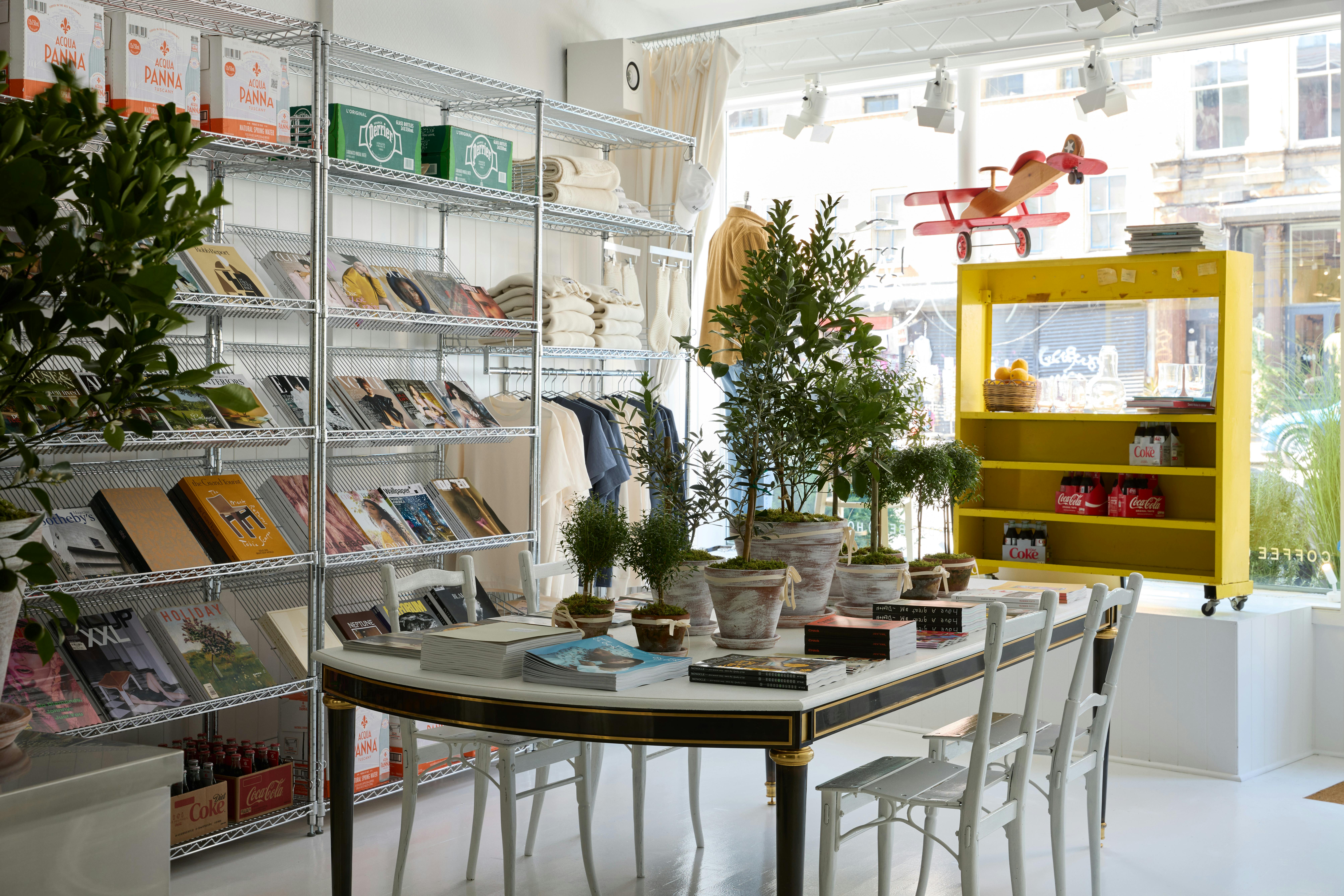
Ritual, however, is the axis around which the entire William White universe spins. Cooper returns to the word constantly. For him, ritual is not dramatic or ceremonial—it’s mundane, daily, and grounding. It’s reading a newspaper every morning, choosing a favorite coffee cup, brushing your hair with something beautifully made, or rearranging a room just because your hands feel like moving something. “We’re building a world of artisanal essentials and timeless rituals,” he says. “Design becomes part of your life when you touch it, use it, and live with it intentionally.”
Craft, too, is integral to his philosophy of ritual. He talks passionately about working with artisans in Egypt on glassware, or about ceramics made at their place of origin, or about the physicality of print and magazines—objects with weight, tactility, and presence. As a child, he collected magazines obsessively; today, he incorporates them into his retail spaces as objects that invite pause and intention. “Print forces you to slow down,” he says. “It’s a ritual in itself.”
Travel provides another essential layer in his creative process. Cooper traces connective threads between ancient architecture, contemporary street life, and the William White universe. Recent trips to Uzbekistan, Egypt, India, and Qatar opened new pathways of reference—arches, plaster work, tents, drapes, and geometric structures that echo through his work. “It’s like everybody existed together at one point, and we’ve only separated these ideas through time,” he says. “I love pulling that connective tissue back into my world.”
Ultimately, what Cooper is building is less a brand and more an ecosystem—one grounded in softness, sensory experience, and the rituals that make up a life. “Everything I design comes from the idea of tentpole rituals,” he says. “Getting dressed, choosing glassware, reading something in print, moving furniture—these small moments create a better life when you approach them intentionally.”
In the William White universe, a chair isn’t just a chair and a curtain isn’t just fabric; they’re carriers of memory, movement, and emotional resonance. They remind you to slow down long enough to feel where you are. And in a world that increasingly values speed and sameness, Cooper is building spaces that remind us of something far more essential: the quiet luxury of paying attention.