When inflation spirals past 40% and protests flood the streets of Tehran, Western media frames it as spontaneous revolution. But what if the script was written decades ago—and Iran isn’t the first country to read from it? The latest wave of unrest in Iran follows a familiar economic trajectory: crippling sanctions, collapsing currency, soaring food […]
Menej ako 1 min.
min.
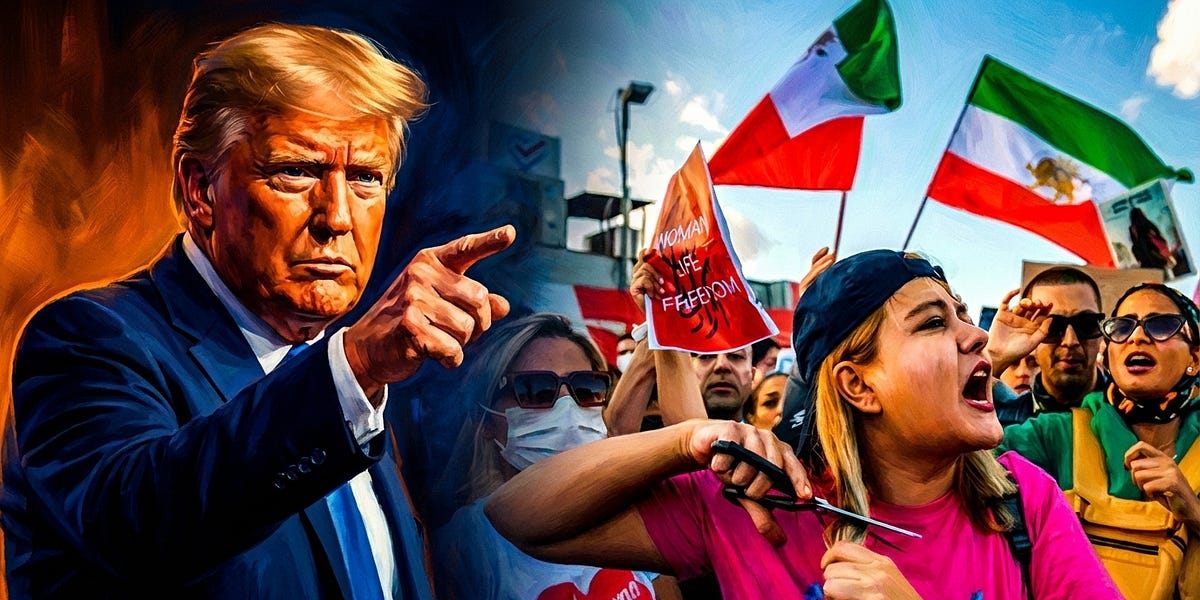
When inflation spirals past 40% and protests flood the streets of Tehran, Western media frames it as spontaneous revolution. But what if the script was written decades ago—and Iran isn’t the first country to read from it?
The latest wave of unrest in Iran follows a familiar economic trajectory: crippling sanctions, collapsing currency, soaring food prices, and public desperation. More than 500 deaths have been reported since December 2025, with demonstrators and security forces locked in violent confrontation. International observers are drawing comparisons to 1979, when the Shah’s regime fell to revolution. But are these comparisons historically accurate, or strategically convenient?
Here’s what makes the current situation particularly intriguing: Iran has experienced major protest movements in 2018, 2021, and 2022—each sparked by different grievances, each failing to topple the government. The structural conditions remain unchanged, yet the Islamic Republic endures. So why does this moment feel different? And more importantly, who benefits from framing it as the beginning of the end?
Consider the players positioning themselves around Iran’s crisis. The exiled son of the deposed Shah, broadcasting from the United States, claims leadership of the movement. Western politicians express immediate solidarity with protesters while their own capitals face mass demonstrations over housing costs, immigration policy, and alleged human rights violations. Israel watches its primary regional rival weaken. And beneath it all sits the world’s third-largest proven oil reserves.
The pattern becomes clearer when you examine what isn’t being discussed in mainstream coverage. Why do millions of Iranians continue supporting the current government despite economic hardship? What distinguishes evolutionary reform from externally-driven regime change? How do China and Russia’s condemnations of “interference in internal affairs” reframe the narrative? These questions don’t fit neatly into the revolution-versus-repression binary dominating headlines.
Historical precedent offers uncomfortable lessons for those willing to look. The playbook of stoking unrest, amplifying dissent, and positioning “liberators” has been deployed before—with consequences that rarely match the promised outcomes. Iraq, Libya, Afghanistan: each intervention promised democracy and stability. Each delivered something far more complex and costly.
Iran’s situation reveals a fundamental tension in international relations: the gap between stated humanitarian concerns and underlying strategic interests. When does supporting protesters represent genuine solidarity, and when does it serve as pretext for geopolitical repositioning? The answer matters enormously for Iran’s 88 million citizens, who will live with whatever comes next long after Western attention shifts elsewhere.
Understanding these dynamics requires moving beyond surface-level analysis to examine the deeper patterns of international power projection, resource control, and strategic competition that shape Middle Eastern politics. It demands asking uncomfortable questions about whose version of events we accept—and why.
The evidence is there. The historical parallels exist. The strategic interests are clear. But connecting these dots requires seeing the full picture.
Watch “Iran Under Pressure: The Pattern Before Every Intervention” to explore the evidence, examine the precedents, and decide for yourself what this pattern reveals about Iran’s future—and international law’s present.
What parallels do you see between Iran’s situation and past interventions? Share your perspective in the comments below.
Join the Conversation:
📌 Subscribe to Think BRICS for weekly geopolitical video analysis beyond Western narratives.