The U.S. has sent its largest aircraft carrier and 15,000 troops to the Caribbean, where Venezuela is sitting on the world’s biggest known oil reserve. As tensions rise, Venezuelan President Nicolás Maduro has accused the U.S. government of attempting to seize the country’s natural resources. In a letter to members of the Organization of the […]
Menej ako 1 min. min.
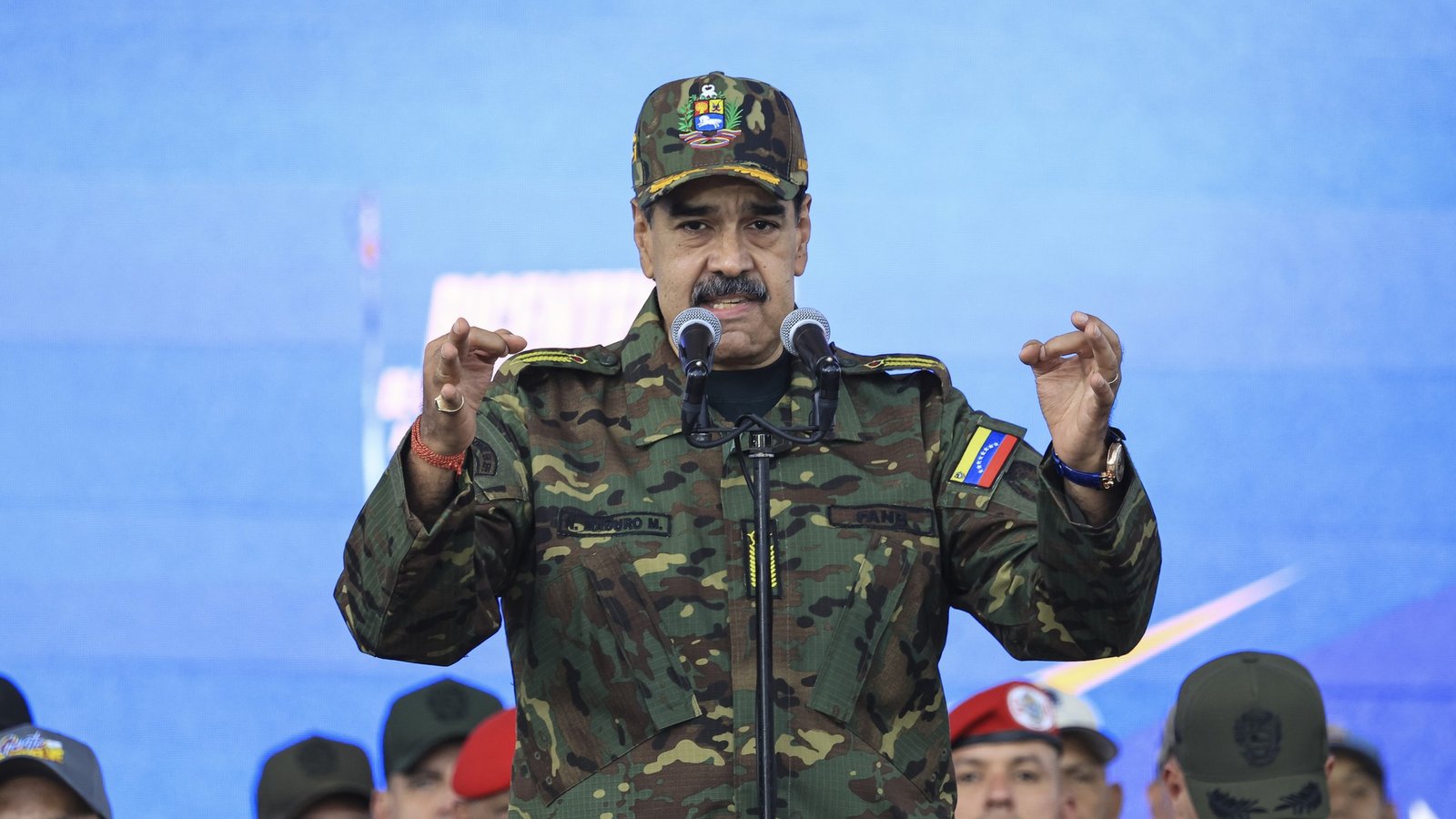
The U.S. has sent its largest aircraft carrier and 15,000 troops to the Caribbean, where Venezuela is sitting on the world’s biggest known oil reserve. As tensions rise, Venezuelan President Nicolás Maduro has accused the U.S. government of attempting to seize the country’s natural resources.
In a letter to members of the Organization of the Petroleum Exporting Countries (OPEC+), Maduro decried U.S. “aggression,” which he said “seriously threatens the balance of the international energy market, both for producing and consuming countries.”

Download the SAN app today to stay up-to-date with Unbiased. Straight Facts™.
Point phone camera here
Unbiased. Straight Facts.TM
Venezuela holds the world’s largest proven oil reserves at 303 billion barrels.

The U.S. State Department has denied that oil plays a role in the decision to increase troops in the area.
The letter comes amid escalations in a conflict that began in September with strikes on boats originating from Venezuela suspected of smuggling drugs. U.S. government officials, including President Donald Trump and Defense Secretary Pete Hegseth, have said the vessels were carrying drugs and the strikes have killed alleged gang members and terrorists. Critics have questioned the vessel’s connections to gang activity or drug smuggling and said the strikes violate international law.
In total, the U.S. has conducted 21 strikes in the Caribbean and eastern Pacific Ocean, killing 82 people, according to Axios. As the U.S. and Venezuela move closer to direct conflict, the outcome will have implications for the economy and global oil markets.
How big are Venezuela’s oil reserves?
Venezuela holds the world’s largest proven oil reserves at 303 billion barrels, but the country only produces about 1 million barrels per day currently. That’s less than half as much oil as the country produced before President Nicolás Maduro took control in 2013, according to an analysis from the Atlantic Council, an international affairs think tank.
Venezuelan oil is a heavy, sour crude variety, in contrast to lighter, sweeter crude produced in the U.S. Venezuelan crude oil is better for producing diesel, asphalt and fuels for factories and other heavy equipment, CNN reported.
A large portion of U.S. refineries were constructed to process Venezuela’s heavy oil, and they’re significantly more efficient when using Venezuelan oil compared to American oil, Phil Flynn, senior market analyst at the Price Futures Group, told CNN.
What are the implications for the economy?
In the short term, direct conflict between the U.S. and Venezuela could disrupt the flow of oil and impact diesel fuel prices. The Atlantic Council pointed to an already tight market specifically for heavy crude used to produce diesel, and said higher diesel prices could increase inflation across the broader economy.
“Venezuelan production would likely require several years to recover from any large-scale US military intervention,” wrote Joseph Webster and David Goldwyn, for the Atlantic Council in November.
On the other hand, some U.S. elected officials are eyeing the oil reserves as an opportunity for American companies.
“American companies can go in and fix the oil rigs and everything that has to do with the Venezuelan petroleum companies,” said Rep. Maria Salazar, R-Fla., in an interview on Fox Business.
Salazar said opening up Venezuelan oil reserves would be a “field day” for the U.S.-based oil and gas industry, with the potential to generate upward of $1 trillion in economic activity.
Chevron is already active in Venezuela after winning an exemption from U.S. sanctions barring companies from dealing with Maduro’s government, the wall street Journal reported. After being granted a license in July, Chevron’s plans to extract Venezuelan oil are complicated by the escalating tension.
Much of the infrastructure needed to extract and process more Venezuelan oil needs upgrading, which CNN reports could cost about $58 billion.