Secretary of State Marco Rubio said America is not at war with Venezuela, a day after the U.S. military carried out airstrikes on the country and captured its leader, Nicolás Maduro, and his wife. On NBC’s Meet the Press Sunday, Rubio said the U.S. is “at war against drug trafficking organizations,” not Venezuela itself. “We […]
Menej ako 1 min. min.
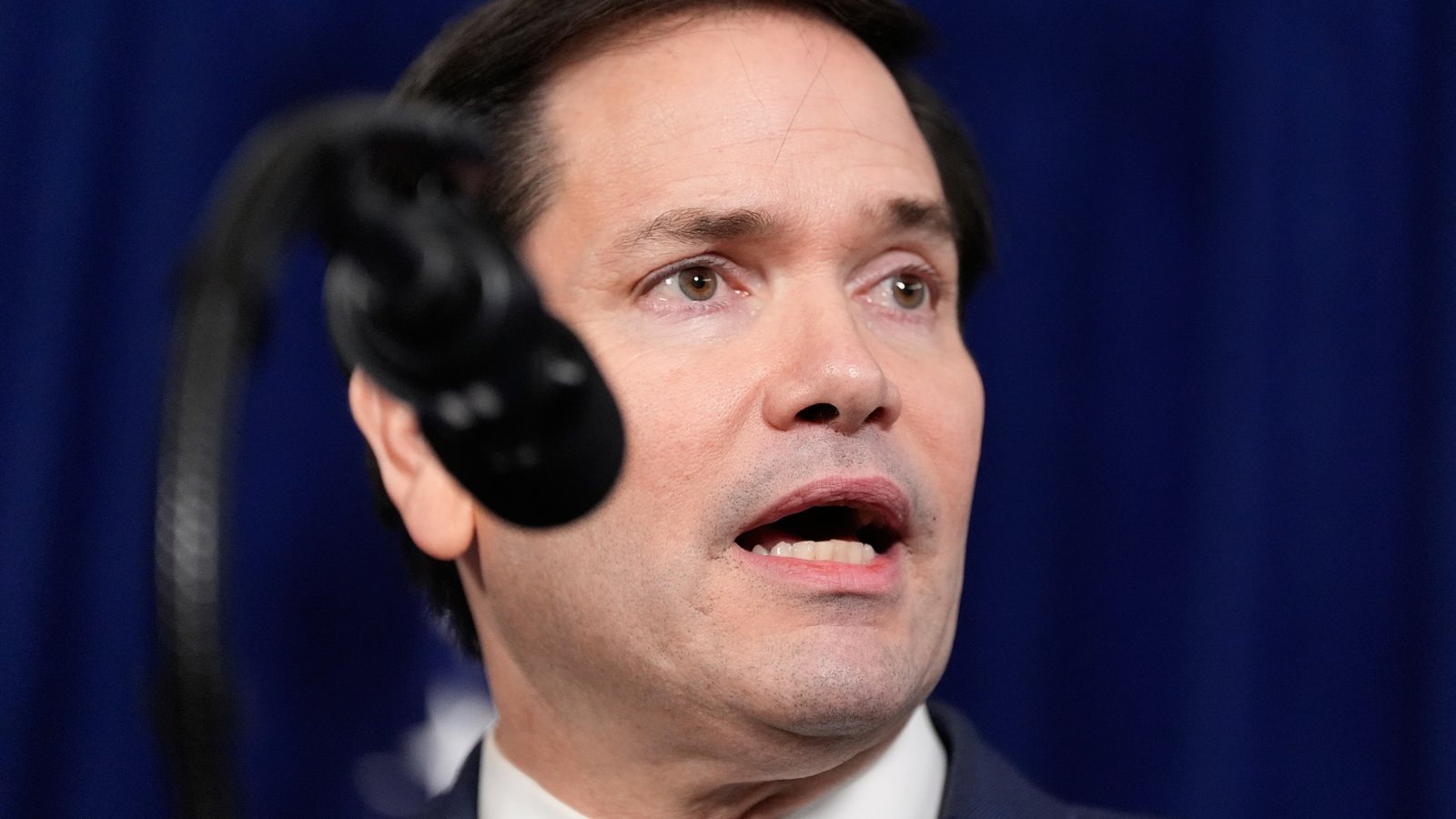
Secretary of State Marco Rubio said America is not at war with Venezuela, a day after the U.S. military carried out airstrikes on the country and captured its leader, Nicolás Maduro, and his wife. On NBC’s Meet the Press Sunday, Rubio said the U.S. is “at war against drug trafficking organizations,” not Venezuela itself.
“We don’t have U.S. forces on the ground in Venezuela,” Rubio said.
When asked, though, about who’s running Venezuela now, he was more vague, saying that people keep “fixating on that.”

Download the SAN app today to stay up-to-date with Unbiased. Straight Facts™.
Point phone camera here
“Here’s the bottom line on it… we expect to see changes in Venezuela — changes of all kinds, long term, short term. We’d love to see all kinds of changes, but the most immediate changes are the ones that are in the national interest of the United States,” Rubio said. “That’s why we’re involved here, because of how it applies and has a direct impact on the United States.”
Holding elections in Venezuela, he argued, is “premature at this point.”
On Saturday, after the strikes, U.S. President Donald Trump, at a news conference said that the U.S. is “going to run the country until such time as we can do a safe, proper and judicious transition.” Pressed about this on NBC, Rubio answered that “it’s running policy.”
“We want Venezuela to move in a certain direction because not only do we think it’s good for the people of Venezuela, it’s in our national interest,” Rubio said. ” It either touches on something that’s a threat to our national security or touches on something that’s either beneficial or harmful to our national interest.”
Added Rubio: “This is a team effort by the entire national security apparatus of our country.”
He made the same point on ABC News’ “This Week.”
“What we are running is the direction that this is going to move moving forward. And that is we have leverage,” Rubio said.
The Trump administration has been criticized for the military operation in Venezuela, as it did not get Congress’ approval for it. Rubio denied that this was needed in Sunday morning show interviews, stating on ABC that “You can’t congressionally notify something like this for two reasons.”
“Number one, it will leak. It’s as simple as that. And number two, it’s an exigent circumstance. It’s an emergent thin,” Rubio said.
He maintained that the goal of the military’s actions were to stop drug trafficking in the U.S.
But House Minority Leader Hakeem Jeffries, D-N.Y., who was also interviewed on “Meet The Press,” said Saturday’s operation “was not simply a counternarcotics operation.”
“It was an act of war,” Jeffries said.
Jeffries said there’s been “no evidence that the administration has presented to justify the actions that were taken in terms of there being an imminent threat to the health, the safety, the well-being, the national security of the American people.”
Sen. Tim Kaine, D-Va., a senior member of the Senate Armed Services Committee, said in a statement Saturday he plans to force a vote on a bipartisan resolution declaring the United States “should not be at war with Venezuela absent a clear congressional authorization.”
During his “Meet the Press” interview, Rubio touched on Cuba, which he previously said should be “concerned” following what happened in Venzuela.
“The Cuban Government is a huge problem, first of all, for the people of Cuba,” he said on NBC, though he declined to talk about what “future steps” would entail.
Still, he said “I don’t think it’s any mystery that we are not big fans of the Cuban regime, who, by the way, are the ones that were propping up Maduro.”
Trump on Saturday also addressed Cuba, saying that he thinks it’s “something we’ll end up talking about.”
“Cuba is a failing nation right now, a very badly failing nation, and we want to help the people,” he said.
In a statement Saturday, Cuban President Miguel Diaz-Canel condemned the Venezuela strikes and Maduro’s arrest, calling it “an act of state terrorism.”
“It is a shocking violation of the norms of international law — the military aggression against a peaceful nation that poses no threat to the United States,” he said.