India took charge of BRICS for 2026 on January 13, launching the official website, logo, and theme at a ceremony in New Delhi. External Affairs Minister S. Jaishankar unveiled these elements on the eve of Makar Sankranti, a harvest festival celebrated across India under different names: Lohri in Punjab, Pongal in Tamil Nadu, Magh Bihu […]
Menej ako 1 min. min.
India took charge of BRICS for 2026 on January 13, launching the official website, logo, and theme at a ceremony in New Delhi. External Affairs Minister S. Jaishankar unveiled these elements on the eve of Makar Sankranti, a harvest festival celebrated across India under different names: Lohri in Punjab, Pongal in Tamil Nadu, Magh Bihu in Assam, and Uttarayana in Gujarat.
The timing holds symbolic weight. Makar Sankranti marks new beginnings, prosperity, and the sun’s northward journey called Uttarayana. The festival embodies harmony and universal brotherhood through kite flying, bonfires, traditional sweets, and folk celebrations. Jaishankar drew this parallel directly: “Just as these festivals convey hope and goodwill, India’s BRICS chairship will seek to bring together the potential of BRICS countries for greater global welfare.”
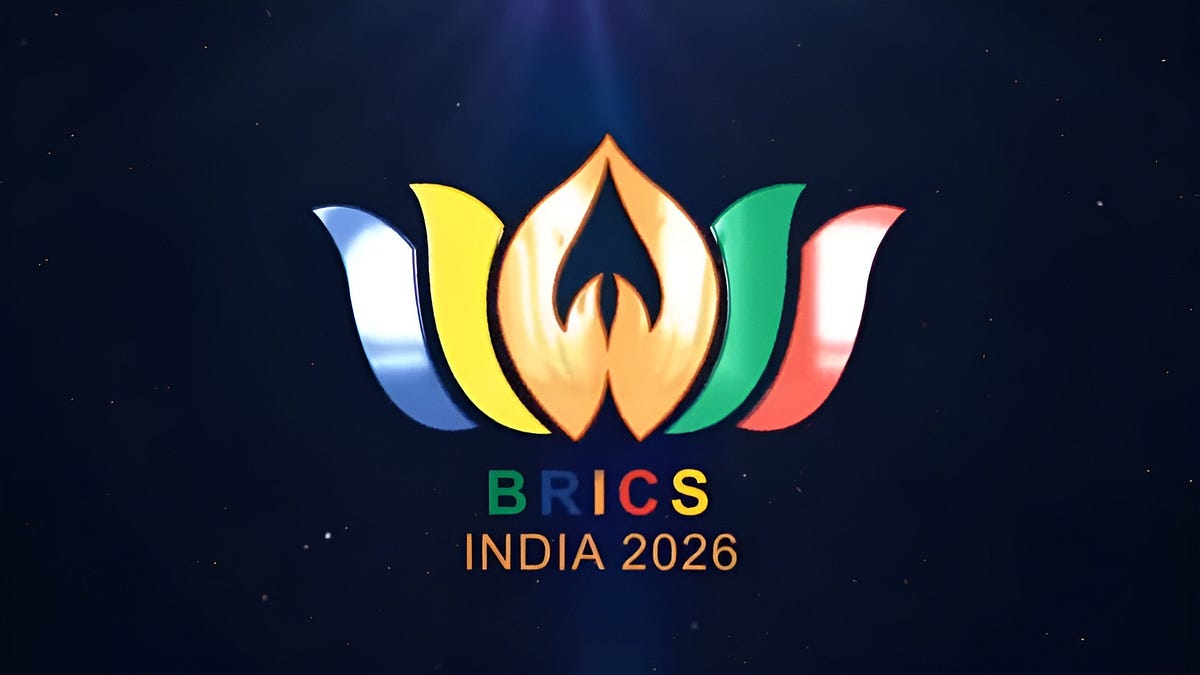
The new logo builds on the design India used during its 2021 BRICS presidency. This restyling keeps the lotus at its center. The flower represents heritage and resilience. The petals display colors from all BRICS member countries, reflecting unity across diverse nations.
At the core sits “namaste,” a gesture of respect and collaboration. The design blends tradition with modernity. Each petal signals a distinct national identity while serving a shared purpose.
Sudhakar Dalal, India’s BRICS Sherpa, explained the symbolism: “The new logo symbolizes cooperation and partnership among BRICS members and shared commitment to development and progress.”
India’s chairship follows a single theme: Building for Resilience, Innovation, Cooperation, and Sustainability.
Here’s what each priority means:
-
Resilience: Strengthening health systems, vaccine research, disaster response, food security, and energy supply chains to weather global shocks
-
Innovation: Advancing startups, digital identity systems, real-time payments, and green technologies to drive transformation
-
Cooperation: Reforming multilateral institutions like the UN, WTO, IMF, and World Bank to reflect contemporary realities
-
Sustainability: Promoting clean energy transition, biodiversity conservation, and sustainable living while respecting national circumstances
Jaishankar emphasized Prime Minister Narendra Modi’s “humanity first” approach. The chairship aims to address geopolitical uncertainties, economic complexities, climate risks, technological disruption, and persistent development gaps.
The minister stressed consensus and mutual respect: “India views BRICS as a constructive platform for dialogue and development complementing the broader multilateral system guided by the principles of mutual respect, sovereign equality and consensus.”
The new BRICS website serves as the central information hub during India’s chairship. You’ll find meeting schedules, initiatives, and outcomes posted throughout the year. The platform targets diverse users: media professionals, students, youth, business chambers, and the general public.
The National e-Governance Division developed the site with user experience as a priority. Dalal called the website “a single reliable source of information on BRICS activities, initiatives and outcomes during India’s chairship.”
The platform ensures transparency and timely information dissemination across all stakeholder groups.
BRICS turns 20 years old in 2026. The grouping evolved from Brazil, Russia, India, China, and South Africa to include multiple partner countries. India previously held the chairship in 2012, 2016, and 2021. The 2021 term fell during the COVID-19 pandemic.
Jaishankar highlighted the group’s evolution: “Over the years, BRICS has expanded its agenda and membership, responding to changing global realities while remaining focused on people-centric development, fostering dialogue and promoting practical cooperation.”
The New Development Bank, founded by BRICS countries, will finance infrastructure and sustainable development projects. India supports strengthening the bank as “a credible, responsible and financially sustainable institution.”
India’s fourth term as chair brings focus to people-centered development. The country will coordinate work across three foundational pillars:
-
Political and security cooperation
-
Economic and financial matters
-
Cultural and people-to-people exchanges
The third pillar emphasizes youth engagement, education, sports, tourism, and academic interactions. These exchanges build mutual understanding and lay groundwork for long-term cooperation.
India’s chairship will deepen engagement with partner countries while making the process “inclusive, practical, people-centered and outcome-oriented,” according to Jaishankar.
The ceremony brought together ministers, ambassadors from BRICS member and partner countries, government officials, think tank representatives, and business chambers. Their presence reflected the collective nature of India’s approach to BRICS leadership.
Join the Conversation:
📌 Subscribe to Think BRICS for weekly geopolitical video analysis beyond Western narratives