To hear the full depth of Pooria Asteraki’s insights and his personal testimony on life inside the Islamic Republic, watch the complete interview on the Think BRICS YouTube channel. As the world watches the escalating cycles of violence and regional conflict currently gripping the Middle East, the headlines often focus on the movements of militaries […]
Menej ako 1 min.
min.
To hear the full depth of Pooria Asteraki’s insights and his personal testimony on life inside the Islamic Republic, watch the complete interview on the Think BRICS YouTube channel.
As the world watches the escalating cycles of violence and regional conflict currently gripping the Middle East, the headlines often focus on the movements of militaries and the rhetoric of leaders. Yet, beneath the geopolitical surface lies a deeper, more enduring tragedy: the largely invisible suffering of the Iranian people, who have spent more than 40 years navigating a reality of isolation and economic warfare. Since the 1979 Revolution, Iran has been the subject of the most comprehensive sanctions regime in modern history—a policy tool that, while aimed at government behavior, has fundamentally reshaped the lives of ordinary citizens.
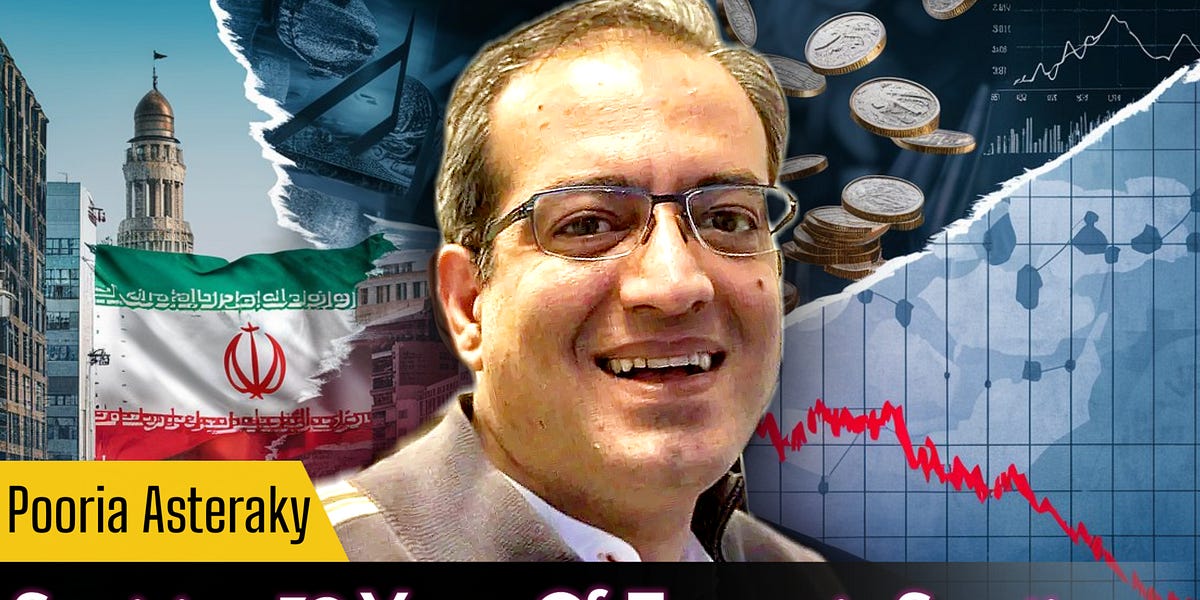
To understand the human reality behind these decades of pressure, we sat down with Pooria Asteraki, a prominent journalist and media activist based in the heart of Tehran. As the Chief Editor of BCA Magazine, and an expert in blockchain technology and organizer of the deBlock Summit, Asteraki offers a unique vantage point. He is not a voice from the diaspora, but a professional living and working within the system he describes—a man who has been interviewed by the BBC and Al Jazeera to explain the complexities of a nation often misunderstood by the West.
In our extensive interview that we made 2 years ago on Think BRICS, Asteraki pulls back the curtain on the “maximum pressure” policy—a strategy explicitly designed to make life so difficult for the Iranian people that they are driven to protest or even civil war.
“The only goal of sanction that has been achieved,” Asteraki notes with a quiet urgency, “is hurting Iranian people”.
He describes a landscape where the “sanctions net” has widened over decades, moving from targeted responses to the 1979 hostage crisis to broad strikes against the country’s energy, banking, and shipping sectors. While policymakers in Washington debate the efficacy of these measures in halting nuclear programs or regional ambitions, Asteraki points to a different set of data: the slow-motion erosion of a middle class.
Perhaps the most resonant part of Asteraki’s testimony involves the “medicine paradox.” Western governments frequently claim that humanitarian goods, like food and medicine, are exempt from sanctions. Asteraki likens this to cutting off a house’s electricity and then telling the resident they are still free to watch their television.
“When there is no single bank transaction, how are you supposed to buy medicine?” he asks. He shares heartbreaking accounts of the practical fallout: the shortage of insulin for diabetics and the immense difficulty of managing the COVID-19 pandemic when the country was severed from the global financial system. Even as Iranians “try hard to help each other,” the systemic barriers turn every medical necessity into a high-stakes struggle against inflation and logistics.
For a general audience, the most relatable struggles might be the smallest ones. Asteraki highlights how the sanctions function as a digital wall for the Iranian youth. He speaks of students unable to pay application fees for international universities and freelancers—young, tech-savvy Iranians—who complete projects for foreign clients but find it impossible to receive a payment as small as $200 or $500.
“It’s not only economy,” Asteraki explains. “It targets different aspects of life and business and work and profession of each and every Iranian”. From the inability to access essential online resources to the 17% of the population turning to cryptocurrencies as a desperate alternative to a devaluing national currency, the interview paints a picture of a nation forced to become “smart in bypassing” a world that has largely turned its back.
Despite the grim economic indicators and the “deteriorated” quality of life, Asteraki is quick to counter the image of Iran as a mere wasteland of conflict. He describes a country of “beautiful nature” and “warm people” who remain incredibly welcoming to the few outsiders who visit. He speaks of the historic markets of Tehran and a society that, while struggling with minus-growth GDP and high inflation, continues to seek “alternative ways” to survive through new global alliances like BRICS.
This interview is more than an economic analysis; it is an invitation to see the Iranian people not as political abstractions, but as a community of 85 million individuals who have been “getting used to” a level of hardship that would be unthinkable in the West. Asteraki’s voice is a reminder that while governments fight, it is the ordinary citizen who pays the ultimate price for the “maximum pressure” of history.
Join the Conversation:
📌 Subscribe to Think BRICS for weekly geopolitical video analysis beyond Western narratives.