After an ambitious but poorly organized coup by the southern Yemeni elites supported by the UAE, Saudi Arabia delivered a counterstrike. Together with local loyalists, the Saudis effectively destroyed the pro-Emirati ecosystem in Yemen. However, from Abu Dhabi’s point of view, it is still too early to speak of a defeat. Even after the collapse […]
Menej ako 1 min. min.
After an ambitious but poorly organized coup by the southern Yemeni elites supported by the UAE, Saudi Arabia delivered a counterstrike.
Together with local loyalists, the Saudis effectively destroyed the pro-Emirati ecosystem in Yemen.
However, from Abu Dhabi’s point of view, it is still too early to speak of a defeat. Even after the collapse of the southerners, the Emirates retained ways to ensure a “showing of the flag” in this country.
The conflict between yesterday’s allies in Yemen began in December 2025, when the Southern Transitional Council (STC), supported by the UAE, under the pretext of conducting a counterterrorism operation, turned its weapons against its former partners — the northerners loyal to Saudi Arabia.
This happened with Abu Dhabi’s formal consent: the sheikhs were no longer satisfied with the balance of forces inside Yemen, which had clearly not developed in favor of the southerners, and they took advantage of the opportunity to redistribute local property.
Abu Dhabi’s calculation was ambitious, yet at the same time simple: the pro-Saudi elements, exhausted by a years-long war with the Houthis backed by Iran, did not represent a serious threat on the battlefield and certainly did not expect a stab in the back from their allies.
Furthermore, over the years, Saudi Arabia’s support for them had almost completely shifted into the diplomatic arena.
The UAE believed that in the event of an escalation, Riyadh would not want to return troops to Yemen, from where it had only recently withdrawn them with great difficulty and reputational losses, and therefore would agree to a deal on Abu Dhabi’s terms.
At first, the scheme really did work. The southerners quickly managed to break the resistance of the northerners and virtually reached the “historical borders” of South Yemen, whose formal revival (under the name “State of South Arabia”) they had proclaimed back in 2016.
The southerners rushed toward the country’s rich oil-bearing areas and the Yemeni–Saudi border in order to finally cut the local loyalists off from their sponsors.
However, as subsequent events showed, the Arabian neighbors were unable to predict Riyadh’s behavior.
The Saudi operation began on 30 December 2025, its formal pretext being the increasingly frequent transfer of weapons from the UAE to South Yemen.
Arabian armored units, which had spent more than a week at the border as a deterrent signal, entered Yemeni territory, sending the STC soldiers entrenched there into flight.
And after Saudi aviation, on the night of 1 January, struck the port of Mukalla — the key supply artery of the southerners — destroying the equipment and ammunition depots accumulated there, it became clear that no one intended to show them any leniency. Nor would the matter be limited to merely pushing southern units back from the Saudi border.
At the same time, Riyadh issued a public ultimatum to Abu Dhabi: Emirati military advisers had to leave Yemen promptly and cease supporting the southerners. Otherwise, they would become legitimate targets for the Saudi army.
By that point, the UAE had already realized it had made a fatal miscalculation in preparing the operation and therefore agreed to the proposed terms: by 3 January 2026, its military presence in mainland Yemen had effectively come to an end. And the STC forces were left practically one-on-one with the Saudi war machine.
After the Emirates demonstratively washed their hands of the affair, panic gripped the southerners: the front collapsed, and the temporary administrations created in the recaptured provinces fell apart. Some of the collaborators quickly surrendered to the mercy of the victors.
In less than a week, more than 90% of the territories seized by the southerners came under the control of Saudi Arabia and the local forces that had joined them (including nominally independent tribal militias).
By the end of 7 January, only a small patch of land in the southwest of the country remained under their control — without access to the sea, squeezed from different sides by pro-Saudi and pro-Iranian forces.
Against this backdrop, “envoys of peace” from among the high-ranking representatives of the STC rushed to Riyadh. The southerners hoped, if not to completely smooth over the conflict, then at least to agree on a territorial swap and freeze the status quo along the new lines.
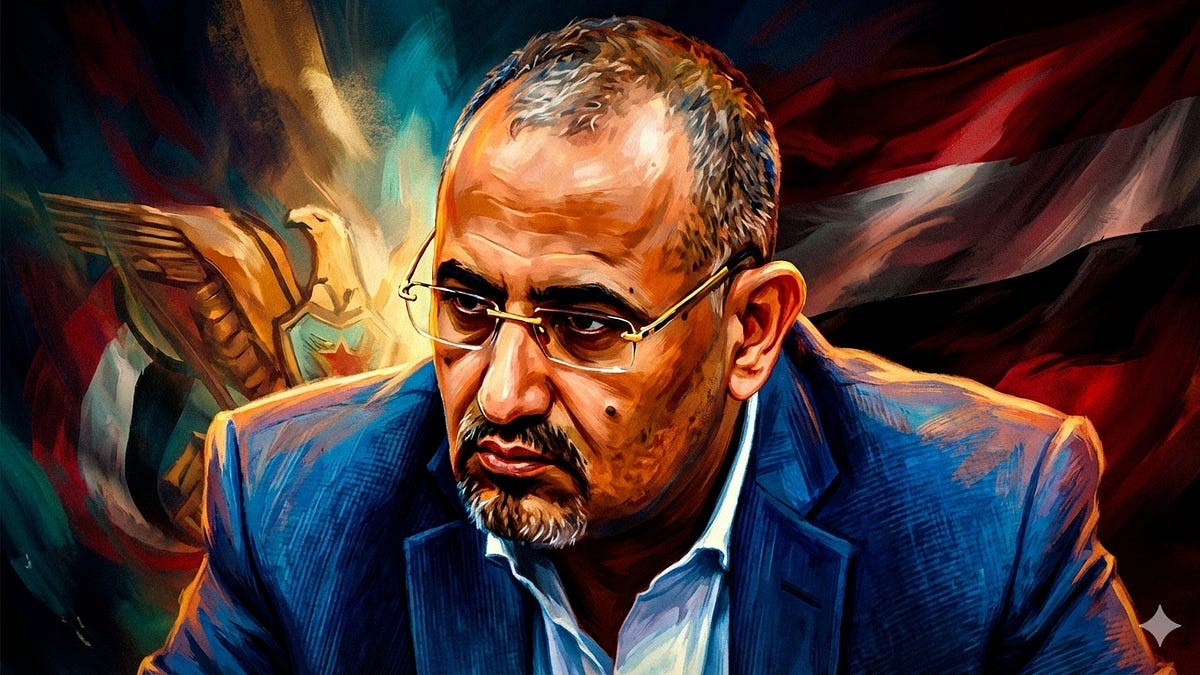
However, the Saudi courtiers did not receive their delegation, hinting that they would speak only with the initiator of the coup, the chairman of the STC, Aidarus al‑Zoubaidi.
Yet the southerners failed to reach him: at the most critical moment, the leader of the “State of South Arabia” disappeared from the radar and, according to available information, fled to the UAE. After that, he was promptly declared a traitor and struck from the political rolls.
Still, it is too early to consider this the end of his political career. It is possible that al‑Zoubaidi will soon reappear on the Yemeni political scene, but in a new status and with a new circle of supporters.
Despite the effective defeat of the pro-Emirati forces in Yemen, Abu Dhabi still has the ability to dictate its will in the Red Sea region.
All the more so because the Saudi military operation is taking place exclusively on land, while the valuable islands (Abd al‑Kuri, Perim, the islands of the Socotra archipelago), where reconnaissance and support infrastructure has been created, including sites for UAV launches, lie outside the combat zone.
Control over the local facilities, despite the formal withdrawal of UAE armed forces from Yemen, remains with Abu Dhabi and its “pocket” militias, such as the “Falcons of Socotra”, which cooperated with the STC but did not side with them during the failed offensive.
As a result, even after the rout of the southerners, the Emirates retained the ability to control the situation in the Bab el‑Mandeb Strait.
In addition, the UAE is increasing its presence in the autonomous region of Puntland (Somalia). The “core” facility there is the Bosaso air base, which was used as a transshipment point for supplying separatists in Sudan and, after the withdrawal of Emirati troops from Yemen, also became a gathering point for loyalists who had fled the country.
As for the future of the STC, the Emirates will most likely prefer to shut down this project as soon as possible. Several attempts to create a puppet state on Yemeni territory have not succeeded, and the local elites nurtured by Abu Dhabi split at the first external threat.
It is far more likely that the UAE will henceforth refrain from attempts to take revenge in mainland Yemen — at least until Riyadh calms down.
Original article by Leonid Tsukanov
Join the Conversation:
📌 Subscribe to Think BRICS for weekly geopolitical video analysis beyond Western narratives