⏱️ Čas čítania: 18 min (3,469 slov) Photo: Shahed 107 kamikaze drone unveiled (Shahed-101 platform) / @hmdmosavi / X The new edition of my newsletter on Russia discusses why sanctions matter and why there is still much more Western countries can and should do to weaken Russia’s military capabilities. Whether we are talking about the […]
Menej ako 1 min.
min.
⏱️ Čas čítania: 18 min (3,469 slov)
The new edition of my newsletter on Russia discusses why sanctions matter and why there is still much more Western countries can and should do to weaken Russia’s military capabilities. Whether we are talking about the new Shahed-107 UAV or Sukhoi aircraft, these systems continue to rely on Western components sourced through third countries. Much of the research I cite in this edition shows that fully substituting these components — as well as the machinery used to manufacture military equipment — is not feasible for Russia.
In this edition:
-
Russia and Venezuela Are Deepening Military Cooperation;
-
Russia’s Budget Crisis, Explained and What It Means for the War in Ukraine;
-
Vulnerabilities in Sukhoi Production: Clipping Russia’s Wings: RUSI Report;
-
Shahed-107 Drone;
-
10+ other developments in Russia.
My newsletters on Russia are always free — please feel free to share them with your network!
Military Cooperation and Alliances
Russia continues to supply weapons to Venezuela amid rising tensions between Venezuela and the United States.
The deputy head of the Russian parliament’s defence committee, Aleksei Zhuravlev said that Russia remains the country’s key military-technical partner and provides “a full spectrum of armaments — from small arms to combat aircraft.”
The official noted that the volumes and types of these deliveries are classified, hinting that “the Americans may be in for surprises.” He confirmed the transfer to Caracas of several divisions of S-300VM (Antey-2500) air-defense missile systems, as well as Buk-M2E and Pantsir-S1 systems.
Militarnyi reported that the S-300VM and Buk-M2E systems were already in service with the Venezuelan army, whereas the Pantsir-S1 has been delivered to the country for the first time.
Zhuravlev also said that Moscow could provide Venezuela with its intermediate-range ballistic missiles, Oreshnik, and Kalibr cruise missiles.
Intelligence Online reported that Russian drone instructors from the elite Rubikon unit were secretly flown to Venezuela aboard an Il-76 military aircraft to train local forces in FPV and wire-guided drone operations. The specialists arrived with their own equipment—assembly kits, programming modules, and fibre-optic guidance systems—and were stationed at secure facilities in Fuerte Tiuna in southern Caracas.
Read: Russia’s Rubikon: What Drives Its Success in Drone Warfare.
In May 2025, Russia and Venezuela signed a strategic partnership agreement that provides for military-technical cooperation. Lavrov said that while Venezuela remains a friendly nation and strategic partner, the relationship does not include mutual defense commitments.
Additional developments:
-
North Korea has cut its artillery shell shipments to Russia by more than half in 2025 due to dwindling stockpiles, Vadym Skibitskyi, deputy head of Ukraine’s military intelligence agency (HUR), said.
According to Skibitskyi, North Korea has begun mass production of FPV drones, as well as larger medium-range attack drones, on its own territory. “They are learning and drawing on their experience from this war to expand production at home,” he said.
By the end of 2025, Russia plans to bring in around 12,000 North Korean workers to the Alabuga Special Economic Zone in Tatarstan, where long-range Shahed/Geran-type drones are produced.
-
Myanmar said it had commissioned Russian helicopters and Chinese airplanes into its air force. Thus, Myanmar has become the first effective foreign recipient of the new Mi-38 helicopter family produced by the Kazan Helicopter Plant. The contract for the delivery of three Mi-38s to Myanmar was likely concluded back in January 2020, when Rosoboronexport announced that it had “signed the first contract with a foreign customer for the supply of the latest Mi-38T transport and assault helicopters.”
-
According to the US, Iranian nuclear scientists made two trips to Russia last year in an effort to acquire sensitive technologies with potential applications in nuclear weapons development.
The secret visit in November 2024, which followed an earlier trip in August, was part of a growing exchange between Russian military-linked research institutes and Iran’s Organization of Defensive Innovation and Research (SPND) — a body the U.S. identifies as being associated with Tehran’s armed forces and responsible for overseeing nuclear weapons research. -
India will pay around $2 billion to lease a nuclear-powered submarine from Russia, concluding a process that followed nearly ten years of negotiations between the two countries’ defence ministries – Bloomberg reported.
The submarine will be larger than the two Russian nuclear-powered vessels that previously served with the Indian Navy under earlier lease agreements.
-
The owner of a major Chinese drone parts supplier has acquired a 5% stake in Rustakt, one of Russia’s leading drone manufacturers. The move underscores the growing cooperation between the Russian and Chinese military-industrial sectors, particularly in the production of FPV drones used by Russia in the war against Ukraine.
Defence Production and Innovations
Russia intends to produce up to 120,000 of its inexpensive glide bombs this year, a HUR official told Reuters. This figure includes both newly manufactured munitions and older bombs upgraded with glide kits. Among them are roughly 500 of a new, longer-range variant. According to Ukraine, Russian forces are currently launching between 200 and 250 glide bombs each day, up from a daily average of around 170 last month, based on defence ministry data.
Defence Express notes that these figures indicate Russia is producing glide bombs not only for immediate deployment to the front “straight off the production line,” but also for building up stockpiles of this weaponry — and in significant quantities.
Additionally, according to HUR, in 2025, Russia is estimated to make a total of about 70,000 long-range drones, including 30,000 Shaheds.
Additional developments:
-
Russia’s arms exports, which before the invasion of Ukraine brought in around $14 billion in foreign revenue annually, have fallen by half compared to 2022. Reuters reported that these figures were announced at the Dubai Air Show 2025 by Sergey Chemezov, head of the state corporation Rostec. According to him, the defence industry is now working mainly to supply the Russian army itself.
-
Local residents recorded the fall and subsequent explosion of a missile near the settlement of Yasny in Russia’s Orenburg region. Militarnyi concluded that it was likely a UR-100N intercontinental ballistic missile equipped with an Avangard hypersonic glide vehicle. Based on the published video, an explosion occurred on board during the flight, causing the missile to lose control and crash to the ground. The remaining rocket fuel then detonated. The large orange cloud that formed indicates that this was a liquid-fuel missile using nitrogen-based propellants.
Russia’s Budget Crisis, Explained and What It Means for the War in Ukraine
Vladimir Milov, in his report for Free Russia Foundation, says that Russia has entered a full-blown budget crisis, which is now recognized by the authorities: the budget for 2026-2028 admits that Russia faces seven consecutive years of high budget deficit, something unseen since 1999, amounting to no less than a full-scale budget crisis.
-
Russia is not able to borrow money internationally due to sanctions, and even China is not ready to provide access for Russia to its domestic financial market.
-
Ballooning military expenditures are a key driver of Russia’s budget crisis, as publicly acknowledged recently by VTB Bank Chairman Andrey Kostin.
-
Here are the most important ways the budget crisis impacts the financing of the war:
-
High budget deficits do not allow for expanding military spending further. The Russian government is forced to cap further increases in military spending – at least on paper for now – because higher spending figures will devastate the markets that already don’t like budget deficits much.
-
Military production is severely underfinanced. As recently admitted by the CEO of Rostec, Russia’s largest arms producer, Russian military manufacturing companies face great financial difficulties: “the profitability of production remains low, and somewhere even zero, if not negative,” leaving “not too many funds for development;” production and investments “nearly completely depend on the state budget” given the dramatic contraction of arms exports from 2022-2025; sanctions and expensive credit are also taking its toll. In September 2025, as reported by the Government, monthly weapons and ammunition production had contracted for the first time since the beginning of the full-scale invasion of Ukraine.
-
Indexation of military salaries is highly insufficient, which impacts the motivation of military personnel. From October 1, 2025, military salaries were indexed only by 7.6%, which doesn’t even match officially reported inflation (over 8%), not to mention cumulative inflation of the past few years.
-
Russian regions started to sharply cut sign-up bonuses for contracting with the MoD. In October 2025, such large Russian regions as Saint Petersburg, Samara, Tatarstan, Bashkortostan, and others have sharply reduced regional payments of sign-up bonuses for signing a military contract by as much as 4-5 times in total.
-
-
This situation will exacerbate further.
-
This does not mean that Russia will be unable to carry out large missile and drone strikes on Ukraine or conduct limited offensive actions along parts of the front — the resources for operations of that scale will still exist. What is no longer feasible, given current constraints, are major offensive campaigns comparable to those launched in 2022.
Sanctions Evasion and Arms Control
HUR published new data on foreign equipment that Russia uses in weapon production, focusing on Eastern Asian companies, including the Japanese Okuma Corporation, Korean Samsung Machine Engineering Company, and Taiwanese AKIRA SEIKI.
HUR said that its list of equipment from Eastern Asian companies is helping Moscow produce a Unified Module for Gliding and Guidance (UMPK) kit for glide bombs, as well as missiles and artillery ammunition.
Also, HUR released information regarding the structure and manufacturing cooperation enterprises involved in the production of the Iskander-M ballistic missile. 13 of the 49 Russian enterprises are not currently under sanctions by any countries in the sanctions coalition.
Additional developments:
-
Entrepreneurs in Uzbekistan have established sanctions-bypassing channels to supply Russia with cotton cellulose, a key ingredient in the production of gunpowder and solid rocket fuels.
After the invasion of Ukraine began, the scale of this covert trade in cotton-based cellulose for Russia’s defence industry increased dramatically. For instance, in 2019, the Kazan Gunpowder Plant purchased 48 tonnes of cellulose from Uzbekistan. During 2022 and early 2023, it bought 1,225 tonnes from the Fergana chemical plant — worth $2.1 million. The volume of sales increased twenty-fivefold. -
Despite formally leaving the Russian market, Austrian optics manufacturer Swarovski Optik continues to be spotted on Russian weapons used in Ukraine. Typical Swarovski scopes cost between $3,000 and $5,000 and are comparable in quality to products made by Carl Zeiss.
Their high price makes them inaccessible to ordinary civilians — the main users are elite military units and security services, including the FSB and GRU special forces. -
The Homel-based cookware factory Santex has been supplying drones to the Russian army in circumvention of sanctions since the start of the full-scale invasion, according to an investigation by the Belarusian Investigative Centre (BIC). Journalists examined the company’s customs documentation, which shows that in 2022–2023, Santex delivered 309 DJI drones of Chinese origin to Russia, worth a total of $2 million.
According to BIC, between 2022 and 2025, 14 Belarusian companies sold more than 20,000 drones to Russia, with a combined value of $34 million.
-
The Insider reports that although most defence-industrial products are manufactured in Russia and even rely on Russian raw materials, the technological chain still contains imported “weak links” — catalysts, plasticisers, additives, and components of chemical-processing equipment.
For example, missile and aviation production requires fuels obtained through chemical processes such as hydrotreating, cracking, and reforming — all of which depend on catalytic reactions. The manufacture of weapon and ammunition components, as well as aircraft construction, also relies on phenol-formaldehyde and epoxy resins.
China, India, and Iran help Russia bypass shortages of chemical substances and technologies. Through these countries, Russian factories receive products, including those originally manufactured by Western suppliers.
Vulnerabilities in Sukhoi Production: Clipping Russia’s Wings: RUSI Report
Excellent report by Nikolay Staykov and Jack Watling for RUSI on the exposure of Russia’s production of Sukhoi combat aircraft to industrial disruption, and the opportunities to displace Russia’s defence exports in the aerospace sector.
This paper is concerned exclusively with combat aircraft that remain in production – the Su-30MK, Su-30SM, Su-34, Su-35S and Su-57 – and does not cover wider Russian aviation, including Tu-160 bombers, Il-76 and Il-78 transport aircraft, and other military aviation.
Check the full report for a detailed list of Russian enterprises involved in Sukhoi production, as well as the Western manufacturers supplying critical components for the aircraft.
Here are some key takeaways:
-
The Soviet Union and, thereafter, the Russian Federation have been a leading manufacturer and exporter of fighter jets since the 1950s.
-
Russia’s aerospace industry today is consolidated under the United Aircraft Corporation (OAC). Within OAC, Sukhoi is the largest element working on the production and modernisation of Russian combat aviation.
-
Today, Sukhoi fighters provide high-yield and precise firepower in the form of glide bombs for Russian ground forces in Ukraine, and complicate Russia’s layered system of air defence for NATO air forces. Combat aircraft have also become an important layer of Russian ISTAR and battle damage assessment.
-
While Russian combat aircraft are less capable than NATO or Chinese equivalents, they still serve important battlefield functions.
-
Russian fighters are optimised to perform three functions.
-
The first is maintaining medium- to high-altitude combat air patrols for defensive counter-air (DCA) operations.
-
The second is the delivery of precision firepower in support of ground operations, with a particular emphasis on the reduction of enemy strong points rather than interdiction.
-
Third, Russian fighters have been tasked with escorting bombers or naval vessels and conducting periodic intercepts beyond Russia’s borders.
-
-
During Russia’s full-scale invasion of Ukraine, the Russians have moved away from both medium-altitude precision bombing and lobbed rocket salvos by aircraft at low altitude, to instead employ gravity bombs augmented with a glide and guidance kit (UMPK).
-
In 2022, Russia assessed what capabilities would achieve the greatest damage for the lowest price per unit and identified the UMPK fitted to its FAB-500, FAB-1000 and FAB-1500 bombs as the most promising capability against this metric.
-
Primarily dropped from Su-34, glide bombs are now systematically used as part of Russian preparatory fires, destroying defensive positions in advance of Russian ground force operations.
-
The Sukhoi manufacturing enterprise involves many primary and secondary production facilities distributed across Russia. Sukhoi production requires a wide range of specialised metals and alloys, which are provided by dedicated facilities.
-
Import data shows that all main metal suppliers – most of which are not sanctioned – depend on critical imported materials such as titanium ores and concentrates, vanadium and molybdenum oxides, and alloying agents, such as rhenium, for their products.
-
At the higher level, Russia’s aviation industry appears to be a strong sovereign sector with advanced indigenous capabilities. However, Russia’s aviation industry is more susceptible to disruption from abroad than is generally appreciated, and this is creating real problems in the production of Sukhoi aircraft.
-
During the full-scale invasion of Ukraine, Russia has lost approximately 40 Su-34 and up to eight Su-35, while a subset of its fleets has built up significant fatigue hours.
-
Production of aircraft has increased during the war. In 2022, for instance, Russia produced nine Su-34. This rose to 13 in 2023 as Russia’s defence industry increased its shifts and was partially mobilised. The target for 2025 is 17 Su-34.
-
While Russia has therefore increased its output of aircraft and been able to largely replace its losses during the war, the struggle to significantly expand production stands in contrast to other parts of Russia’s defence industry, where outputs have increased between two and 10 times pre-war rates.
-
Throughout Russia’s aviation industry, a more detailed examination shows systematic use of Western-manufactured tools, equipment and components, along with other foreign-sourced materials.
-
For example, Russian engineers use the Ceyear 1465 Series Signal Generator, made by Meilhaus Electronic GmbH of Germany, which retails at around $90,000. Direct shipments from Germany to Russia are not visible in trade databases, but the equipment has been freely imported to Russia via China and Vietnam since 2022.
-
The manufacturing of specialist components for high-precision machinery requires precise measuring and testing equipment.
-
Russian manufacturers of avionics and the university laboratories all use the products of leading manufacturers of measuring equipment like the US-based Keysight and National Instruments or Germany’s Rhode & Schwartz and Ceyear.
-
In 2023 and 2024, Russian companies continued to import products made by Keysight and National Instruments mostly via China and Hong Kong, but also through Thailand, the UAE and Turkey. The most imported instruments included signal generators, oscillographs and spectrum analysers.
-
Substituting Western components with Chinese ones is not always possible. Even where it is possible, it can be highly disruptive in more complex products, such as in the aerospace sector.
-
Expanding the sanctions regime against the second and third tiers of the Sukhoi supply chain could help to disrupt production of Russian aircraft today and highlight to Russia’s potential export customers the risks in becoming dependent on Russia for the maintenance and provision of aircraft in the future.
-
Coordinating sanctions with Ukraine’s expanding deep strike campaign that is liable to further disrupt Russian metallurgy and defence industrial concerns over the next 12 months could see a compounding effect, whereby Russia struggles to replace damaged equipment.
Russian Drones
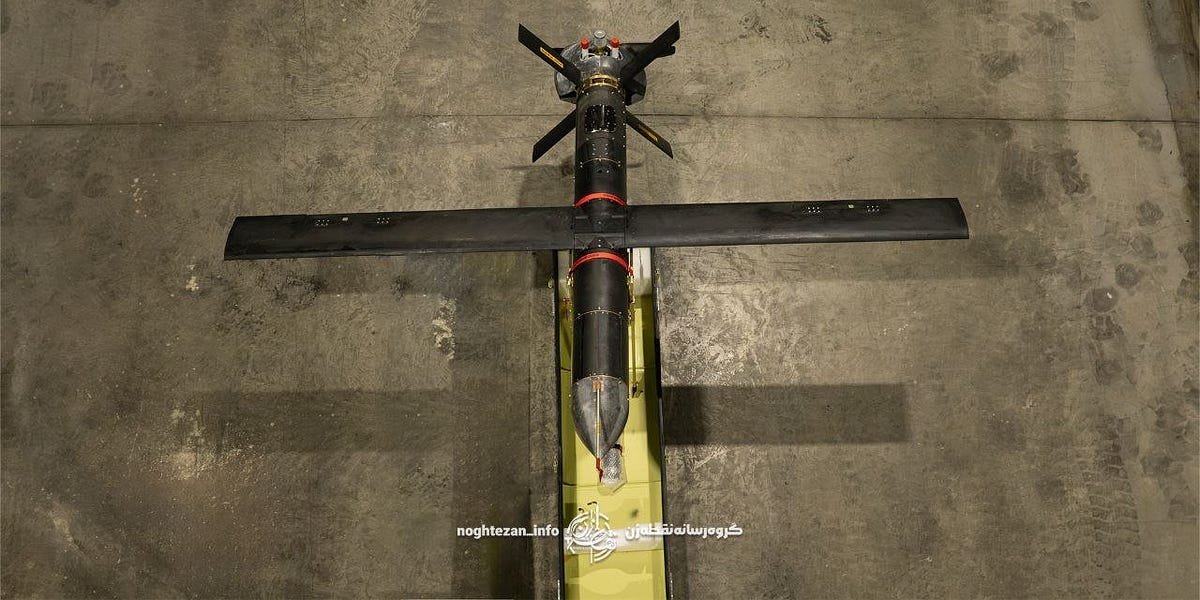
In November, Ukraine’s HUR released details about the new Iranian Shahed-107 drones that Russia is using to strike the frontline regions of Ukraine.
The Shahed-107 drones are believed to be equipped with technology for detecting high-value targets, including the British and American MLRS systems operated by the Ukrainian army.
In the sample examined by HUR specialists, the drone carried a 15-kg shaped-charge high-explosive fragmentation warhead. According to HUR, its characteristics are similar to those of other Iranian Shahed warheads, though it is smaller than the “standard” variants (40–50 kg) or the “enhanced” versions (up to 90 kg).
Ukrainian radio technology expert Serhiy FLASH Beskrestnov wrote about the trophy Shahed-107 in the following way: “We can see a CRPA antenna — this is satellite navigation to the target. We also understand that if it uses satellite navigation, then we have the capability to suppress that navigation. But we need to study in more detail how exactly this CRPA antenna works. For now, I can say that the range is certainly several hundred kilometers”.
According to him, it is still necessary to thoroughly analyze the exact flight range of these Shahed-107 — whether it is 200, 500, or 600 km. It is also important to determine the capacity of this drone’s fuel tank.
“I can say that this Shahed is 100% made in Iran. It has markings from around July 2024. So, this is not a Russian product — it is Iran supplying it to the Russian Federation,” FLASH wrote.
Like the Russian Gerbera, BM-35, Parody, and Delta drones, the new Shahed is equipped with a small Chinese-made two-stroke gasoline engine, the DLE 111.
As is the case with other types of Shahed drones, Iran and Russia rely on electronic components from Western and other countries, such as the U.S., Switzerland, China, Japan, Taiwan, the Netherlands, and Ireland, for Shahed-107 production, according to HUR.

Additional developments:
-
Russia has begun using Shahed kamikaze drones equipped with R-60 air-to-air missiles in an effort to overcome Ukrainian air defences. This represents an attempt by the aggressor state to escalate the conflict and counter Ukrainian helicopters, which frequently shoot down Russian UAVs.
The R-60 missile, also known as the AA-8 Aphid, is a short-range infrared missile. It homes in on the heat signature of an aircraft’s engine and can strike targets at a distance of roughly 8 kilometres. The weapon was designed specifically to engage helicopters and tactical aircraft.
Other Developments
-
In November, South Africa’s government said it had received distress calls from 17 citizens trapped in Ukraine’s Donbas region after joining mercenary forces. It stated that efforts were underway through diplomatic channels to bring them home, though no repatriation has occurred so far. The men had reportedly been recruited under the false promise of lucrative contracts, and the government condemned “the exploitation of young, vulnerable people by individuals working with foreign military entities.” Five people have been charged in relation to the alleged recruitment of men for the Russian military, according to South African police.
-
Institute for the Study of War, December 4, 2025: Putin reiterated his commitment to his original war aims from 2021 and 2022 and unwillingness to compromise during an interview with Indian media – likely as part of the Kremlin’s efforts to shape the international information space during the ongoing negotiations process. The Kremlin is setting conditions to frame any future agreement to not attack and seize Odesa and Mykolaiv cities as an alleged Russian “concession” in peace negotiations, even though Russia is currently incapable of seizing these cities. Russia appears to have launched a new cognitive warfare campaign aimed at spreading narratives about Russian preparations for an offensive on Chernihiv City.
Check out the list of all editions of Russia’s Arms Trends newsletter here: link.
Also, here is the Topic Navigator, where I’ve grouped all my posts by theme, such as “Deep Strike Capabilities”, “Air Defence and Counter-UAS”, and others.