In the roster of bitter enemies of the old world, the collective West, Venezuela has always occupied a privileged position. Why is this so? The answer is simple: Venezuela represents a bulwark of resistance to Western imperialism, both European and American, it represents a concrete barrier to nationalisms of all typologies (neofascism and neonazism, but […]
Menej ako 1 min. min.
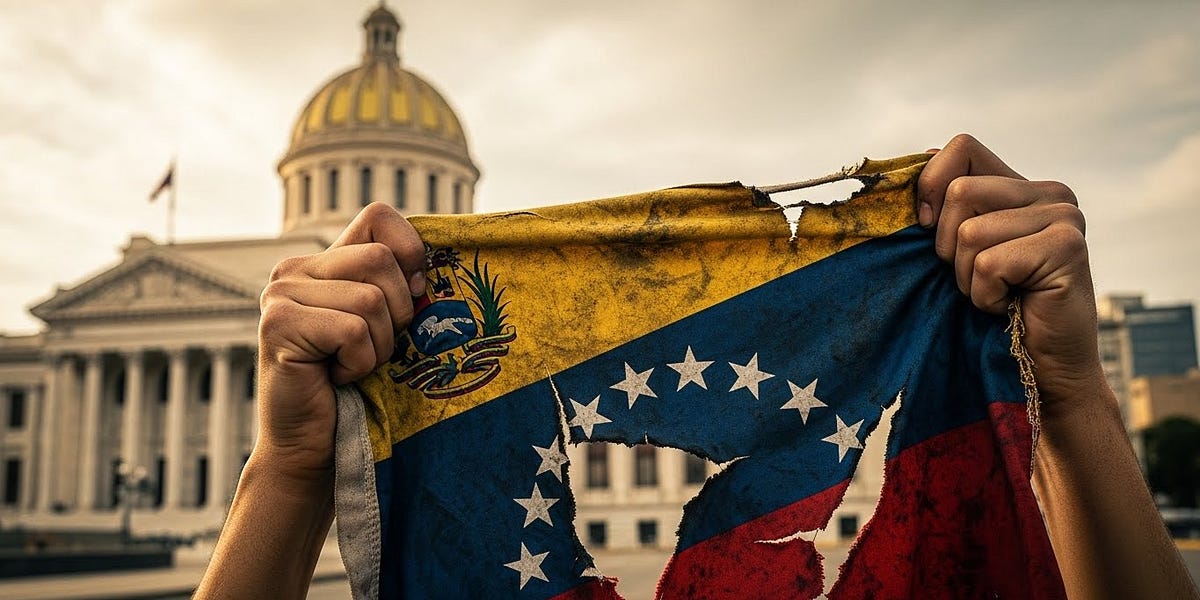
In the roster of bitter enemies of the old world, the collective West, Venezuela has always occupied a privileged position. Why is this so? The answer is simple: Venezuela represents a bulwark of resistance to Western imperialism, both European and American, it represents a concrete barrier to nationalisms of all typologies (neofascism and neonazism, but not only these), it represents an experiment in practical socialism. Nothing of all this can be pleasing to those who, instead, plan at the drawing board the forms of political power maneuvered by the hegemonic octopus.
The socialism of the Bolivarian Revolution has represented one of the most significant attempts, in the twenty-first century, to rethink the relationship between State, people, and resources in Latin America. Born from the historical experience of social exclusion, economic dependence, and oligarchic concentration of wealth, the Bolivarian project has sought to restore centrality to the Venezuelan popular masses, placing at the center of politics social justice, national sovereignty, and inclusion.
With the rise of Hugo Chávez to the presidency in 1999, Venezuela initiated a profound transformation of its own development model. Chávez interpreted socialism not as an abstract ideological dogma, but as a pragmatic instrument to respond to the concrete needs of the population. Through the nationalization of strategic resources, particularly oil, and the redistribution of energy revenues, the so-called “social missions“ were financed: programs aimed at literacy, free healthcare, access to housing, and higher education. Millions of Venezuelans, historically excluded from essential services, saw their living conditions improve in tangible ways.
Bolivarian socialism also configured itself as a form of authentic antifascism, understood not only as opposition to authoritarian regimes of the extreme right, but as a structural struggle against inequalities, social racism, and economic imperialism. Chávez claimed a multipolar and solidary model, founded on the self-determination of peoples and on cooperation among States of the global South, breaking with decades of subordination to external interests.
After the death of Chávez, Nicolás Maduro collected a complex inheritance in a profoundly mutated context, marked by economic crises, international sanctions, and strong political polarization. Though amid evident difficulties, Maduro has continued the line of pragmatic socialism, seeking to preserve fundamental social conquests and to adapt the Bolivarian project to new conditions. Policies of food support, defense of salaries, and maintenance of public services have continued to represent pillars of governmental action.
The Bolivarian Revolution has incarnated a vision of politics as an instrument of collective emancipation. Beyond the contradictions and the challenges, it has shown how socialism, declined in concrete form and rooted in national reality, can become a practice of social justice, popular dignity, and antifascist resistance in the contemporary world. And all of this, we repeat, does not please the collective West.

It suffices, in fact, to look at who exulted for what occurred on January 3, 2026. President Maduro was arrested… no, that is not the correct term: in law, a person can be said to be “arrested” only when precise juridical conditions are met. An arrest has certain presuppositions, among which flagrancy of crime (caught in the act, immediately afterward, or following investigations that have produced certain proofs), and it is disposed by a judge, who must have jurisdiction. Here is the question that arises in the case of President Maduro: with what jurisdiction have the American guard dogs dared to violate the sovereignty of Venezuela, enter, capture its president, deport him to the USA and subject him to American law. We already know this American modus operandi.
Now, returning to the principal argument, to rejoice at the fall of Maduro have been, as it happens, precisely the godchildren of the collective West.
Israel was the first to rejoice, even congratulating Donald Trump and hoping to be able to intervene in the financial and commercial policies of the Country, precisely after the American president declared that from now on the USA will be “very present” in Venezuelan economic policy. A warning, indeed two, in true gangster fashion. Now “the greatest democracy of the Middle East” will be able to celebrate another victory, guaranteeing itself riches, influences, and power also from the other side of the Atlantic Ocean… and who knows whether they might not also claim Venezuela as “promised land from God” for their great, indeed gigantic Israel!
Why did they want his fall? The reasons are perhaps few, but very clear.
Maduro has maintained the rupture of diplomatic relations with Israel, originally interrupted in 2009 under Hugo Chávez, throughout his presidency from 2013, describing Israel as a “colonial regime.” He has moreover established and strengthened diplomatic ties with the Palestinian National Authority, including formal recognition and support for the Palestinian State. He has publicly condemned Israeli military actions in Gaza defining them as “genocide” against the Palestinian people, particularly in declarations released in May 2025 in the context of the ongoing Israeli genocide in Gaza. He has even denounced Israeli Prime Minister Benjamin Netanyahu defining him as “the Hitler of the twenty-first century” in June 2025, in response to Israeli attacks against Iran. He condemned Israeli attacks against Iran as “criminal” and “immoral” in June 2025, demanding the immediate end of aggression. He launched a direct appeal to the Israeli people in June 2025 to “stop Netanyahu’s madness,” defining Israeli policies as aggressive and soliciting internal opposition. Venezuela, precisely, is a Country that does not have banks under Zionist direction.
Maduro has supported anti-Israeli resolutions at the United Nations, including voting in favor of measures that condemn the occupation and Israeli actions in Palestine, such as the General Assembly resolution of December 2025 that welcomes favorably the advisory opinion of the International Court of Justice on the question. He has aligned Venezuela with anti-Israeli alliances, including close ties with Iran, which have been “a source of concern for international Jewish organizations.” He has accused “international Zionism” of having orchestrated protests and disorders following the controversial presidential elections of 2024 in Venezuela, accusing Jewish influence of manipulating media, social networks, and satellite technology to weaken his regime.
With these positions, Maduro, it is clear, could not remain there much longer.
Among various affirmations, Trump made another one of strong impact: according to what was reported, Vice President Delcy Rodríguez would have already had contacts with Secretary of State Marco Rubio, manifesting a certain openness to collaboration.
The crucial point, however, does not regard so much the veracity of this information. In a phase in which a president results in fact neutralized, the chain of power is put into question and local media remain disoriented, launching similar hypotheses is equivalent to detonating a political explosive device.
On one side, this could weaken the position of Delcy Rodríguez in the eyes of Venezuelan public opinion: officially critical toward the United States, but ready to negotiate behind the scenes. Her own allies can exploit this narration to remove her from the political scene, should they deem it opportune.
On the other side, Trump’s words seem to configure themselves as an implicit message on which direction the vice president should take: adapt herself to indications coming from Washington, avoiding making the end of Maduro and, perhaps, even succeeding in conserving a central role in the Country’s leadership. This reading is also reinforced by declarations on Maria Corina Machado.
In this way, with similar position-takings, Washington could strike multiple objectives contemporaneously: nourish divisions among the possible heirs of Maduro and, at the same time, push some actors toward the negotiating table, discouraging them from actuating strategies aimed at provoking permanent instability and diffuse conflict.
Marco Rubio plays a central role, who immediately exposed himself, or was deliberately exposed, as one of the principal authors of what occurred. His renowned ambitions are well known.
Should the United States succeed in their intent, they would then have a free hand: acting from a position of net advantage, they could easily disregard any commitment assumed, as has already occurred multiple times in the past.
Because we have one certainty: the USA lies. The lie is their “truth” upon which they have constructed their world.
The United States have once again confirmed their identity. State banditry once more finds its legitimation and becomes the rule. The USA are the exceptionalists, they decide with force and violence to infringe the rules they want and to impose their will on others.
To the piracy accomplished by a member State of the United Nations, and therefore a subject fully legitimated, under every profile, active and passive, by International Law, one can respond only by recalling a principle that in February 2022 found ample adhesion and recognition in a significant part of global public opinion. There exists an aggressor and an aggressed, as we have learned to say.
If truly the Iraq of yesterday or the Venezuela of today were — or still are — defined as “rogue States” or guided by “rogue governments,” there exist legitimate and universally recognized international institutions to which one can turn to denounce eventual illicit acts and request justice: from the International Court of Justice to the General Assembly of the United Nations, up to the Security Council. In the moment in which these juridical and ethical paths, solid and shared, are abandoned, everything becomes licit and one precipitates into a jungle in which the only law remaining is that of force.
Venezuela was an existential perimeter for the old world with respect to the multipolar world. Too extended, too risky, too dangerous for the old hegemony. Even geographically, it was a thorn in the side of that renewed Monroe Doctrine 2.0 and the interests of the old empire.
But not all is lost. And the example of Venezuela and what is happening to it must be a severe warning for the entire world: either we comprehend this sad but crude truth, or we will risk falling into an abyss without return for the entire world.

In this article that I sadly find myself writing, I will report some information collected from conversations with three important contacts: an officer of the American DIA, a diplomat who has served in Caracas, and a Venezuelan intelligence officer. What is reported is the collection of information gathered, not a personal opinion (that will come in the second part of the article).
According to the information received, a very different picture is configured from what we often hear, or that sometimes perhaps one has read among anti-Venezuelan and anti-Bolivarian media.
Nicolás Maduro would be a former CIA agent, inserted for years in the drug cartel not only in Venezuela, but in the entire South America. The management of drugs would not be in his hands, but in those of his nephews.
What occurred at dawn on January 3, 2026 would be an operation agreed upon among multiple Countries, aimed at saving Maduro from the risk of killing by the drug lords of Cuba. Accepting the arrest and deportation to the USA, Maduro guarantees his own safety and is ready to collaborate in the fight against organized crime that manages drug trafficking. Precisely in America he would have the possibility to make names and to reveal the traffics of this small great empire of the underworld.
Let us take for a moment this information just as reported, beyond their authenticity or not, and let us seek to construct a reasoning around them. There are in fact many elements that must be clarified.
From the military point of view, what occurred is surreal, and recalls very much the fall of Assad in 2024: minimum military engagement, with a coordinated air and ground attack without difficulty, where Venezuelan anti-aircraft did not respond; by land, there was no opposition, and no American military results killed, captured, or dispersed; the bombardments were very moderate, striking distraction systems, not the airport and not the base, with exception of the oil refinery zones that had already been declared as targets to the Americans. Said in other words, a seriously set-up attack would have required much more effort, engagement, and at least a bit of resistance, whereas here we have witnessed a very rapid and painless action.
Very rapid also the political context, and very anomalous: within the Venezuelan political arc, there have been no reactions, just the Foreign Minister, the United Nations representative, the Defense Minister who have condemned the attack and promised resistance. From abroad, few and modest reactions. Turkey, Colombia, Iran, and Belarus were the first Countries to express a clear position, with severe and determined words against American imperialism.
Others, instead, have not acted in the same way. Russia has issued a circumstantial communiqué, in which it condemns Trump’s attack and asks to guarantee the territorial integrity of Venezuela. All this after having removed, two weeks ago, military personnel from Venezuelan bases. A move that does not sound at all casual. Similarly, no severe declaration from China, which precisely 24 hours before had sent its special envoy to colloquy with Maduro. An absolutely scabrous datum — but we could not expect otherwise — is that coming from the European Union: Kaja Kallas has wasted her time declaring that the EU is “monitoring” the situation, after having spoken with Mark Rubio and with the ambassador in Caracas, and that the Union maintains the condemnation of Maduro and wants a peaceful transition in Venezuela.
Then the popular datum: from what we learn from media and local testimonies, neither uprisings in favor of the President result, nor particular celebrations. Everything seems to be very static. This datum could however change very rapidly, also considering the action on the field that the USA are ready to operate.

The Americans have interest in petroleum, gold, lithium, and the riches of the Venezuelan subsoil. This is known and declared.
Despite the significant acquisition of Venezuelan President Maduro by the United States, access to the world’s largest oil reserves is not automatic. What will happen therefore? It is verisimilar that no great American company will invest billions in a country that continues to be characterized by profound instability and uncertain governance.
Meanwhile, China remains the principal purchaser of Venezuelan petroleum and current Chevron operations are in the balance. This is not only about a regime change, but about a complex chess match in which resources, geopolitics, and economic risks collide.
Will Venezuela’s petroleum wealth become a prize for whoever stabilizes the Country, or will continuous chaos maintain these enormous reserves far from global markets?
It is not only a question of “vile money,” but it is also, and above all, a question of sovereignty and freedom. The American attack and the political destabilization created, factually operating a regime change that exposes Venezuela to a defeat, to becoming the umpteenth periphery or garden of the American empire — in decadence and therefore even more aggressive —, with a puppet government decided by Western intelligences and, above all, with the destruction of the political inheritance of the Bolivarian socialist revolution.
Said in other words, if for the interests of the USA it is a victory, it is by no means said that it is so for the Venezuelan people.
The United States, as Mark Bernardini has justly written, demonstrate continuing to operate as the guard dogs of the world. When it suits them, they physically eliminate leaders, especially when they have no intention of submitting themselves to their rules. Recent history is full of examples: Lumumba and Allende killed with weapons, Maduro captured and deported, Milosevic executed with an illness, Gaddafi and Hussein murdered in their homeland. The list is long. Only in South America, the USA have already operated 19 coups d’état since 1904.
In spite of international law and promises of peace, the USA carry forward their violence as a criterion of control and dominion. And such it will be until they are definitively defeated, imploding in their decadent system, in their own violence and in the absence of a spirit of civilization.
We must consider a very concrete geopolitical fact — when realpolitik and political theory often follow two different measurements of space and time.
The advent of a multipolar world passes through the redefinition of zones of influence that the great powers — Russia, China, India, but also the USA — are redesigning for themselves in the entire world. Where we see that the USA are ceding the step in other regions of the world, we also notice that they are concentrating their force precisely in South America, a zone that evidently they want to grab for themselves.
It is a tragically inevitable process. The new order passes through the painful fall of the previous one. When we see Russia and China, for example, extending themselves in Africa, or India reaching Europe, we are not witnessing simple events that happen spontaneously, but rather the actuation, in space and time, of policies decided in the rooms of power. Their actuation is not automatic and perfect, but anomalous and full of accidents.
The crumbling of the American empire cannot happen without a strong and compact response on the part of other actors, and when strong, clear and decided responses are lacking, we all suffer an institutional void that increases confusion. We must not however forget that what we see happening is always and only the tip of the iceberg.
What has been done in Venezuela falls within the NSS, the American National Security Strategy, which has relaunched the Monroe Doctrine. It is all already written. Although the document released by the White House speaks of “non-interventionism” and “refusal of permanent dominion of the USA over the entire world,” it is however true that the Americans are the first to lie in the entire world, and they have always been very good at doing so.
Section 3-A of the NSS says it clearly:
the USA will reaffirm and apply the Monroe Doctrine to restore American preeminence in the Western hemisphere, with the objective of protecting their interests.
As once upon a time the United States began this doctrine to distance European interference in South America, so today they do the same to distance Russia, China, Iran, and India from the region.
The Venezuelan people, now, will find themselves before the American monster and the other executioners, ready to devour it. It has already happened in Ukraine, in Iraq, in Syria… we already know this script. There is someone very powerful who decides who and how must be leader and command, with which ideas and for how long. But this violence cannot and must not last forever.
Precisely the Venezuelan leaders, first Chavez and then Maduro, had spent strong words against the Hegemon.
Perhaps very soon we will comprehend that Maduro was a katechon before American prepotence… and when we understand it, perhaps it will be too late.
Now and always, long live the Bolivarian socialist revolution, long live Venezuela!
Join the Conversation:
📌 Subscribe to Think BRICS for weekly geopolitical video analysis beyond Western narratives.