Oil markets are reacting to tensions between the U.S. and Iran with a 5% bump in per-barrel price. If the conflict escalates, it could send U.S. gasoline prices higher, because Iran is a major oil producer and controls a global supply chain chokepoint. Large and long-lasting price spikes, however, are unlikely, oil market analysts told […]
Menej ako 1 min.
min.
Oil markets are reacting to tensions between the U.S. and Iran with a 5% bump in per-barrel price. If the conflict escalates, it could send U.S. gasoline prices higher, because Iran is a major oil producer and controls a global supply chain chokepoint.
Large and long-lasting price spikes, however, are unlikely, oil market analysts told Straight Arrow News. The prices Americans pay at the pump are expected to rise as winter gives way to spring, but normal seasonal changes are to blame.
“A lot of people are vastly overestimating the situation with Iran,” said Patrick De Haan, head of petroleum analysis at GasBuddy. In an interview with SAN, De Haan described the seasonal rise in prices that typically occurs in spring as refineries conduct maintenance and spring break travel picks up.
“Geopolitical tensions may enhance the increase,” De Haan said, “but it likely would be temporary.”
How much have oil prices changed already?
The price for a barrel of West Texas Intermediate (WTI) crude oil has risen more than 5% over the past five days, as of Thursday, to sit around $66.50. The primary global oil price ticker Brent is also up more than 5% over five days to more than $71.60. Both have risen by more than 10% in the past month.
The uptick comes as President Donald Trump is reportedly weighing his options on Iran, with U.S. military assets in a position to strike as soon as this week.
Experts are describing this week’s price swing as a premium for increased uncertainty in the region. The exact level of risk, however, is unknown. As long as the tension remains, oil prices will likely fluctuate as traders assess the likelihood that oil supply could be impaired and determine how to calculate that into what they’re willing to pay.
“There’s a spectrum of things that can happen here,” Skip York, a nonresident fellow at Rice University’s Baker Institute for Public Policy, told SAN. “We just don’t know the what or the when.”
Why do gasoline prices normally rise in the spring?
From the latter half of February to April and May, gasoline prices usually make a “pretty noticeable” rise of 25 to 65 cents per gallon, according to De Haan.
Unbiased. Straight Facts.TM
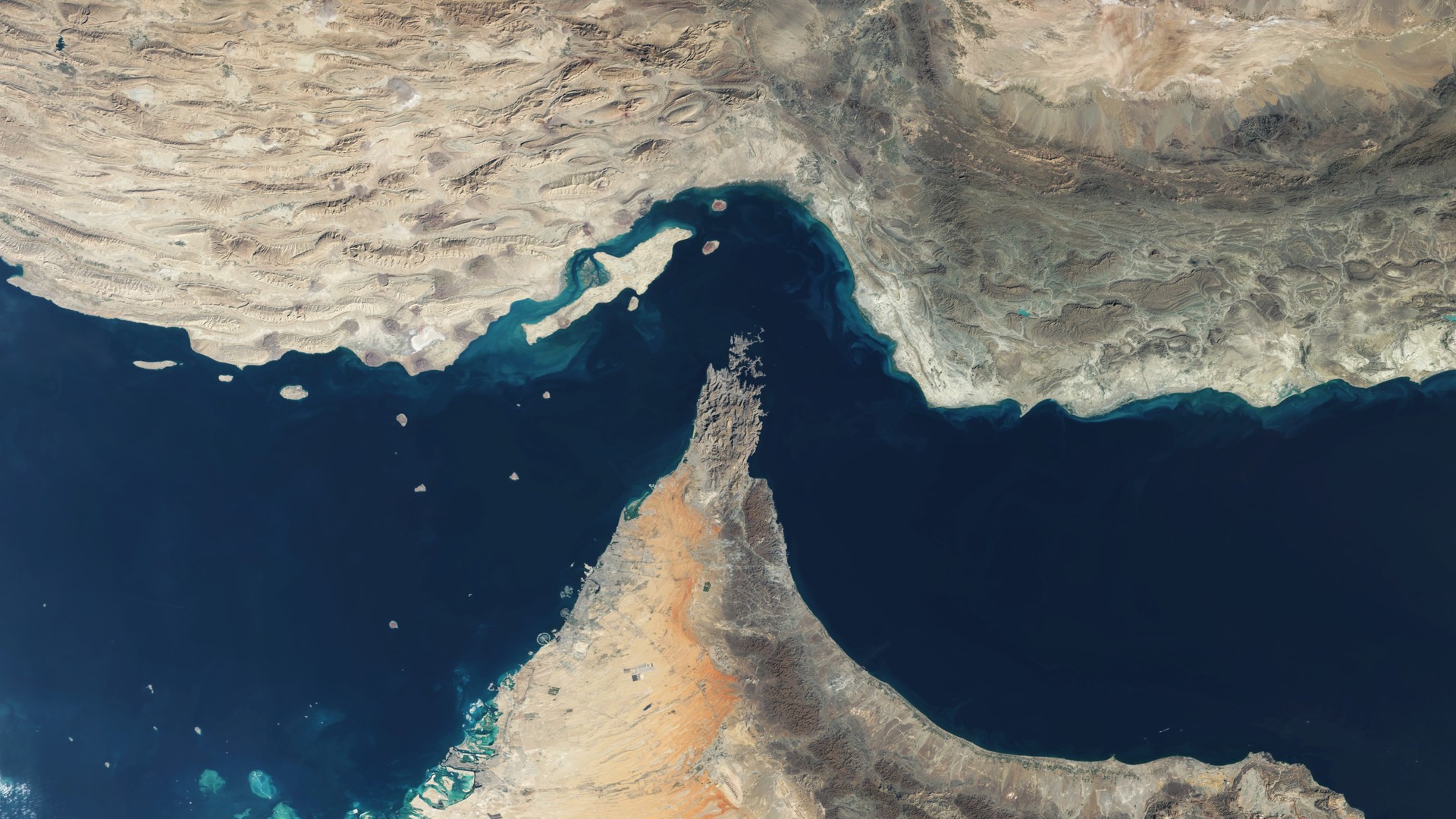
About 20 million barrels of oil per day pass through the Strait of Hormuz, a chokepoint bordering Iran.

A main driver of the increase is regular maintenance at U.S. refineries that process crude oil and turn it into gasoline. Refineries use the season to conduct standard repairs in preparation for summer’s peak gasoline demand.
“Generally, they have to shut down portions of their facilities,” De Haan said, which temporarily constricts gasoline supply. At the same time, warmer weather and spring break travel increases demand. And on top of that, many refiners switch to a slightly more expensive blend of gasoline for the summer.
De Haan said Americans will be paying more at the pump over the next few months, but he expects the situation in Iran to contribute only a few cents to the total rise.
“There’s a supply overhang right now,” said Jim Krane, lead on energy and geopolitics in the Middle East at Rice University’s Center for Energy Studies.
The global oil surplus due to record production from the U.S. and increases from Saudi Arabia and other OPEC countries means the market is in a good position to absorb some disruption without sending prices skyrocketing.
What could happen with the Strait of Hormuz?
But there’s one unknown that could shock global oil markets and prices at the pump: Will Iran attempt to block the Strait of Hormuz?
Each day, about 20 million barrels of oil pass through the Strait of Hormuz, which links the Persian Gulf to the Indian Ocean. That’s close to 30% of all maritime oil supply, making the strait on Iran’s southern coast a critical chokepoint in the global economy.
“Any impingement on exports from the strait will almost immediately affect prices,” Krane told SAN. And if the Iranian regime feels threatened, Krane said it may attempt to close the strait in order to disrupt oil supplies as a “strategy for Iran to try and whip up global opposition to attacks on its territory.”
Earlier this week as negotiations took place in Geneva, Iran temporarily closed part of the strait to conduct military drills.
De Haan said that given the immense build up of U.S. military assets, there’s an “extremely low potential that Iran would be successful in blocking in any way the Strait of Hormuz.”
In doing so, Iran would also be locking down its oil exports. But if the U.S. were to further restrict Iranian oil, which is already under heavy sanctions, Krane said it is more likely that Iran could resort to blocking the Strait, which would also restrict exports from Saudi Arabia, Iraq, the United Arab Emirates and Kuwait.
“If you want to start a war with Iran without antagonizing the American motorist, you need to let them continue exports,” Krane said.