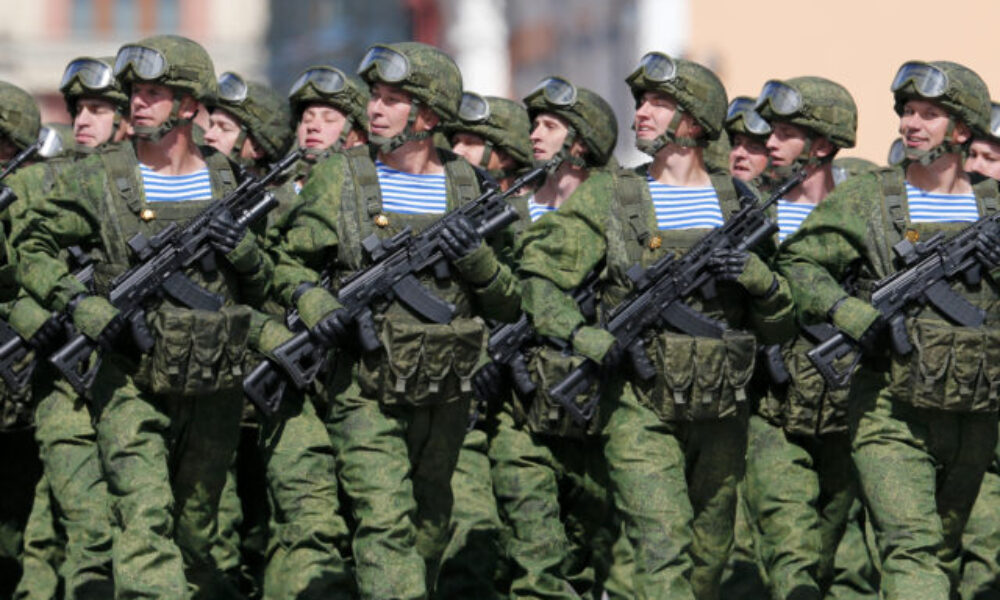
Defence alliances are an indispensable part of the Russia–Ukraine war. For years, we have seen Russia’s relations with some of its long-standing partners weaken for several reasons: Moscow’s increasingly unreliable behaviour as an ally, the absence of a decisive position of strength on the battlefield, and even its difficulties in protecting its own territory and […]
Menej ako 1 min.
min.
Defence alliances are an indispensable part of the Russia–Ukraine war. For years, we have seen Russia’s relations with some of its long-standing partners weaken for several reasons: Moscow’s increasingly unreliable behaviour as an ally, the absence of a decisive position of strength on the battlefield, and even its difficulties in protecting its own territory and critical infrastructure.
Ukraine’s ability to defend itself through domestic innovation, rapid adaptation, and a growing defence-industrial base may increasingly appear more attractive to countries looking for new security and defence partnerships.
Türkiye appears to be gradually moving closer to Ukraine on certain defence issues, Serbia has signalled interest in deeper engagement with Kyiv, and Kazakhstan’s leadership has become more outspoken in distancing itself from aspects of Russia’s war.
In this edition:
-
Türkiye Sells Critical Defence Equipment to Ukraine;
-
War-Related GPS Jamming Could Pose Problems for Civil Aviation in Europe;
-
Ukraine’s Interceptors Against Jet-Powered Shaheds: Key Challenges;
-
and 10+ additional developments in Ukraine and Russia.
As I’ve repeatedly mentioned, none of the content in my newsletter is sponsored, and I produce it as an independent researcher. That is why your paid subscription would significantly support my work!
For drone-related developments, check Drone warfare in Ukraine: battlefield testing and emerging UAV trends and Ukraine Drone Brief.
Türkiye Sells Critical Defence Equipment to Ukraine
According to the U.S. State Department, Ukraine acquired from Türkiye 70 M39 ATACMS ballistic missiles, 12 M270 multiple-launch rocket systems capable of firing GMLRS and ATACMS, and tens of thousands of cluster munitions.
The U.S. State Department has notified Congress that it is prepared to approve the transfer, saying it is consistent with U.S. security assistance objectives.
According to the documents, Türkiye wants to reduce its stocks of older weapons so it can focus on modernization and sustainment of existing systems. Ukraine, meanwhile, seeks to acquire the equipment to strengthen its offensive and defensive fire-support capabilities against Russia. The transfer is expected to begin once the congressional review period is completed.
The founder of Ukraine’s Kruk drone training center, Viktor Taran, wrote that the transfer is politically significant: Türkiye is re-exporting a U.S.-origin strike system to Ukraine with Washington’s approval, potentially creating a precedent for other countries holding American-made weapons.
According to Viktor, the 12 M270 launchers are particularly significant because each carries two rocket pods, compared with one on HIMARS, effectively doubling the salvo per vehicle and increasing the number of Ukrainian launch platforms Russia must locate and target.
The package also includes around 2,500 unguided M26 rockets with cluster warheads, providing Ukraine with a cheaper option for striking troop concentrations, assembly areas and other dispersed battlefield targets without expending scarce precision-guided munitions.
The older M39 ATACMS lacks GPS guidance and is less precise than later variants, but its cluster warhead contains hundreds of submunitions, making it useful against dispersed targets such as airfields, air-defence positions and ammunition depots. Ukraine previously used this type of ATACMS against Russian helicopter bases in Berdyansk and Luhansk in October 2023.
According to Russian Telegram channels, some ATACMS missiles may already have been delivered to Ukraine. Such transfers could be carried out discreetly via commercial shipping routes from Türkiye to Ukraine or through the Romanian port of Constanța.
Russians also argue that the reported transfer comes as Ukraine is preparing for more intensive operations in the autumn, while accumulating long-range strike capabilities, including drones and Flamingo missiles.
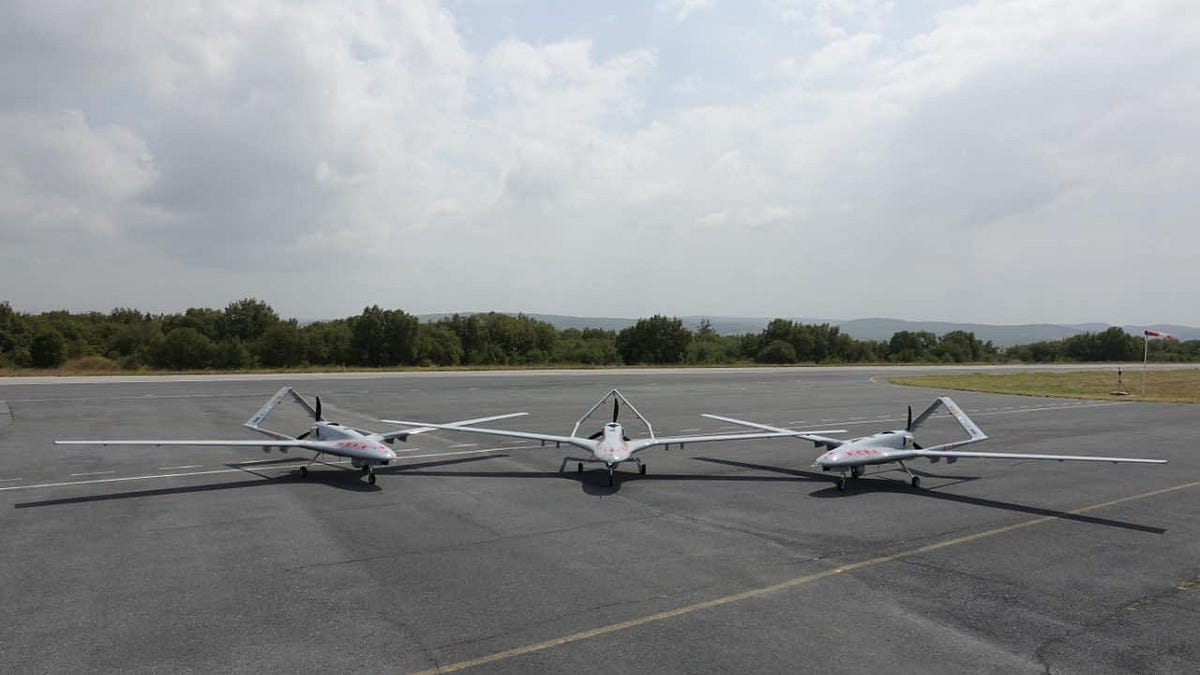
Türkiye, while supplying military assistance to Ukraine in a more low-key manner, has always been an important contributor to Ukraine’s defence capabilities. In particular, the use of Bayraktar TB2 drones by Ukraine’s Defence Forces proved highly effective at the beginning of the full-scale invasion. Although their significance later declined due to Russia’s advanced electronic warfare capabilities, in summer 2025, after a long pause, Bayraktar TB2 drones reappeared in the sky as Ukrainian forces struck a Russian boat and troops on the Black Sea coast.
In June 2026, the Ukrainian Navy released rare footage showing the destruction of an entire group of Russian unmanned surface vessels heading toward the Ukrainian coast. Defence Express noted that the footage shows the distinctive interface of a Bayraktar TB2 strike drone, suggesting that the system was used in the operation.
The strikes were likely carried out using MAM-L or MAM-C guided munitions, or laser-guided missiles with semi-active seekers, which have previously been seen in service with Ukrainian Bayraktar TB2s.
Following extensive Ukrainian strikes against Russian radar stations and surface-to-air missile systems, including in occupied Crimea, the operating environment over parts of the Black Sea appears to have become more permissive. This has allowed Ukraine to employ Bayraktar TB2s again against Russian boats and USVs.
In addition to Bayraktar drones, Türkiye has also provided laser-guided missiles, protective gear, Kirpi armoured vehicles, Cobta II armoured vehicles, Escort BTS410 semi-automatic shotguns, Canik M2 heavy machine guns to Ukraine.
Recent policy signals from Türkiye — including its decision to join the Drone Capability Coalition for Ukraine and its willingness to abandon the Russian S-400 air defence system to potentially return to the F-35 fifth-generation fighter program — demonstrate a shift toward deeper cooperation with NATO allies. According to The WSJ, as of July 2026, Turkey was in talks to transfer S-400 to the UAE in hopes of lifting the US ban on its purchase of advanced F-35 warplanes.
Last week, Türkiye proposed that both Russia and Ukraine declare a moratorium on strikes against vessels in the Black Sea and is awaiting responses from both sides. Attacks have affected Turkish vessels, as well as ships with Turkish owners or Turkish crews.
Read my earlier report: Bayraktar TB2 Drones and Ukraine-Türkiye Strategic Defence Partnership.
War-Related GPS Jamming Could Pose Problems for Civil Aviation in Europe
According to WIRED, the May accident involving a twin-engine Beechcraft King Air medevac plane, which crashed after taking off from Roswell, New Mexico, occurred while U.S. military personnel were conducting a GPS-jamming exercise. It marked the first time GPS jamming had contributed to the crash of a civilian aircraft in the United States.
GPS disruptions caused by electronic warfare might affect civilian aviation in Europe, particularly over the Baltic Sea. This creates navigation risks, as pilots may lose the signal or receive false positioning data.