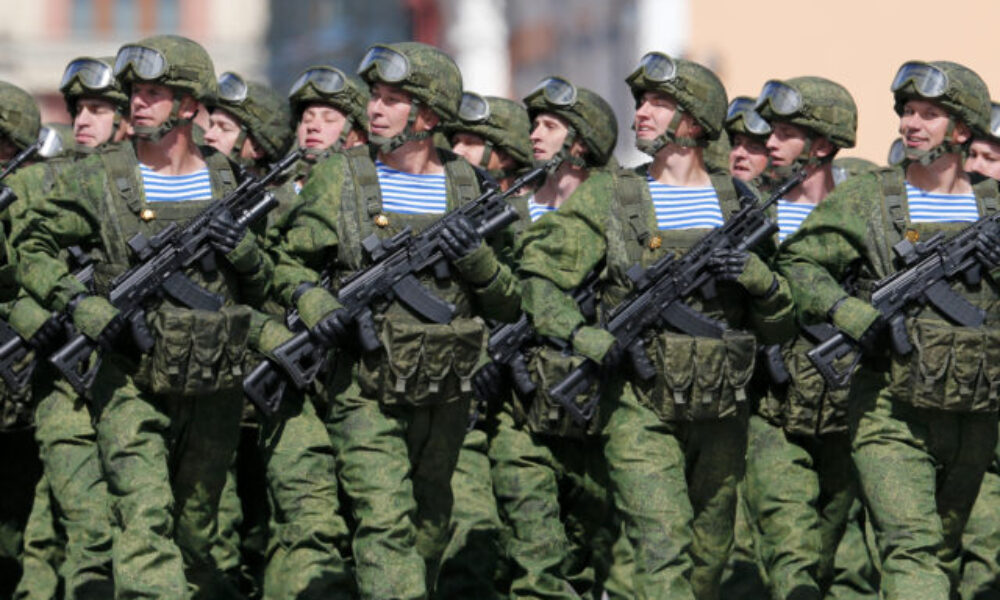
Photo: 91st Separate Anti-Tank Battalion / Facebook Today is Ukraine’s 35th Independence Day! 🇺🇦 For more than a third of those 35 years, Ukraine has been defending itself against aggression from its neighbour, Russia. All that time and resources could have been spent on economic development, education, and culture. Instead, Ukraine has already been at […]

Menej ako 1 min.
min.
Today is Ukraine’s 35th Independence Day! 🇺🇦 For more than a third of those 35 years, Ukraine has been defending itself against aggression from its neighbour, Russia. All that time and resources could have been spent on economic development, education, and culture. Instead, Ukraine has already been at war for 12 years and is now spending 40% of its GDP on defence while losing its youngest and brightest people.
Ukraine, which entered this war essentially disarmed, has transformed into a global security provider, helping allies and partners around the world defend themselves against dictatorial regimes seeking greater global dominance.
On this 35th Independence Day, we should thank everyone serving in Ukraine’s Defence Forces, everyone working in the Ukrainian defence industry and civil society, and all Ukrainians who contribute to the country’s resilience and keep it a stronghold of democracy.
We should also value a society that remains vocal, that disagrees and protests, that is not afraid to criticize, and that continues to ask for the support it needs to carry out a mission that is not only about Ukraine’s future, but about the future of all democracies.
Glory to Ukraine! Glory to Heroes!
For the occasion of Ukraine’s Independence Day, this edition of my newsletter is free.
In this edition:
-
Ukraine Aims to Secure Additional Air Defence Missiles Ahead of Winter;
-
Ukraine Advances Development and Production of Domestic KABs;
-
How the Helicopter War Is Changing in Ukraine;
-
and 10+ additional developments in Ukraine and Russia.
Thank you for reading and supporting my work and Ukraine!
Ukraine Aims to Secure Additional Air Defence Missiles Ahead of Winter
CNN was recently granted access to a Patriot system operating in Ukraine, allowing Ukrainian officials to highlight the severity of the country’s interceptor shortage. The launcher showed clear signs of frequent use across all 16 launch tubes. However, the system’s chief engineer in Ukraine said he had not seen the Patriot fire in six weeks.
According to Ukraine’s data, Russia has the potential to produce up to 1,300 ballistic missiles a year, and currently has around 600-630 such missiles at its disposal. Additionally, Russia has been positioning North Korean ballistic missiles within striking range of seven Ukrainian regions, including Kyiv. Ukrainian intelligence and the Institute for the Study of War wrote that six launchers have been deployed in Russia’s Voronezh region, while North Korea has supplied Moscow with around 50 KN-series ballistic missiles.
Following a call with President Zelensky, French President Macron has pledged to expand military support for Ukraine. Macron said France would continue working through the Anti-Missile Coalition established in Paris in July.
The Anti-Missile Coalition is a 10-member European initiative aimed at developing a more affordable European alternative to countering ballistic missile threats, rather than relying solely on US-made Patriot systems. At the coalition’s launch, Macron also said France planned to accelerate deliveries of the new SAMP/T system to Ukraine and provide licences enabling Ukrainian production of interceptor missiles, SCALP long-range cruise missiles, and other munitions. Ukraine is expected to receive one SAMP/T air-defence system and new air-defence radars from France this autumn.
Also, President Zelensky met former US presidential envoy Keith Kellogg in Kyiv on August 22. The president underscored the importance of securing additional Patriot interceptor missiles ahead of winter. “Ukraine is ready to buy them, and any efforts in this direction are important,” he said.
Euronews reported that, according to a European Commission official familiar with discussions over the EU’s €90 billion loan for Ukraine, Kyiv has proposed using part of the next defence funding package to procure anti-ballistic missile systems, alongside other priority capabilities.
Oleh Katkov, editor-in-chief of Defense Express, told Radio NV that we should not expect the situation with the Patriot anti-ballistic interceptors to improve dramatically in the near future — and that even the United States faces serious limitations in that regard.
According to Katkov, citing multiple reports, the U.S. inventory of PAC-3 MSE interceptors is only slightly above 800. With roughly 60 Patriot systems in U.S. service, this would be enough to fully load only about two launchers per system at most.
Russia is already producing more ballistic missiles than the United States produces PAC-3 MSE interceptors. Russia currently produces around 110 weapons per month that require Patriot-class interception, while Lockheed Martin manufactures only about 60 PAC-3 MSE missiles per month.
Alternative foreign suppliers are extremely limited. Katkov argued that Israel, for instance, should be excluded as an option, as it has blocked even the re-export of Israeli-made weapons to Ukraine.
Ukraine’s domestic systems will also take time. According to the latest estimates he cited, testing of an interceptor missile for the Ukrainian Freyja air-defence system may begin only in summer 2027. A considerable period would then still be required to complete trials, begin low-rate production, scale up serial manufacturing, and deliver meaningful quantities to the military.
Raytheon can reportedly produce around 220 GEM-T/PAC-2 missiles per year. These can be used against ballistic targets, but unlike PAC-3 MSE, they generally do not destroy the incoming missile through hit-to-kill interception. Instead, they may damage or deflect it, meaning the missile and its warhead can still fall and explode elsewhere.
Even if Ukraine receives a larger share of available Patriot missiles, the global supply remains far below the scale of the threat.
Without waiting for additional interceptors, Ukraine is also pursuing an alternative approach to reduce the threat posed by ballistic missile attacks. Earlier, citing a podcast with Ukrainian aviation expert Anatoliy Khrapchynskyi, I reported that Russia was seeking to increase the number of missile launchers available for its strikes and that one of Ukraine’s priorities would be to target those launchers.
Last week, Zelensky said Ukraine had launched a new operation aimed at Russian ballistic missile launchers near the border. Ukrainian forces had struck an Iskander ballistic missile launcher.
Ukraine Advances Development and Production of Domestic KABs
Russian guided aerial bombs, or KABs, remain one of the most serious threats to Ukraine’s Armed Forces, which still lack a dedicated countermeasure against them. In 2026, Ukraine has increasingly focused on developing its own capabilities in this category.
Ukraine’s Leveler or Equalizer (“Vyrivniuvach”) guided aerial bomb has completed the required testing, been codified for use by the Armed Forces, and is now officially being procured for the military. DW reports on this and other innovations:
-
Leveler, developed by Brave1 participant DG Industry, is a glide-and-correction module that converts a conventional 250 kg aerial bomb into a precision-guided weapon. Its stated range is 10 to 130 km, and it is designed to strike targets at operational depth.
-
Leveler is made up of roughly 90% Ukrainian and Western components.
Nearly all of its key elements have been developed in Ukraine, from the wing assembly to the flight-control software. The main exceptions are certain chips and microelectronic components.
-
Unlike the French AASM guided bomb, Leveler does not have its own propulsion system.
-
Integrating the bomb with Western aircraft such as the F-16 and Mirage 2000 would require certification from the aircraft manufacturers. Brave1 says, however, that the weapon is technically compatible with both platforms.
-
According to Ukrainian authorities, it is only one of roughly ten Ukrainian guided-bomb projects currently under development. These systems are at different stages of testing, with some undergoing more advanced trials and others broader evaluation.
-
Developers are also working on modules for bombs of different sizes, not only 250 kg weapons. Among the systems under development is a version with a 500 kg warhead, twice the weight of the model already being procured.
-
All of the systems are Ukrainian-made. Ukrainian designs are significantly cheaper than foreign equivalents, making it easier to scale up production. The cost of Leveler is estimated to be about three times lower than that of the U.S.-made JDAM-ER kit.
-
Guided aerial bombs remain among the most difficult targets for Ukrainian air defences, largely because of the way they are employed. Russian aircraft climb to the required altitude and speed before releasing the bombs from outside the engagement range of Ukrainian air-defence systems. The munition then accelerates and uses its own guidance systems to reach the target.
-
Ukrainian forces can intercept guided aerial bombs, but far less frequently than drones. Electronic warfare systems that are effective against UAVs have only a limited impact on KABs.
-
This is one reason Russia uses KABs in areas where artillery is less effective or unavailable, including sectors where Ukrainian forces hold an advantage or where Ukrainian EW is actively disrupting Russian drones.
-
The intensity of Russian guided-bomb strikes has increased significantly. Russia used an average of around 180 KABs per day in 2025, while the current rate has risen to more than 300 per day.
Military Transfers to Ukraine and Defence Cooperation
-
🇩🇪 According to the draft budget, the German government plans to increase military aid to Ukraine to a record level in 2027. The budget line covering assistance to countries affected by aggression will total €11.612 billion, with around €9.05 billion allocated specifically to support Ukraine.
-
🇳🇴 Norway plans to maintain its support for Ukraine at NOK 85 billion ($9.15 billion) in 2027, with the majority of the funding expected to be allocated to military assistance.
-
🇮🇹 Italian defence giant Leonardo has set up a subsidiary in Ukraine. Leonardo Ukraine will focus on scientific and engineering R&D spanning communications and navigation systems, software, IT services, and electronic and optical technologies.
-
🇺🇸 The U.S. Army is seeking companies capable of supplying scarce and obsolete components for M2A2 ODS-SA Bradley infantry fighting vehicles intended for military assistance to Ukraine.
Following repairs, the vehicles are expected to be fully operational and ready for transfer to Ukraine, and their subsequent maintenance must be supported without delays due to spare-parts shortages.
-
🇸🇪 🇫🇷 Contracts for the supply of foreign-made Gripen and Rafale fighter jets to the Ukrainian Air Force include provisions for the localization of production and maintenance in Ukraine.
-
🇫🇷 The Ukrainian Khyzhak anti-drone turret was tested in the Mediterranean aboard the French Navy frigate La Fayette. This marks the first known test of a Ukrainian military system by the French Navy.
Defence Production and Innovation in Ukraine
-
Around 80% of the artillery shells ordered for Ukraine’s Defence Forces are now produced domestically. Most of them are long-range 155 mm rounds.
-
Construction of a solid rocket fuel plant in Denmark, planned by the Ukrainian missile manufacturer Fire Point, has been delayed until the end of 2027, while projected costs have more than tripled. Danish authorities have removed more than 20 legal and regulatory barriers to allow Fire Point to establish a production site in the country for fuel used in its Flamingo cruise missiles. However, the company now needs to build a new facility after determining that the building it initially acquired was unsuitable for solid rocket fuel production.
-
Ukraine’s Defence Ministry’s Center for Innovation and Development of Defense Technologies is expanding its team after the number of DELTA users tripled over the past year. The center is recruiting specialists from the civilian IT sector to work on digital products designed for frontline use.
How Ukraine’s Helicopter War Is Changing
Russia’s full-scale invasion has significantly changed the role of both attack and multirole helicopters in Ukraine, writes Arkadii Dotsenko for Oboronka.
Attack helicopters, originally designed to provide close support to ground forces and operate directly over the battlefield, are now forced to remain farther from the front because of dense air defences, electronic warfare, and the growing threat from drones.
Multirole helicopters still transport personnel and cargo and evacuate the wounded, but they have also taken on new missions, including the interception of long-range strike drones deep behind the front.
-
As the airspace over the battlefield became increasingly dangerous, a new niche emerged for helicopters in the Ukrainian rear: hunting Shahed-type drones.
-
The Shahed-136 travels at roughly 180 km/h, while helicopters such as the Mi-8 have enough speed to catch up with the target, match its course, and give an onboard gunner time to engage it.
-
The full architecture of these interceptions is not publicly disclosed, but the general principle is clear: air-defence command receives information from radar stations, acoustic sensors, and observation posts and guides the helicopter crew toward the target area. Once there, the crew searches for the drone visually or with thermal imaging equipment, approaches it from the side or rear, and engages it over an area where falling debris poses a limited risk.
-
Ukraine’s distributed network of acoustic sensors, sometimes referred to as Sky Fortress, is particularly important because it can provide early targeting information to both mobile fire teams and aviation. In this role, the helicopter becomes an airborne mobile fire group.
-
In July 2026, it was disclosed that Soviet-made helicopters were being upgraded with modern communications, navigation, reconnaissance, and targeting systems. These upgrades are intended not only to make it easier to find drones, but also to integrate helicopter crews into Ukraine’s broader air-defence network, allowing them to receive targeting data in time, maintain situational awareness, and coordinate with ground-based air-defence systems.
-
Ukrainian Mi-8 helicopters have also been equipped with thermal sights and high-rate-of-fire machine guns, including six-barrel M134 Miniguns. In March 2026, the Ukrainian Navy published footage showing one crew destroying 12 Shahed drones within three hours.
According to Brigadier General Pavlo Bardakov, Commander of the Ukrainian Army Aviation, this capability was not developed overnight. “We have been working on this for more than a year. A lot of research was done to understand how to search for and destroy Shaheds in the most effective way, because nobody in the world had really done this before,” he said.
The task is especially difficult at night because finding a black target is extremely challenging, particularly when there is no moonlight and complete cloud cover.
At the same time, he stressed that Russia continues to adapt: “The situation has changed now. The antenna environment is different, and the tactics of UAV employment are different as well.”
Russia has already begun experimenting with ways to protect its drones from helicopter interception. In December 2025, Ukraine documented for the first time a Shahed-136 carrying a Soviet R-60 air-to-air missile, a weapon originally designed to engage aircraft and helicopters.
The threat also works in the opposite direction. Attack helicopters have themselves become targets for small FPV drones.
In August 2024, operators from the Security Service of Ukraine’s Special Operations Center “A” struck a Russian Mi-28 helicopter in flight over Russia’s Kursk region with an FPV drone. The drone hit the area around the tail rotor, damage to which can cause a helicopter to lose control.
These developments may eventually require helicopters to carry their own dedicated counter-drone protection, including optical, thermal, acoustic, or compact radar sensors, electronic warfare systems, and potentially kinetic counter-UAS systems.
Ukraine’s current helicopter force has been shaped not only by the war with Russia but also by decades of operational experience abroad.
Bardakov recalled that Ukrainian Army Aviation went through a difficult period following the collapse of the Soviet Union, when there were chronic shortages of fuel, personnel, and spare parts.
The recovery began around 2002–2003, when Ukrainian helicopter crews started participating extensively in United Nations missions in countries including Liberia, the Democratic Republic of the Congo, and Côte d’Ivoire.
Those deployments became an important training ground for a generation of Ukrainian pilots. According to him, Africa played a very significant role in developing highly experienced pilots and in forming many of Ukraine’s helicopter aces. “A young pilot could return after a mission with around 300 flight hours and a level of training that allowed him to conduct independent flights. For us, that was an enormous contribution in terms of ready crews.”
Operating in Africa also pushed crews to understand the limits of their aircraft: “High temperatures, mountains, difficult weather conditions — you had to really feel the helicopter and calculate every takeoff and landing very carefully. Africa does not forgive mistakes.”
When Russia launched its full-scale invasion in 2022, Ukraine withdrew its aviation personnel and assets from overseas missions.
Despite extensive modernization, Ukraine’s current helicopter fleet faces a structural problem: much of it is Soviet-designed, and many of the necessary spare parts were historically produced in Russia.
Bardakov said Ukraine has already modified some of its helicopters to use Western weapons, navigation systems, and other equipment, but modernization can only extend the life of the existing fleet for so long.
“Aviation is always expensive. Helicopters are expensive, pilot training is expensive, maintenance is expensive, and aviation weapons are expensive.”
The problem is particularly acute because Soviet-era helicopters cannot remain in service indefinitely: “Most of the spare parts for the helicopters we currently operate were produced in Russia. Sooner or later, the service life of these helicopters will come to an end, and there will be nothing to replace them with.”
For that reason, Ukraine expects that in the medium term it will have to transition to Western helicopters — not necessarily newly manufactured aircraft, but potentially modernized platforms obtained from partner countries.
For Army Aviation, Bardakov said the UH-60 Black Hawk is currently seen as one of the strongest candidates for a future core platform.
“The main helicopter we see is the UH-60 Black Hawk — a universal aircraft for both combat and transport missions. It has proven itself in many operations and, in our view, offers an optimal balance of capability, price, and effectiveness.”
Defence Express has also reported that Ukrainian Army Aviation wants the UH-60 to become the foundation of its future helicopter fleet, although separate discussions are ongoing with Bell regarding possible localization of the UH-1Y Venom and AH-1Z Viper in Ukraine.
Bardakov cautioned, however, that not every Western helicopter is suitable for the realities of the current war. Ukraine requires aircraft that can remain stored outdoors, be maintained to a significant degree by their own crews, and work with appropriate avionics and weapons without requiring an excessively fragile support structure.
“Very delicate and very expensive machines do not necessarily correspond to the conditions of modern war. We have to approach this from a practical point of view.”
According to Bardakov, teaching experienced Ukrainian pilots to physically fly a Western helicopter is not the hardest part. “If you put an experienced pilot into the cockpit of almost any Western helicopter, after a few hours he can understand the basics, because the principles of flight control are largely the same.”
The bigger challenge is the entire technical ecosystem around the aircraft.
Maintenance manuals, technical documentation, instructor training, and operating procedures are generally in English. That means the transition to Western platforms will require not only aircraft and spare parts, but also a long-term training and support infrastructure.
Bardakov described Russian helicopter crews as performing many of the same missions as Ukrainian Army Aviation, but with an advantage in the age and technical sophistication of their aircraft. “Their equipment is newer and more modern. From a purely technical perspective, they are significantly ahead.”
Yet the technological competition continues to evolve rapidly.
Defence Express recently published footage of a Russian Ka-52 helicopter attempting to intercept a Ukrainian FP-1 long-range strike drone. The helicopter reportedly launched an air-to-air missile at the UAV, but the missile missed its target.
Drones have not made helicopters obsolete. Helicopters remain essential for transporting troops and cargo, evacuating wounded personnel, inserting small groups, and operating from areas without prepared airfields. But the war in Ukraine is forcing Army Aviation to change its tactics, equipment, and even its understanding of what a helicopter is supposed to do.
Updates in Russia
-
Some Russian forces in northern Sumy and Kharkiv oblasts are disbanding tank units to prioritize drone and assault operations amid broader military reorganizations to optimize for positional warfare.
-
According to Ukraine’s Military Intelligence (HUR), Russia has built a secret military biolaboratory complex in the Tver region, where experiments involving dangerous pathogens are being conducted under the cover of veterinary research.
-
Russia may free up to 20,000 combat-ready troops stationed in border regions to reinforce the most intense frontline sectors in Ukraine by replacing them with North Korean personnel.
-
The Kremlin is recruiting local gang members in NATO countries to sabotage defence manufacturers to test NATO’s resolve. The attacks appear carefully calculated to fall just short of triggering Article 5, Nato’s mutual defence clause, intelligence officials believe.
Recently, a building belonging to Milrem Robotics, a Tallinn-based firm that supplies weapons to Ukraine, was set ablaze.
Developments on the Battlefield and Beyond
-
On the night of August 20, Russia launched a large-scale attack on Ukraine using several types of missiles and 168 drones.
At dawn, one of Ukraine’s mobile border-guard fire teams detected an incoming Russian cruise missile in its sector and shot it down with a machine gun, which is an extremely difficult task.
-
Ukraine’s Parliament approved President Zelensky’s nomination of Yevhenii Khmara as Ukraine’s new Defence Minister. Khmara replaces Mykhailo Fedorov, who headed the ministry for six months, from January 14 to July 16, 2026.
Khmara is an SBU major general and career special operations officer. He served for more than 15 years in the Security Service of Ukraine’s Special Operations Center “A” (“Alpha”).
-
French OSINT analyst Clement Molin reported that while it’s hard to get precise statistics, it’s established that around 10 to 20% of Russian drones are not shot down during strikes on Ukraine. When Kyiv strikes Russia, we’re talking about a maximum of 2 to 5% hitting their target. “Nevertheless, many less defended targets are within range of the drones, particularly in the border regions,” he added.
-
The August 21 Russian double-tap strike against a shopping center in Kryvyi Rih, Dnipropetrovsk Oblast, caused a 9,000 square-meter fire, killed 16 people, and injured 130, including 26 children. Putin claimed Russian strikes impact combat operations in a “positive way” and stated that Kyiv “opened a Pandora’s box” by attacking Russian economic sites.
-
On August 22, Russia fired a ballistic missile towards Kyiv in the middle of the day, while the German foreign minister was visiting Ukraine’s capital.
-
On the evening of August 17, a Russian Banderol missile crossed the border near Transnistria and continued toward central Moldova.
Ukraine’s HUR previously told Militarnyi that Russia is capable of producing around 80 Banderol missiles per month. About a month ago, a new ground-based launcher developed specifically for the missile was also revealed. Previously known launch platforms for the S8000 Banderol included the Orion UAV and the Mi-28 attack helicopter.
-
In Odesa Oblast, a Russian jet-powered drone struck a passenger train locomotive traveling from Zhytomyr to Odesa. All passengers and railway personnel were evacuated in time. The train was carrying 593 passengers, including 15 children.