The U.S. Department of Energy (DOE) canceled three transmission line projects pursued during the Biden administration. It’s the latest example of the Trump administration unraveling Biden-era energy projects aimed at increasing renewable energy capacity on the U.S. power grid. “Transmission policy must serve the American people—not special interests or a climate-alarmist agenda,” Energy Secretary Chris […]
Menej ako 1 min.
min.
The U.S. Department of Energy (DOE) canceled three transmission line projects pursued during the Biden administration. It’s the latest example of the Trump administration unraveling Biden-era energy projects aimed at increasing renewable energy capacity on the U.S. power grid.
“Transmission policy must serve the American people—not special interests or a climate-alarmist agenda,” Energy Secretary Chris Wright said in a Wednesday press release. Wright claimed that the transmission projects would drive up costs and worsen grid reliability.
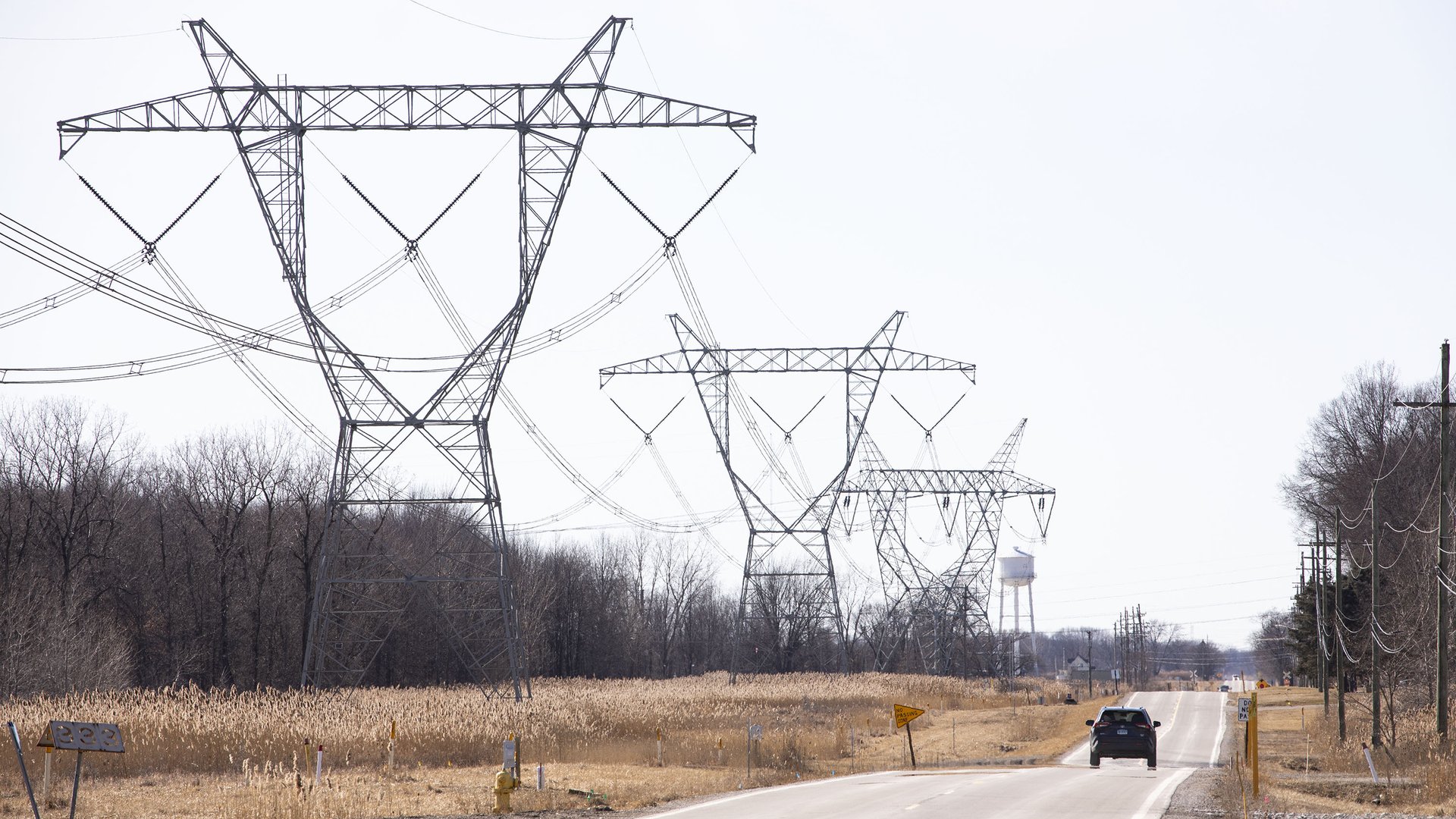
Transmission lines connect the power grid over long distances, bringing electricity from power plants and renewable energy sources to population centers and industrial facilities.
READ MORE: These ranchers heal the land. The power company drew a line through it
But building new transmission lines is among the most complicated energy infrastructure projects due to the number of local and state jurisdictions and private property lines that projects must cross. The three projects axed by the DOE faced local opposition during the Biden administration.

Download the Straight Arrow app today to get the stories that matter free from manipulation, bias or agenda.™
Point phone camera here
In Texas, Straight Arrow has reported on how separate plans to build new transmission lines are driving a wedge between the energy industry and ranchers. That tension plays out in every proposal. Rural landowners and Republican politicians are applauding the DOE’s move to cancel the projects, while clean energy advocates say it’s a missed opportunity.
Are there benefits to transmission lines?
A 2024 study from the Biden-era DOE and the National Laboratory of the Rockies — formerly known as the National Renewable Energy Laboratory — found that expanding interregional connections would improve grid reliability and generate $1.60 to $1.80 in savings for every dollar spent on new transmission lines.
The current DOE also points to benefits of new transmission lines, with a July draft of an updated study stating, “Interregional and cross-interconnection transmission links show the highest potential value to relieve transmission congestion.”
The Trump administration has offered about $30 billion in loans to power companies including American Electric Power and Southern Company to complete transmission projects.
Two of the now-canceled projects were in the West: the Tribal Energy Access Corridor from North Dakota to Nebraska, and the Southwestern Grid Connector Corridor from eastern Colorado to southern New Mexico. The third project, the Lake Erie-Canada Corridor, was planned to extend from Pennsylvania underwater into Lake Erie and connect to the grid in Canada.
Mixed reactions
The decision has drawn criticism from some grid analysts and renewable energy advocates and praise from others who opposed federal control of local areas.
“There’s no reason to have DOE in the middle of the process making designations that get reversed with each new administration,” Rob Gramlich, founder and president of Grid Strategies LLC, told the publication NOTUS.
READ MORE: What will it take to solve the great American energy puzzle?
To acquire land for transmission lines, the government can grant developers the power of eminent domain. That allows purchases to proceed even if landowners do not want to part with their property. The South Dakota Farm Bureau opposed the transmission project in its state, and last year, private landowner concerns were a major factor in the DOE canceling Biden-era funding for a transmission line in the Midwest.
“This is a smart course correction,” said Rep. Lauren Boebert, a Republican representing rural Colorado, in a press release. “I will continue fighting to protect consumers, private property rights, and local input.”